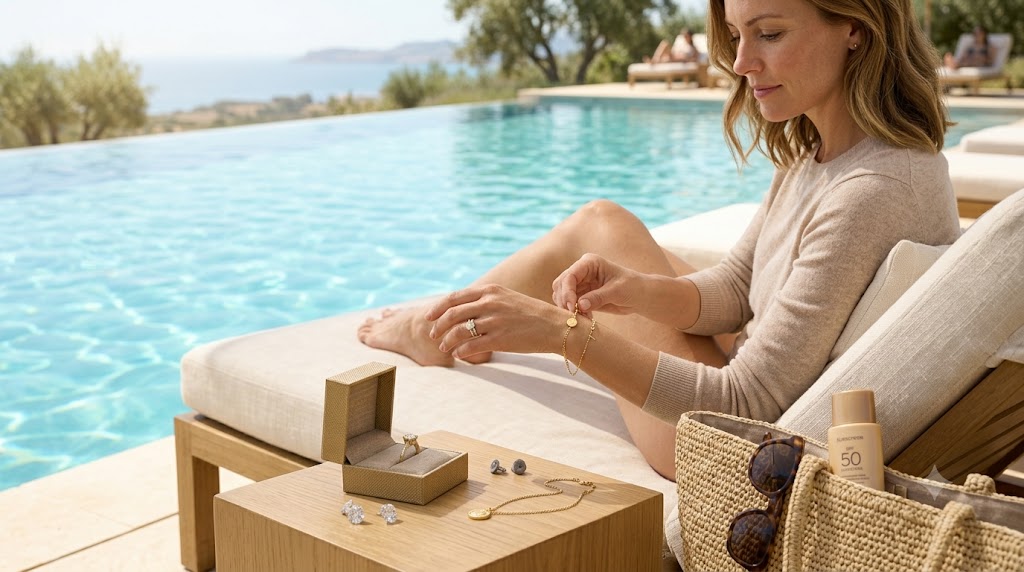
Wearing jewelry in the pool or ocean might seem harmless, especially on a beautiful summer day. Whether you’re heading to the beach with friends or relaxing by the pool, it’s natural to want your favorite necklace, bracelet, or ring to complete your outfit. But before you dive in, there’s one important thing to consider: water can be surprisingly damaging to jewelry.
While one quick swim isn’t guaranteed to ruin your favorite piece, repeated exposure to chlorine, saltwater, and even sand can gradually affect both the metal and the finish. Cold water also creates another hidden risk by making your fingers shrink slightly, increasing the chance of losing valuable rings without even noticing.
Understanding how pool water and seawater affect different types of jewelry can help you protect your favorite accessories and avoid costly repairs or replacements.
Why Water Can Damage Jewelry
Water damage to jewelry isn’t caused by water alone. The real problem comes from the chemicals and minerals dissolved in it, which slowly react with different metals over time.
The two biggest threats are:
- Chlorine in swimming pools
- Salt in ocean water
Each affects jewelry differently, but both can shorten the lifespan of your favorite pieces if they are exposed regularly.
The Danger of Chlorine
Chlorine keeps swimming pools clean, but it’s much harsher on jewelry than many people realize.
Most gold jewelry isn’t made from pure gold. To improve strength and durability, manufacturers combine gold with other metals such as:
- Copper
- Nickel
- Zinc
- Silver
These alloys make jewelry suitable for everyday wear, but they can also react with chlorine over time.
Repeated exposure may cause:
- Dull or faded shine
- Surface discoloration
- Weakened gemstone settings
- Tiny structural cracks
- Reduced durability
The damage usually happens gradually rather than after a single swim. Even so, removing your jewelry before entering a chlorinated pool is the safest option.
Saltwater and Ocean Damage
Ocean water creates a different set of problems. Salt is naturally corrosive and can be tough on many jewelry metals, especially after repeated exposure.
When you combine saltwater with sand, sun, and constant movement, your jewelry experiences much more wear than it normally would.
Saltwater may cause:
- Faster tarnishing
- Mineral buildup
- Loss of shine
- Surface corrosion
- More frequent cleaning needs
Sterling silver is especially vulnerable because it oxidizes much faster when exposed to salt.
Even if your jewelry looks fine after swimming, cleaning it as soon as possible helps prevent long-term damage.
The Biggest Risk Isn’t Damage—It’s Losing Your Jewelry
Losing jewelry in the ocean is actually more common than permanent water damage.
Cold water causes your fingers to shrink slightly. At the same time, sunscreen, waves, and wet skin make rings much easier to slip off.
Several factors work against you:
- Cold temperatures reduce finger size.
- Sunscreen makes your skin slippery.
- Ocean currents pull against loose jewelry.
- Sand makes lost rings almost impossible to find.
A ring that fits perfectly on land can disappear within seconds once you’re in the water.
Bracelets and anklets with clasps may also loosen unexpectedly while swimming.
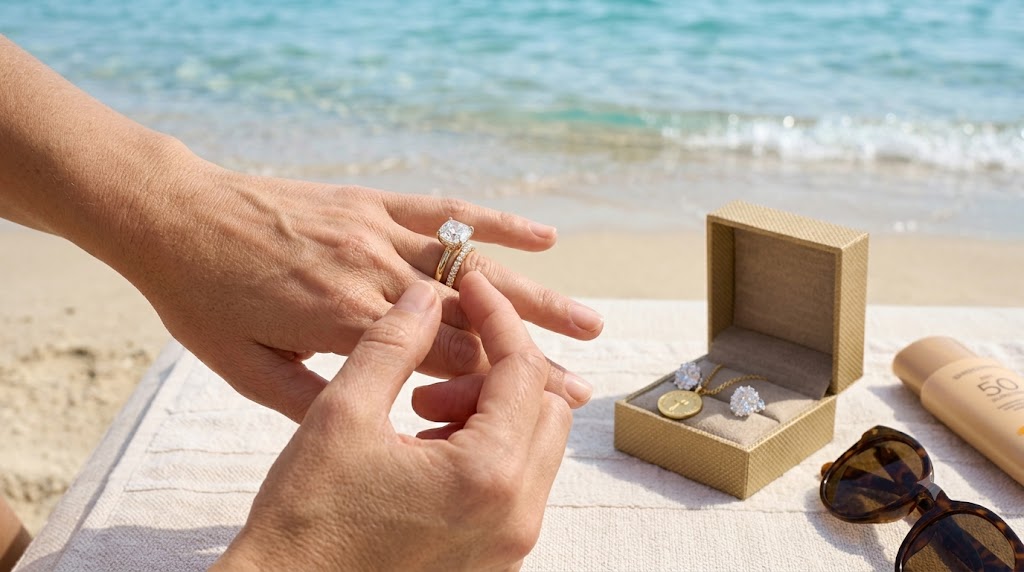
Which Jewelry Metals Handle Water Best?
Different jewelry metals react very differently when exposed to pool or ocean water.
Solid Gold and Platinum
Solid gold and platinum are among the most durable metals used in fine jewelry.
Although they resist corrosion better than many alternatives, they still aren’t immune to damage.
Swimming while wearing them can lead to:
- Duller surface shine
- Minor scratches from sand
- Gradual wear on lower-karat gold alloys
- A higher risk of accidental loss
Even expensive jewelry is worth removing before swimming.
Sterling Silver
Sterling silver is beautiful but much more reactive to chlorine and saltwater.
Repeated exposure can cause:
- Faster tarnishing
- Surface oxidation
- Loss of brightness
- More frequent polishing
If sterling silver accidentally gets wet, rinse it with fresh water and dry it thoroughly as soon as possible.
Gold-Plated Jewelry
Gold-plated jewelry is one of the least suitable choices for swimming.
Because the gold layer is extremely thin, chlorine and saltwater can wear it away much faster than normal use.
Common problems include:
- Fading plating
- Discoloration
- Exposed base metal
- Shorter lifespan
Removing plated jewelry before entering the water is always the best choice.
Fashion Jewelry
Fashion jewelry made from inexpensive base metals is especially vulnerable to moisture.
Water exposure can quickly lead to:
- Rust
- Green discoloration
- Peeling finishes
- Tarnishing
- Loose decorative stones
Many costume jewelry pieces aren’t designed to withstand regular contact with water.
What About Gemstones?
Gemstones aren’t always immune to water either.
Some stones are more delicate than others and can lose their beauty after repeated exposure to moisture or chemicals.
For example:
- Pearls can lose their natural luster.
- Opals may react poorly to sudden temperature changes.
- Porous gemstones can absorb chemicals over time.
Diamonds and sapphires are much more durable, but the metal settings holding them in place can still weaken after frequent exposure to chlorine.
What to Do If You Wore Jewelry in the Water
Accidentally swimming with jewelry isn’t usually a disaster.
Taking a few simple steps afterward can help minimize potential damage.
Rinse Immediately
Wash the jewelry under clean running water to remove chlorine, salt, sunscreen, and sand.
This is especially important after swimming in the ocean.
Dry It Completely
Use a soft microfiber cloth or jewelry polishing cloth to remove all moisture.
Pay extra attention to clasps and gemstone settings where water can collect.
Inspect the Jewelry
Look carefully for:
- Loose stones
- Bent prongs
- Surface discoloration
- Damaged clasps
If something doesn’t look right, have the piece inspected by a professional jeweler before wearing it again.
Store It Safely
Once the jewelry is completely dry, place it in a jewelry box or soft storage pouch.
Keeping jewelry dry helps slow down tarnishing and unnecessary wear.
Tips to Protect Your Jewelry During Summer
Protecting your jewelry during beach and pool season doesn’t require much effort.
A few simple habits can make a big difference:
- Remove jewelry before swimming.
- Store it in a soft travel pouch.
- Apply sunscreen before putting jewelry back on.
- Wait until your skin is completely dry before wearing accessories again.
- Clean your jewelry after spending time outdoors.
These small habits can help preserve your jewelry’s appearance for years.
Quick Water Safety Guide
| Jewelry Type | Pool Water | Ocean Water |
|---|---|---|
| Solid Gold | Better to remove | Better to remove |
| Platinum | Better to remove | Better to remove |
| Sterling Silver | Not recommended | Not recommended |
| Gold-Filled | Occasional exposure is less harmful, but removal is still best | Not recommended |
| Gold-Plated Jewelry | Avoid | Avoid |
| Fashion Jewelry | Avoid | Avoid |
Chlorine and saltwater are also common tarnish accelerants beyond the pool itself — see our guide on why jewelry tarnishes and how to spot the cause for more on protecting pieces day to day.
Final Thoughts
Wearing jewelry in the pool or ocean may seem harmless, but chlorine, saltwater, and sand can gradually affect both the appearance and durability of many metals. Even high-quality materials like solid gold and platinum can lose their shine, develop scratches, or become easier to lose while swimming.
Before heading into the water, make it a habit to place your rings, bracelets, necklaces, and earrings in a small jewelry pouch inside your beach bag. It only takes a few seconds, but that simple routine can help protect your favorite pieces, extend their lifespan, and keep them looking beautiful for many summers to come.
You Might Also Like
- Common Jewelry Care Mistakes You Need to Avoid
- How to Clean Sterling Silver Tarnish at Home: A Safe Step-by-Step Guide
- Sterling Silver Cleaning Methods Compared: Which One Should You Use?