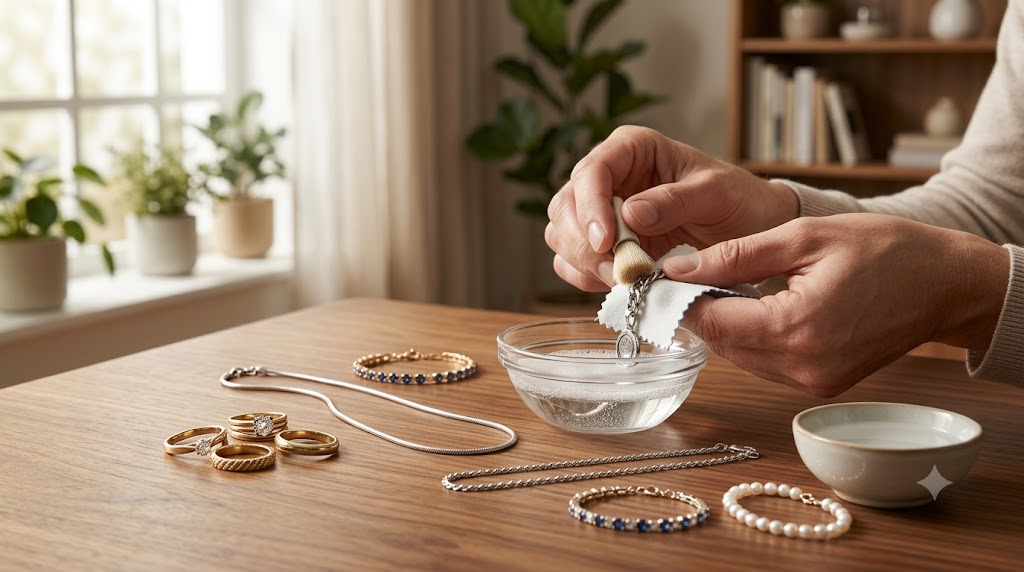
How to clean jewelry at home is one of the most useful skills for keeping your favorite pieces looking new and shiny. Over time, rings, necklaces, and bracelets naturally lose their sparkle due to everyday wear, but the good news is that you don’t need expensive cleaners or professional services to restore them.
In most cases, simple household ingredients are enough to safely bring back the original shine of gold, silver, and gemstone jewelry.
This guide will show you the safest DIY methods to clean your jewelry at home without damaging delicate materials.
Why Jewelry Gets Dirty and Dull
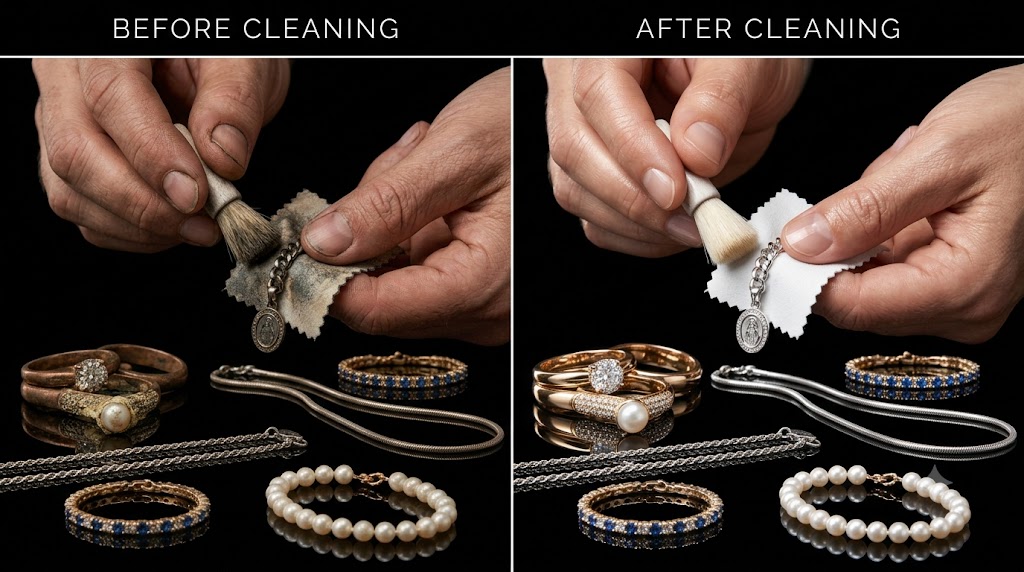
Jewelry dullness happens gradually, even if you wear your pieces carefully.
Everyday exposure leads to buildup from:
- Skin oils and sweat
- Lotions and sunscreen
- Perfumes and cosmetics
- Dust and pollution
- Soap and water residue
Over time, this invisible layer blocks light reflection, making metals and stones look less bright.
Regular gentle cleaning helps restore shine and prevents long-term buildup.
The Safest Universal Method: Soap and Warm Water
Cleaning jewelry with soap and water is the safest method for most metals and gemstones, including gold, platinum, diamonds, and moissanite.
It is gentle, effective, and safe when done correctly.
Step-by-Step Method
- Fill a small bowl with warm (not hot) water.
- Add a few drops of mild dish soap.
- Place jewelry in the solution for 10–15 minutes.
- Gently brush with a soft toothbrush (extra-soft preferred).
- Focus on small crevices and settings.
- Rinse under clean running water.
- Dry with a microfiber or lint-free cloth.
Best For This Method
- Gold jewelry (14K, 18K, and higher)
- Platinum jewelry
- Diamond rings and earrings
- Moissanite pieces
- Most durable gemstone settings
The key is gentle cleaning—never scrub aggressively, especially near prongs or thin chains.
How to Clean Sterling Silver Safely
Cleaning sterling silver at home requires a slightly different approach because silver naturally tarnishes over time.
One of the most effective DIY methods is the aluminum foil technique, which suits plain, solid sterling silver. A short version is below; the full step-by-step guide to cleaning sterling silver tarnish at home covers each step and other methods in more detail.
Aluminum Foil Cleaning Method
This method uses a simple chemical reaction to remove tarnish without scrubbing.
How It Works
Tarnish (silver sulfide) transfers from the silver surface to aluminum when combined with warm water, baking soda, and salt.
Step-by-Step Method
- Line a glass or ceramic bowl with aluminum foil (shiny side up).
- Place the sterling silver jewelry in the bowl so that it touches the foil.
- Pour in enough warm (not boiling) water to cover the jewelry.
- Add:
- 1 tablespoon baking soda
- 1 tablespoon table salt
- Let it soak for 5–10 minutes. A slight sulfur smell is normal.
- Rinse thoroughly under running water and dry with a soft cloth.
Do Not Use This Method On
- Pearls, opal, turquoise, and other porous or delicate stones
- Silver set with gemstones, unless you are sure the stones are safe in water
- Rhodium-plated or other plated pieces; wipe them with a microfiber cloth instead
- Silver with a deliberately darkened (oxidized or antique) finish, because the method also lightens recessed details
- Gold or other non-silver jewelry, since the method only treats silver tarnish
If you are not sure what a piece is made of, start with the soap and warm water method above, and see the delicate gemstone section below.
Best For
- Sterling silver chains
- Plain sterling silver rings and bracelets without gemstones
- Light to moderate tarnish
For heavier tarnish, repeat the process once rather than soaking longer, then finish with a silver polishing cloth.
What You Should Never Use on Jewelry
Jewelry cleaning mistakes can permanently damage your pieces, even if the method seems harmless.
Avoid these completely:
- ❌ Toothpaste (can scratch metals and soft stones)
- ❌ Bleach or chlorine (corrosive to metals and alloys)
- ❌ Ammonia on delicate gemstones
- ❌ Steel wool or rough sponges
These products may remove dirt quickly but often cause permanent surface damage.
Special Care for Delicate Gemstones
Cleaning delicate gemstones requires extra caution because some stones are porous or sensitive to moisture.
Avoid soaking:
- Pearls
- Opals
- Turquoise
- Emeralds (especially untreated stones)
These gemstones can absorb liquids, leading to discoloration or damage.
Safe Method for Delicate Stones
Instead of soaking, use:
- A soft, slightly damp cloth
- Gentle wiping only
- No chemicals or cleaning solutions
This helps protect their natural beauty and structure.
Extra Jewelry Cleaning Tips
Jewelry care at home becomes easier with a few simple habits:
- Clean jewelry over a soft towel to prevent drops
- Remove jewelry before applying lotions or perfume
- Clean one piece at a time to avoid tangling
- Store jewelry in dry, separate compartments
Consistency is more important than intensity—light cleaning done regularly works best.
How Often Should You Clean Jewelry?
Jewelry cleaning frequency depends on how often you wear your pieces.
A simple guide:
- Weekly: Light wipe for everyday jewelry
- Monthly: Deep cleaning with soap and water
- Every few months: Silver polishing or tarnish removal
Daily-wear pieces like engagement rings may need more frequent cleaning.
Common Cleaning Mistakes to Avoid
At-home jewelry cleaning mistakes can do more harm than good.
Avoid:
- Leaving jewelry soaking overnight
- Using boiling water (can loosen stones)
- Mixing multiple cleaning chemicals
- Scrubbing too hard around prongs
Gentle cleaning always produces better long-term results.
Final Thoughts
How to clean jewelry at home is simple when you use the right methods. In most cases, warm water, mild soap, and a soft brush are all you need to restore shine to gold, platinum, and gemstone jewelry safely.
For plain sterling silver without gemstones or plating, the aluminum foil method provides a fast and effective way to remove tarnish without damaging the metal. The most important rule is to avoid harsh chemicals and abrasive tools that can permanently scratch or weaken your jewelry.
With a consistent cleaning routine and gentle care, your favorite pieces can stay bright, beautiful, and wearable for many years. A few minutes of maintenance each month is enough to keep your jewelry looking like new.
You Might Also Like
- Common Jewelry Care Mistakes You Need to Avoid
- How to Clean Sterling Silver Tarnish at Home: A Safe Step-by-Step Guide
- Sterling Silver Cleaning Methods Compared: Which One Should You Use?
