Gold has been one of the world’s most treasured metals for centuries. From engagement rings and wedding bands to necklaces and bracelets, gold jewelry combines beauty, value, and timeless appeal. Yet many shoppers find themselves wondering what the labels 14K, 18K, and 24K actually mean.
The answer is simpler than it may seem. The letter “K” stands for karat, a unit that measures the purity of gold. Because pure gold is naturally soft, it is often mixed with other metals such as silver, copper, nickel, or zinc to create jewelry that is stronger and better suited for everyday wear.
Understanding the differences between 14K, 18K, and 24K gold can help you choose jewelry that fits your lifestyle, budget, and personal preferences. This guide explains each option in simple terms.
What Does “K” Mean in Gold?
Karat (K) measures how much pure gold is contained in a piece of jewelry.
Pure gold is divided into 24 equal parts. The higher the karat number, the greater the percentage of pure gold.
Here’s a quick overview:
- 24K Gold: 99.9% pure gold
- 18K Gold: 75% pure gold
- 14K Gold: 58.3% pure gold
The remaining percentage consists of carefully selected metals that improve durability, hardness, and sometimes even the color of the jewelry.
Understanding 24K Gold
What Is 24K Gold?
Twenty-four karat gold is considered the purest form of gold available for jewelry. It contains approximately 99.9% pure gold with almost no additional metals.
Its rich yellow color is often associated with luxury and traditional fine jewelry.
Advantages of 24K Gold
There are several reasons why some people choose 24K gold:
- Highest level of gold purity
- Rich, vibrant yellow appearance
- Resistant to rust and corrosion
- Popular for investment bars and collectible coins
- Highly valued in many cultures
Why Isn’t It Common for Everyday Jewelry?
Although pure gold is beautiful, it is also very soft.
Because of this softness, 24K jewelry can:
- Scratch more easily
- Bend under pressure
- Lose its shape over time
- Wear down faster with daily use
For these reasons, 24K gold is generally reserved for special occasions, investment pieces, or jewelry that is not worn every day.
Understanding 18K Gold
What Is 18K Gold?
Eighteen karat gold contains 75% pure gold and 25% alloy metals.
This combination creates an excellent balance between purity and durability while maintaining the rich appearance that many people love.
Why Is 18K Gold So Popular?
Many jewelers consider 18K gold the ideal choice for premium jewelry.
It offers:
- A luxurious golden color
- Greater durability than 24K gold
- Better resistance to scratches
- High long-term value
- Comfortable everyday wear with proper care
Because of its attractive balance, 18K gold is commonly used for:
- Engagement rings
- Wedding bands
- Luxury necklaces
- Designer bracelets
- Fine earrings
Why Engagement Rings Often Use 18K Gold
Engagement rings are meant to last a lifetime.
Eighteen karat gold provides enough hardness to better protect gemstones while still offering a high percentage of pure gold. This combination makes it one of the most popular choices for fine jewelry around the world.
Understanding 14K Gold
What Is 14K Gold?
Fourteen karat gold contains approximately 58.3% pure gold, while the remaining 41.7% consists of stronger alloy metals.
Although it contains less pure gold than 18K or 24K, it offers outstanding durability.
Why Is 14K Gold So Popular?
In the United States, 14K gold is one of the best-selling options for jewelry.
Its popularity comes from several advantages:
- Excellent durability
- Better scratch resistance
- Lower price than higher-karat gold
- Suitable for everyday wear
- Wide availability in many jewelry styles
Because it withstands daily use so well, 14K gold is commonly chosen for:
- Wedding rings
- Bracelets
- Chains
- Earrings
- Watches
- Everyday necklaces
A Great Balance Between Price and Performance
For many buyers, 14K gold offers the best value.
It delivers the appearance of genuine gold while being more affordable than 18K or 24K options. Its increased hardness also makes it an excellent choice for active lifestyles.
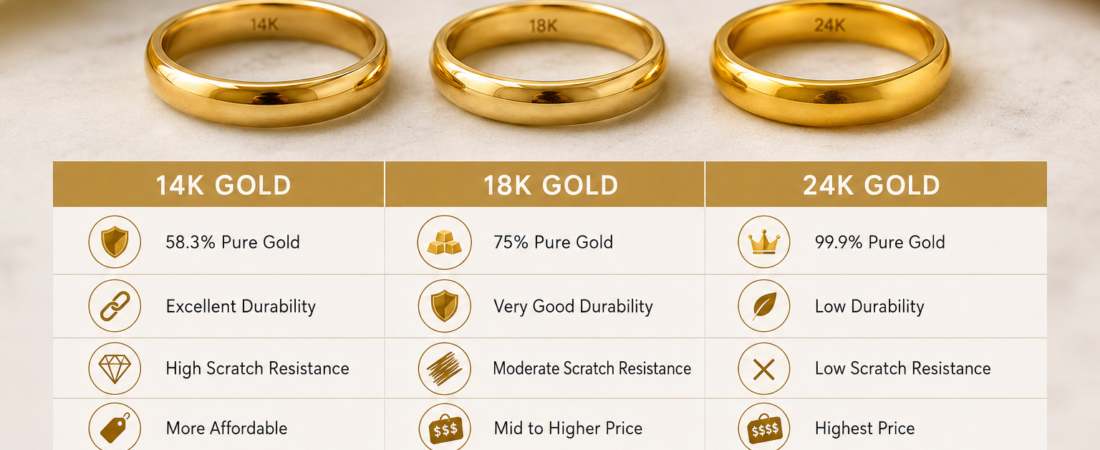
Simple Comparison Table
| Feature | 14K Gold | 18K Gold | 24K Gold |
|---|---|---|---|
| Gold Purity | 58.3% | 75% | 99.9% |
| Durability | Excellent | Very Good | Low |
| Scratch Resistance | High | Moderate | Low |
| Color | Warm Yellow | Rich Yellow | Deep Bright Yellow |
| Everyday Wear | Excellent | Very Good | Limited |
| Price | $$ | $$$ | $$$$ |
| Best For | Daily jewelry | Fine jewelry and engagement rings | Investment and special occasions |
Which Gold Is Right for You?
There is no single “best” type of gold. The right choice depends on your priorities.
Choose 14K Gold If:
- You wear jewelry every day.
- Durability is your top concern.
- You want excellent value.
- You have an active lifestyle.
Choose 18K Gold If:
- You want higher gold purity.
- You appreciate a richer gold color.
- You’re buying fine jewelry.
- You’re shopping for an engagement or wedding ring.
Choose 24K Gold If:
- Maximum purity is your priority.
- You’re interested in investment-grade gold.
- The jewelry will be worn occasionally rather than daily.
Does Higher Karat Always Mean Better?
Not necessarily.
A higher karat means more pure gold, but it does not automatically make the jewelry better for every situation.
For example:
- Someone looking for a durable wedding band may prefer 14K gold.
- Someone purchasing a luxury engagement ring may choose 18K gold.
- Someone buying gold primarily as an investment may select 24K gold.
Each option serves a different purpose, and all three have unique advantages.
Tips for Caring for Gold Jewelry
No matter which karat you choose, proper care helps preserve its beauty.
Here are a few simple maintenance tips:
- Remove jewelry before swimming or using household cleaners.
- Store pieces separately to prevent scratches.
- Clean regularly with warm water and mild soap.
- Dry thoroughly with a soft microfiber cloth.
- Avoid exposing jewelry to harsh chemicals or abrasive materials.
With routine care, quality gold jewelry can remain beautiful for decades.
Final Thoughts
Understanding the difference between 14K, 18K, and 24K gold makes shopping for jewelry much easier. While all three contain genuine gold, they differ in purity, durability, appearance, and price.
If you need jewelry for everyday use, 14K gold offers exceptional strength and value. If you’re looking for a balance of luxury and durability, 18K gold is an excellent choice and remains a favorite for engagement rings and fine jewelry. For those who value maximum purity above all else, 24K gold stands out with its brilliant color and nearly pure composition, though it requires more careful handling.
By considering how often you’ll wear the piece, your budget, and your personal style, you can confidently choose the type of gold that best suits your needs and enjoy its beauty for many years to come.