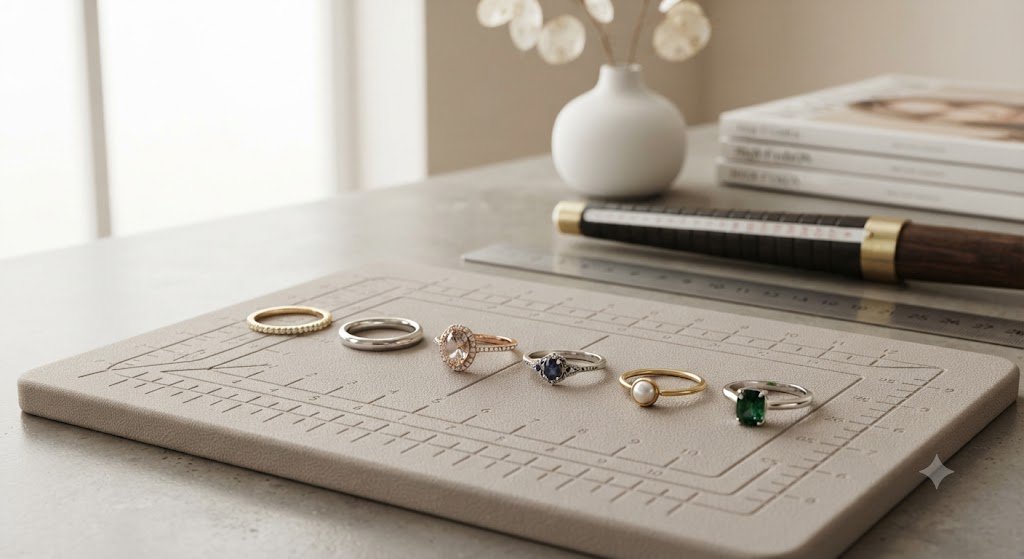
Introduction: Why International Ring Sizes Can Be Confusing
Buying a ring from an international jewelry brand can be an exciting experience, but it also creates one common concern: choosing the correct ring size.
Unlike clothing sizes, which may have some similarities between countries, ring sizing systems vary significantly around the world. A customer in the United States may choose a size 7 ring, while someone in the United Kingdom may look for size O, and a European buyer may select size 54. In Brazil, the same finger may require a completely different number.
This difference can make online jewelry shopping challenging, especially when purchasing from international brands, ordering custom rings, or buying meaningful pieces such as engagement rings and wedding bands.
A small conversion mistake can result in a ring that feels uncomfortable, rotates constantly, slips from the finger, or becomes difficult to remove.
Understanding how international ring measurements work makes the process much easier. This guide explains the main sizing systems used in the US, UK, Europe, and Brazil, provides a detailed international ring size conversion chart, and shows how to measure accurately before buying.
Understanding the Main International Ring Size Standards
Ring sizes are generally based on the inside diameter, inside circumference, or a country-specific numbering system.
Although every system has the same purpose—to create a comfortable fit—the measurement methods are different. Knowing these differences helps prevent mistakes when shopping internationally.
1. US Ring Sizes: The Numerical Standard
The United States uses a numerical ring sizing system that includes whole and half sizes.
Common examples include:
- Women’s rings often range between US sizes 5 and 8.
- Men’s rings frequently range between US sizes 8 and 12.
US ring sizes are based on the internal measurement of the ring, usually calculated from the inner circumference. Half sizes allow customers to achieve a more precise fit, which is especially useful because finger sizes naturally vary.
2. UK Ring Sizes: The Letter System
The United Kingdom uses an alphabetical sizing system.
Examples include:
- Size J
- Size M
- Size P
- Size T
The UK system also includes half sizes, such as M½ or P½, allowing more accurate adjustments.
Because UK letters do not directly match US numbers, buyers should always use a conversion chart instead of guessing.
3. EU Ring Sizes: Based on Circumference
European ring sizes are commonly based on the internal circumference of the ring measured in millimeters.
Examples:
- EU size 50 represents approximately 50 mm of inner circumference.
- EU size 54 represents approximately 54 mm of inner circumference.
- EU size 58 represents approximately 58 mm of inner circumference.
This makes the European system relatively easy to understand because the number relates directly to the measurement.
4. Brazilian Ring Sizes: The Local Numerical Standard
Brazil uses a numerical ring sizing system that differs from both US and European standards.
Brazilian sizes do not directly match the millimeter measurements used in European sizing. Because of this difference, the safest way to convert Brazilian ring sizes internationally is by comparing the actual internal diameter or circumference in millimeters.
When purchasing imported rings, Brazilian customers should avoid relying only on the local number and instead confirm the measurement provided by the jewelry brand.
International Ring Size Conversion Chart: US, UK, EU, and Brazil
The following chart provides a general reference for converting common international ring sizes.
| Inner Diameter | Inner Circumference | US Size | UK Size | EU Size | Brazil Size |
|---|---|---|---|---|---|
| 14.9 mm | 46.8 mm | 4 | H | 47 | 7 |
| 15.3 mm | 48.0 mm | 4.5 | I½ | 48 | 8 |
| 15.7 mm | 49.3 mm | 5 | J½ | 49 | 9 |
| 16.1 mm | 50.6 mm | 5.5 | L | 51 | 11 |
| 16.5 mm | 51.9 mm | 6 | M | 52 | 12 |
| 16.9 mm | 53.1 mm | 6.5 | N | 53 | 13 |
| 17.3 mm | 54.4 mm | 7 | O | 54 | 14 |
| 17.7 mm | 55.7 mm | 7.5 | P | 56 | 16 |
| 18.1 mm | 57.0 mm | 8 | Q | 57 | 17 |
| 18.5 mm | 58.3 mm | 8.5 | R | 58 | 18 |
| 18.9 mm | 59.5 mm | 9 | S | 60 | 19 |
| 19.4 mm | 61.0 mm | 9.5 | T | 61 | 20 |
| 19.8 mm | 62.1 mm | 10 | T½ | 62 | 22 |
| 20.2 mm | 63.5 mm | 10.5 | U½ | 64 | 23 |
| 20.6 mm | 64.8 mm | 11 | V½ | 65 | 24 |
Important: This international ring size conversion chart should be used as a general reference only. Different jewelry brands, manufacturers, and countries may have slightly different sizing standards. Always check the official size guide provided by the jewelry company whenever possible.
Factors That Influence Your Ring Size
Finding the correct ring size is not only about one measurement. Several factors can affect how a ring fits during daily use.
Temperature and Weather
Warm temperatures can cause fingers to expand slightly, while cold weather may make fingers smaller.
For this reason, a ring measured during a cold morning may feel tighter during a hot afternoon.
Physical Activity and Diet
Exercise, heavy lifting, and high sodium intake can cause temporary water retention, which may increase finger size.
Time of Day
Fingers are usually smaller in the morning and naturally become slightly larger throughout the day.
For the most accurate result, measure your finger later in the day.
Knuckle Size
Some people have larger knuckles compared to the base of their fingers.
In these cases, the correct ring size should comfortably pass over the knuckle while still fitting securely at the base of the finger.
How Ring Width Affects Your Ring Size
Many shoppers forget that the width of a ring band can influence comfort.
Thin and Standard Bands
Rings under approximately 4 mm wide usually fit according to standard size charts.
Wide Bands
Rings wider than 6 mm, including some statement rings and thick wedding bands, may feel tighter because they cover more surface area.
Many jewelers recommend choosing a slightly larger size for wider designs to improve comfort.
How to Measure Your Ring Size Correctly at Home
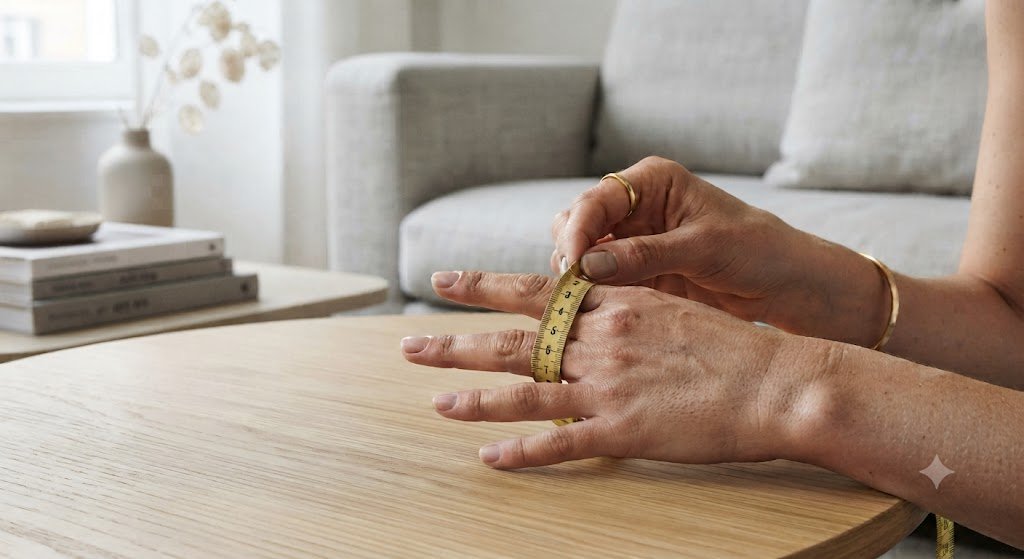
Before using any international ring size chart, accurate measurement is essential.
Method 1: Measure an Existing Ring
If you already own a ring that fits comfortably:
- Place the ring on a flat surface.
- Measure the inside diameter from one inner edge to the opposite inner edge.
- Do not include the metal thickness.
- Record the measurement in millimeters.
- Compare it with the conversion chart.
Method 2: Measure Your Finger Directly
If you do not have an existing ring:
- Wrap a flexible strip of paper or measuring tape around your finger.
- Mark the point where the ends meet.
- Measure the length in millimeters.
- Compare the circumference with an international sizing chart.
Best Practices for Accurate Measurement
- Measure at the end of the day when fingers are naturally larger.
- Avoid measuring when your hands are very cold.
- Repeat the measurement two or three times.
- Measure the exact finger where the ring will be worn.
What to Do If an Imported Ring Arrives in the Wrong Size
Even with careful preparation, an international ring may occasionally arrive with an imperfect fit.
Fortunately, there are several solutions.
Use a Ring Size Adjuster
Silicone ring reducers and transparent sizing strips can help make a slightly large ring fit more securely.
They are useful because they:
- Provide a temporary solution.
- Avoid permanent modifications.
- Work well for rings that are only slightly too large.
Visit a Professional Jeweler
A local jeweler may be able to resize the ring depending on:
- The metal type.
- The ring design.
- The presence of gemstones.
- The amount of adjustment needed.
Gold and silver rings are generally easier to resize, while materials such as titanium and tungsten are much more difficult to modify.
Frequently Asked Questions About International Ring Sizes
Are US and UK ring sizes the same?
No. US ring sizes use numbers, while UK sizes use letters. A US size 7 does not equal a UK size 7.
How can I convert my ring size internationally?
The most reliable method is measuring the ring’s internal diameter or circumference in millimeters and comparing that measurement with an international conversion chart.
Should I choose a larger size for a wide ring?
Usually, yes. Wider rings often feel tighter because they cover more of the finger. Many people prefer going slightly larger for thicker bands.
Is an international ring size chart always accurate?
A conversion chart is an excellent reference, but some jewelry brands may have their own sizing methods. Always confirm measurements with the seller before purchasing.
Conclusion: Your Reliable International Ring Size Reference
Understanding international ring sizes is essential for anyone buying jewelry across borders.
Whether you are comparing US numbers, UK letters, European measurements, or Brazilian sizing standards, using accurate millimeter measurements removes most of the uncertainty.
Save this international ring size conversion guide as a reference whenever you shop for jewelry worldwide. With careful measurement and the right conversion method, finding a comfortable and secure ring fit becomes much easier—no matter where your next piece of jewelry comes from.
You Might Also Like
- Anklet Sizing Guide and Measurement: How to Measure and Choose the Perfect Fit
- Jewelry Condition Reports and Certifications Resale Value: Why Documentation Matters in the Secondary Market
- How to Measure Your Wrist for Bracelet Size: The Complete Guide to Link Bracelets and Chains
