Buying a diamond is an exciting milestone, whether you’re shopping for an engagement ring, a meaningful gift, or a timeless piece of jewelry. However, if you’ve never purchased a diamond before, the process can feel overwhelming. With so many grades, certifications, and pricing differences, it’s easy to wonder what actually determines a diamond’s quality.
Fortunately, there is a trusted system designed to make comparing diamonds much easier. Known as the 4 Cs, this grading method was developed by the Gemological Institute of America (GIA) and has become the worldwide standard for evaluating diamonds. The four factors—Cut, Color, Clarity, and Carat—work together to determine a diamond’s beauty, rarity, and value.
This beginner-friendly guide explains each of the 4 Cs in simple language, helping you understand what to look for before making an important purchase.
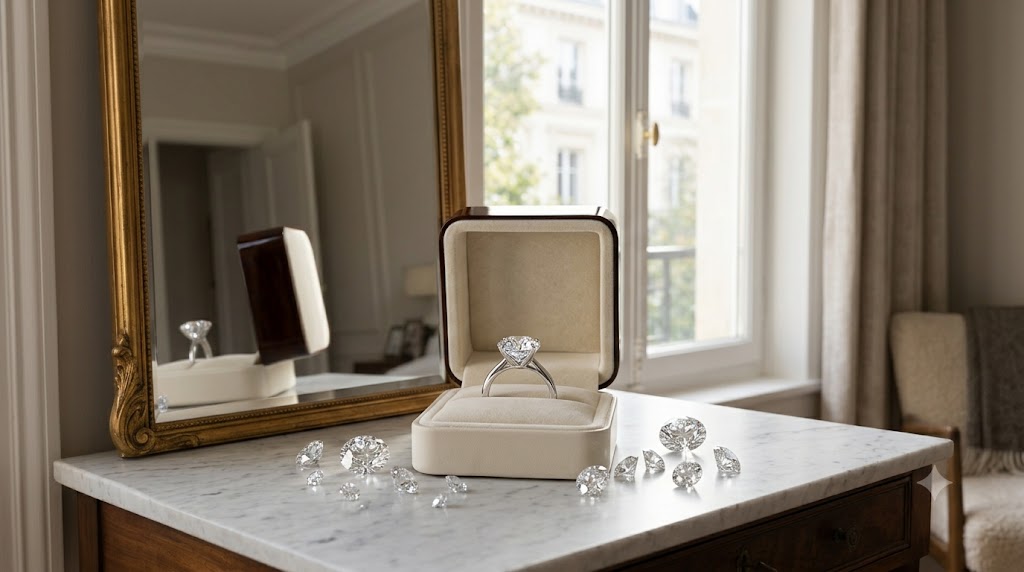
What Are the 4 Cs?
The 4 Cs provide a standardized way to evaluate a diamond’s overall quality.
They include:
- Cut – How well the diamond has been shaped and polished.
- Color – How colorless the diamond appears.
- Clarity – The presence of internal or external imperfections.
- Carat – The diamond’s weight.
While all four characteristics matter, they do not contribute equally to a diamond’s appearance. Understanding their differences can help you make a smarter buying decision.
1. Cut: The Most Important Factor
Among the 4 Cs, Cut is widely considered the most important because it directly affects a diamond’s brilliance, sparkle, and fire.
Many people assume a larger diamond will automatically look better, but even a large stone can appear dull if it has been poorly cut.
What Does Diamond Cut Mean?
Cut refers to how well a diamond’s facets have been proportioned and polished.
A skilled cut allows light to:
- Enter the diamond.
- Reflect internally.
- Return through the top of the stone.
This creates the brilliant sparkle diamonds are famous for.
Types of Diamond Cut
Ideal Cut
An ideal cut reflects the maximum amount of light.
Advantages include:
- Exceptional brilliance.
- Strong sparkle.
- Excellent balance of light and contrast.
Shallow Cut
A shallow diamond allows light to escape through the bottom.
As a result, the stone may appear:
- Less bright.
- Slightly watery.
- Less lively.
Deep Cut
A deep-cut diamond also loses light because reflections exit through the sides.
This often makes the diamond appear:
- Darker.
- Smaller than its actual weight.
- Less brilliant.
What to Look For
If your budget allows you to prioritize only one characteristic, choose the best cut quality you can afford.
A well-cut diamond often appears more beautiful than a larger diamond with an inferior cut.
2. Color: The Less Color, the Better
Most white diamonds are not completely colorless.
Instead, they may contain subtle yellow or brown tones that become more noticeable as the color grade decreases.
The Diamond Color Scale
The GIA grades diamond color using letters from D to Z.
- D–F: Colorless
- G–J: Near Colorless
- K–M: Faint Color
- N–R: Very Light Color
- S–Z: Light Color
Diamonds graded D are considered the rarest and most valuable because they contain virtually no visible color.
Should You Always Buy a Colorless Diamond?
Not necessarily.
Many buyers find that diamonds in the G–H range appear colorless to the naked eye while costing significantly less than D or E grades.
What to Look For
Consider:
- D–F if maximum rarity is important.
- G–H for an excellent balance of beauty and value.
- Slightly lower grades if you’re working within a tighter budget.
3. Clarity: Understanding Natural Imperfections
Nearly every natural diamond contains tiny imperfections formed during its creation deep within the Earth.
These imperfections are completely normal.
What Are Inclusions?
Inclusions are tiny internal characteristics inside the diamond.
Examples include:
- Small crystals.
- Tiny fractures.
- Mineral traces.
What Are Blemishes?
Blemishes are external surface imperfections, such as:
- Minor scratches.
- Small polish marks.
- Tiny surface pits.
The Clarity Scale
Common clarity grades include:
- FL – Flawless
- IF – Internally Flawless
- VVS1–VVS2 – Very, Very Slightly Included
- VS1–VS2 – Very Slightly Included
- SI1–SI2 – Slightly Included
- I1–I3 – Included
What Does “Eye-Clean” Mean?
A diamond described as eye-clean appears free of visible imperfections when viewed without magnification.
This makes eye-clean diamonds one of the best values available.
Many buyers choose VS2 or SI1 diamonds because they often look flawless in everyday viewing while offering meaningful savings.
What to Look For
Prioritize diamonds that:
- Appear clean without magnification.
- Have inclusions located away from the center.
- Offer excellent visual quality rather than simply the highest clarity grade.
4. Carat: Weight, Not Size
One of the biggest misconceptions about diamonds is that carat refers to size.
In reality, carat measures weight, not physical dimensions.
A one-carat diamond weighs 200 milligrams.
Why Two Diamonds Can Look Different
Two diamonds with the same carat weight may appear different in size because of:
- Cut quality.
- Shape.
- Proportions.
An excellent cut can make a diamond appear larger than a poorly cut stone of the same weight.
Smart Money-Saving Tip
Diamond prices often increase dramatically at popular weight milestones.
For example:
- 0.50 ct
- 0.75 ct
- 1.00 ct
- 1.50 ct
- 2.00 ct
Choosing a diamond just below these milestones—such as 0.90 ct instead of 1.00 ct—can provide a nearly identical appearance while reducing the overall price considerably.
What to Look For
Focus on:
- Visual appearance rather than carat number alone.
- Excellent cut quality.
- A balanced combination of all four Cs.
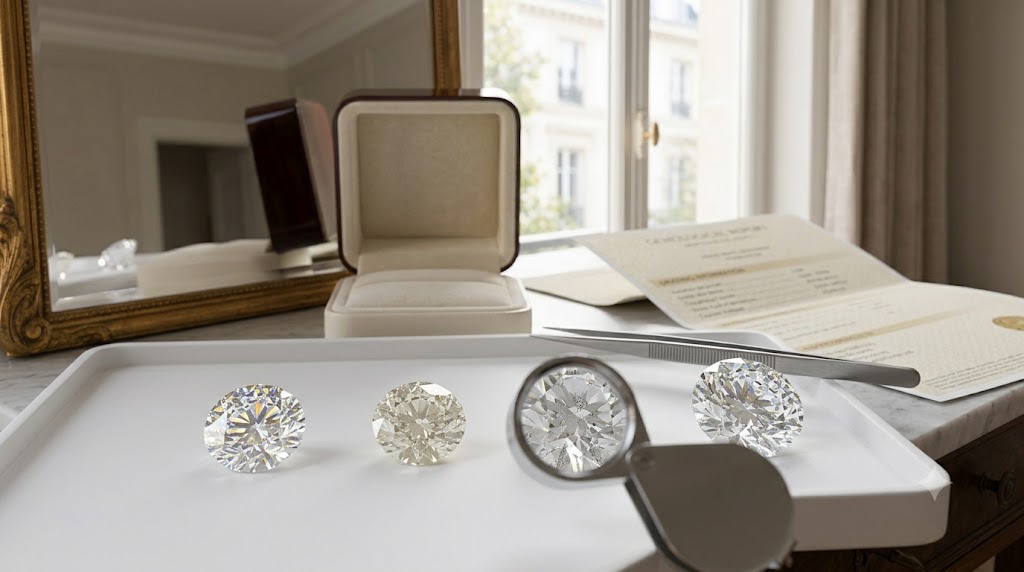
Quick Comparison of the 4 Cs
| C | What It Measures | Why It Matters |
|---|---|---|
| Cut | Light performance | Creates sparkle and brilliance |
| Color | Absence of color | Higher grades appear brighter and rarer |
| Clarity | Internal and external imperfections | Affects appearance and rarity |
| Carat | Diamond weight | Influences size and price |
Tips for First-Time Diamond Buyers
If you’re shopping for your first diamond, keep these simple tips in mind:
- Prioritize cut quality before anything else.
- Choose near-colorless diamonds for excellent value.
- Look for eye-clean clarity instead of flawless grades.
- Consider diamonds slightly below popular carat weights.
- Always review a grading report from a reputable gemological laboratory when available.
- Compare several diamonds rather than focusing on one characteristic.
Balancing all four Cs often results in a more beautiful diamond than simply choosing the highest grade in a single category.
Final Thoughts
Understanding the 4 Cs of diamonds makes shopping for fine jewelry far less intimidating. Instead of focusing only on size or price, you’ll be able to evaluate a diamond based on the qualities that truly influence its beauty and value.
While Cut, Color, Clarity, and Carat all play important roles, most experts agree that Cut deserves the highest priority, especially if you’re working with a limited budget. A well-cut diamond reflects light beautifully, creating the brilliance and sparkle that most people notice first.
By learning how the 4 Cs work together, you can shop with greater confidence, compare diamonds more effectively, and choose a stone that offers both lasting beauty and excellent value. Whether you’re purchasing an engagement ring or celebrating a special occasion, a little knowledge goes a long way toward making an informed and rewarding decision.