The small piece behind an earring may not get much attention, but it plays an important role in how comfortably and securely the earring stays in place. From simple push backs to screw backs, lever backs, hooks and hinged closures, different designs suit different earrings and different preferences. Understanding how they work makes it easier to choose a pair that feels secure without being unnecessarily complicated.
Understanding Earring Posts, Backs and Closures
Before comparing different backs, it helps to separate the parts of an earring.
What is an earring post?
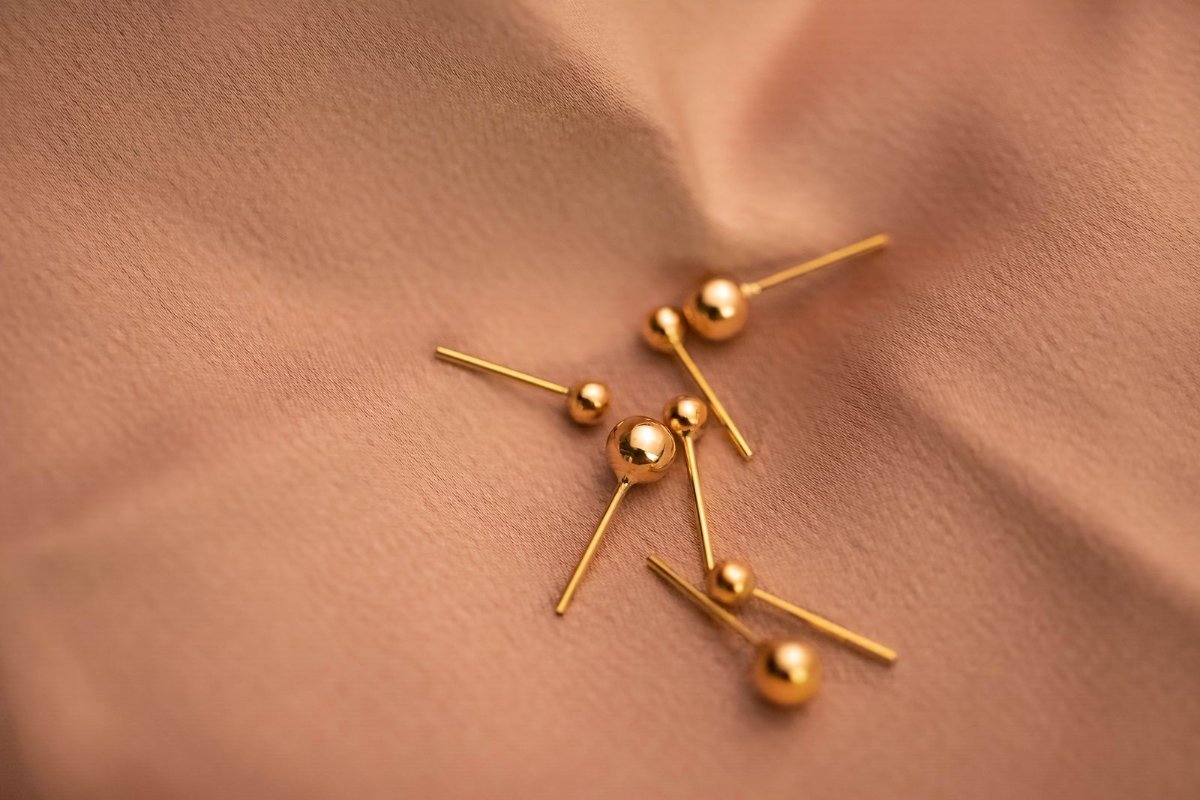
A post is the straight piece that passes through the earlobe or an existing ear opening. The back then attaches to the post to help hold the earring in position. Posts can vary in length, thickness (sometimes described by gauge), shape, position on the earring, and the type of back they are designed to work with.
The right length depends partly on the earring design and how much room is needed behind the ear. A post that is too short may not leave enough space for the back to attach comfortably, while an unnecessarily long one leaves extra metal behind the ear and may feel less comfortable.
What does “gauge” mean?
Gauge is a general way of describing the thickness of a post or wire. In many common gauge systems a higher number means a thinner post, which can feel counterintuitive, and systems differ, so check the actual specifications instead of assuming. For everyday jewelry shopping, the important question is whether the post is appropriately sized for the earring and its intended use.
What is an earring back?
An earring back is the component that holds a post-style earring in place from behind. Some backs slide onto a post, while others screw into place. Other earrings use no separate back at all, because the closure is built into the earring itself. The right choice depends on the earring’s weight, design and post, and on how secure you want the closure to feel.
Common Types of Earring Backs and Closures
There is no single “best” earring back. Each design has advantages and trade-offs.
Push backs or butterfly backs
Push backs are among the most familiar closures. A small metal back slides onto the post and stays in place through friction, which is why they are also called friction backs, or butterfly backs because of their shape. They are commonly used with stud earrings, small gemstone earrings, everyday earrings and lightweight to moderately weighted designs. They are easy to put on and remove, but their security depends on the fit between back and post. If a back becomes loose or worn, it may no longer hold the earring reliably.
Screw backs
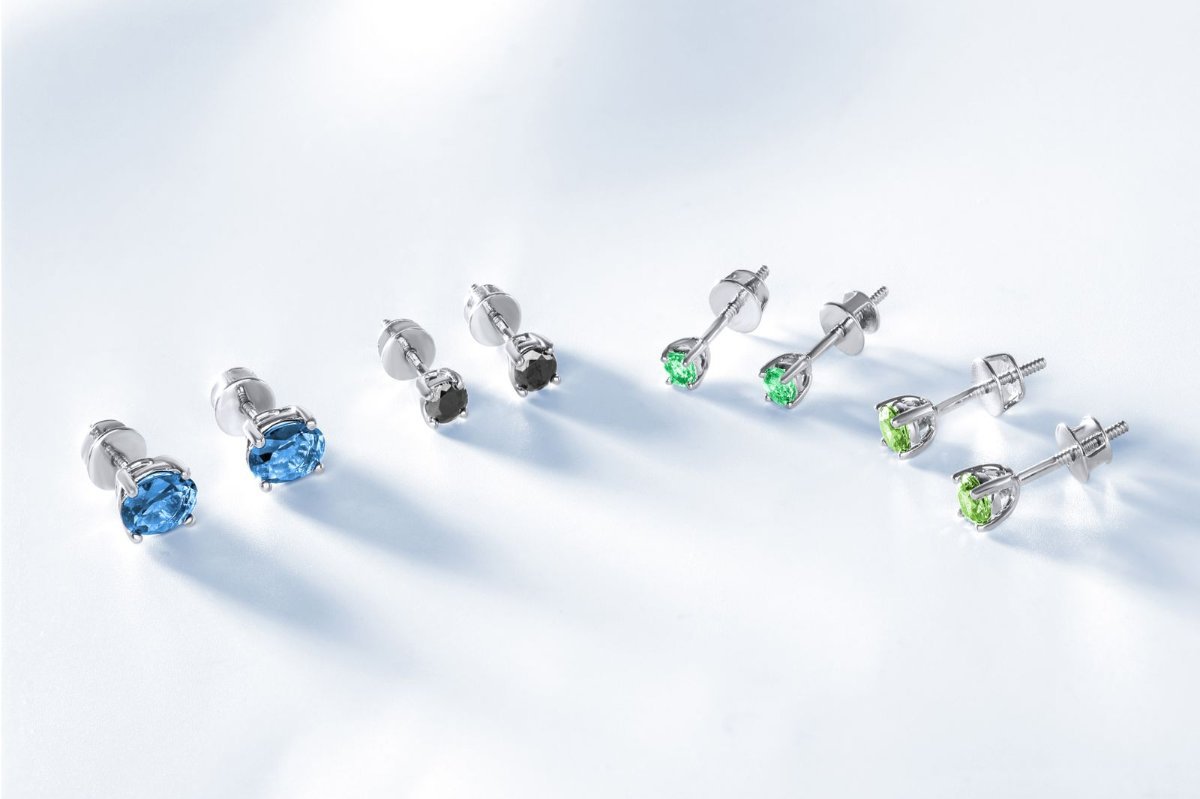
Screw backs use a threaded post and a matching back that twists into place. Because the back has to be turned on, they can feel more deliberate than a basic friction back and may suit people who want extra reassurance that the back will not simply slide off. The trade-off is that they take longer to put on and remove, and the threaded parts should be handled gently. Do not force a back that does not turn smoothly.
Lever backs
Lever backs combine a curved wire with a hinged closure. The wire passes through the ear opening and the lever closes behind it. The closure is part of the earring, so there is no separate loose back to attach or misplace. They are commonly found on drop and dangle earrings and can be convenient for everyday use.
Hook or fish-hook wires
Hook-style earrings use a curved wire that passes through the ear opening and hangs behind the ear. Some versions have an extra small stopper or catch, while others rely mainly on the shape of the wire. They are common on lightweight drop earrings and decorative styles. Because the arrangement varies, check the specific design before assuming every hook earring is equally secure.
Hinged and huggie closures
Hinged earrings have a small section that opens and closes as part of the earring itself. Huggie-style earrings are generally small hoops that sit close to the ear, often with a hinged mechanism and a section that clicks into place. There is no separate back to handle, and the compact design looks neat. As with any moving closure, check that the hinge and closing section work properly before wearing them. If you are choosing small hoops, our guide to choosing the right hoop earring size can help.
Locking backs
Locking backs have a mechanism intended to make accidental release less likely. They can be useful for earrings you would be especially sorry to lose, or whenever you want extra security. The way they attach and release depends on the design.
Silicone and disc-style stabilizing backs
Soft silicone backs and larger disc-style backs serve different purposes depending on their design. A silicone back may offer a soft-feeling grip behind the ear, while a larger disc-style back can add support behind certain earrings and spread pressure over a broader area. They are worth considering when an earring needs more support than a very small standard back provides, but they should still be matched to the earring and post rather than treated as universal fixes.
How to Choose the Right Back for Your Earrings
The earring itself should usually determine the type of back you need.
Match the back to the earring weight
A tiny lightweight stud does not necessarily need the same closure as a larger decorative earring. As general guidelines, not strict rules:
- Lightweight studs: push backs are often simple and convenient.
- Moderately weighted earrings: a secure, well-fitting back adds reassurance.
- Heavier earrings: a larger stabilizing back or other supportive closure may be more comfortable.
- Drop earrings: lever backs or secure hook designs can be convenient.
- Small hoops: hinged closures remove the need for a separate back.
- Special or valuable earrings: a more secure closure may be worth considering.
Match the back to the style
A small stud often looks and feels best with a relatively simple back, while a larger decorative earring may benefit from one that offers more support. For earrings with a long or heavy front section, the back is not only there to prevent loss; its shape and size can affect how the earring sits on the ear.
Consider comfort
Security matters, but a closure that feels uncomfortable is unlikely to become a favorite. A comfortable back holds the earring without excessive pressure, leaves enough room behind the ear, has no sharp or damaged edges, works smoothly with the post, and suits the weight of the earring. Comfort is partly personal: what feels secure to one person may feel too tight or too loose to another. If you have sensitive skin, our guide to metals for sensitive skin covers the material side.
Earring back comparison
| Back or closure type | Security | Comfort | Best for | Notes |
|---|---|---|---|---|
| Push or butterfly back | Moderate to good when well fitted | Generally comfortable | Studs and everyday earrings | Simple and easy to use |
| Screw back | Good | Can be comfortable when correctly fitted | Earrings where added fastening is desired | Takes longer to put on and remove |
| Lever back | Good | Generally comfortable | Drop and dangle earrings | Closure is built into the earring |
| Hook or fish-hook wire | Varies by design | Often comfortable for lightweight earrings | Lightweight drops | Some designs use an additional catch |
| Hinged closure | Good when properly closed | Generally comfortable | Small hoops and other hinged styles | Check the hinge and closing section |
| Huggie closure | Good when properly closed | Often comfortable | Small close-fitting hoops | Compact design with built-in closure |
| Locking back | Designed for added security | Depends on design | Earrings where extra security is desired | Mechanism varies |
| Silicone back | Moderate, depending on fit | Often soft against the ear | Lightweight to moderate earrings | Check compatibility with the post |
| Disc-style stabilizing back | Moderate to good, depending on design | Can provide broader support | Larger or heavier earrings | Useful when additional support is desired |
No rating in this table is absolute. The condition of the closure, compatibility with the post, earring weight and individual design all affect real-world performance.
How to Put On and Remove Earring Backs Safely
Small earring components are easy to mishandle, particularly tiny backs.
Putting on a post-style earring back
- Check the post and back first. Make sure neither looks bent, cracked, damaged or unusually loose.
- Insert the earring normally. Position it from the front of the ear.
- Hold the post steady. Avoid twisting the front of the earring unnecessarily.
- Attach the back gently. Slide or screw it into position according to its design.
- Check the fit. The back should hold the earring securely without excessive pressure.
- Confirm the closure. For a screw back, make sure it is properly engaged and not just resting on the post.
Removing the back
Removal should be just as gentle. Hold the front of the earring securely, pull a friction back straight off rather than sideways, unscrew a screw back instead of pulling it, and release a hinged mechanism according to its design. Do not force a back that does not move normally. If a back is stuck, bent or damaged, have the piece checked by a qualified jeweler instead of forcing it.
Why Single Earrings Get Lost
Losing one earring is one of the most common frustrations with small jewelry. Usually the earring does not vanish mysteriously: a back loosens, a small part is misplaced, or the earring falls somewhere hard to notice.
Simple ways to reduce the risk
- Check that the back is fully attached before you leave home.
- Inspect older backs for signs of wear, and replace backs that no longer fit the post properly.
- Avoid putting earrings loosely in pockets or bags, and store pairs together.
- Close hinged earrings completely.
- Check earrings after removing scarves, hats or clothing that could catch them.
- Keep spare backs in a small, secure place.
- When you take earrings off, put both pieces in the same spot right away instead of setting them down separately.
Small parts need extra care
Earring backs are small parts and easy to overlook. Keep loose backs, posts and other tiny components away from small children and pets, since a tiny jewelry part can become a safety hazard if swallowed or mishandled.
Caring for Earring Backs and Posts
Earring backs are easy to ignore until something stops working.
Check them regularly
Before wearing a favorite pair, look for bent posts, loose backs, damaged catches, cracked or worn components, hinges that do not close properly, and screw threads that do not engage smoothly. If a post or back looks damaged, do not force it into place.
Keep them clean and dry
Cleaning should suit the specific jewelry material. For many ordinary pieces a soft, lint-free cloth removes surface residue. If more cleaning is needed, check the materials and any gemstone treatments first rather than using the same method on every earring (our guide to cleaning gemstone jewelry safely explains why). Let suitable pieces dry before storing them.
Store pairs together
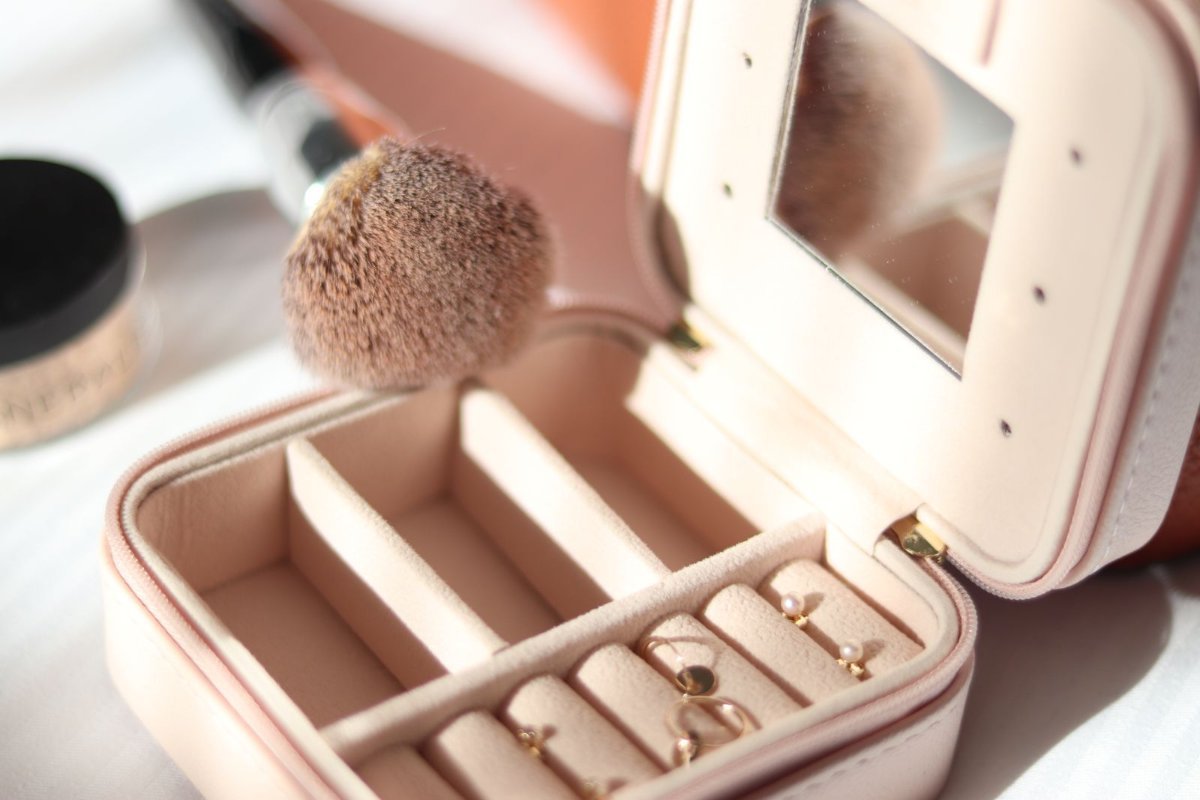
A small compartment, jewelry box or soft storage area helps keep pairs together. For earrings with separate backs, keeping the backs attached during storage also reduces the chance of losing them. Our jewelry storage guide has more ideas.
Frequently Asked Questions
What is the most secure type of earring back?
No back is universally the most secure. Screw backs, locking backs, lever backs and properly closed hinged mechanisms can all be secure when they suit the earring and work correctly.
Are butterfly backs good for everyday earrings?
They can be a practical choice for many lightweight and moderately weighted studs. Their security depends heavily on the fit and condition of the back and post.
What back is best for heavy earrings?
A suitable larger or stabilizing back can offer more support than a tiny standard back, but the best choice depends on the earring’s construction and weight. Heavy earrings can also feel uncomfortable over time, so both support and comfort matter.
Why does my earring keep falling out?
A loose or worn back, a damaged post, an incomplete closure or snagging on clothing can all be to blame. Check the closure before wearing the earrings, and replace or repair components that no longer fit properly.
How do I know if an earring back is damaged?
Look for bending, cracks, looseness, worn friction, damaged threads or a closure that no longer works as it should. Do not force a damaged back onto a post.
Can I use any earring back with any earring?
No. Backs need to be compatible with the post or closure design. Post thickness, length, threading and the weight of the earring all affect whether a particular back is suitable.
Final Thoughts
Earring backs are small, but they have a big influence on how secure and comfortable an earring feels. The right choice depends on the earring’s weight, style, post and closure design, and on personal preference.
Push backs can be wonderfully simple, screw backs offer a more deliberate fastening, lever backs and hooks suit drop earrings, and hinged closures make small hoops easy to wear. Stabilizing backs help when an earring needs extra support. Whatever you choose, check the post and back before wearing them, never force a component into place, and keep small loose parts away from children and pets. A few seconds of checking can mean the difference between enjoying a favorite pair and discovering that one earring has disappeared.
