A new watch should feel comfortable from the moment you fasten it on your wrist. Unfortunately, many watches come with bracelets that are intentionally oversized to fit a wide range of wrist sizes. If your watch slides around constantly or feels uncomfortably tight, it can affect both comfort and appearance.
The good news is that many metal watch bands can be adjusted at home with a few inexpensive tools and a careful approach. Learning the basics can save time, reduce unnecessary trips to a jeweler, and help you better understand how your watch is built.
However, patience is essential. Modern watch bracelets are precision-made components, and forcing a pin or using the wrong technique can damage the bracelet. This guide explains how to safely resize a metal watch band while knowing when it’s best to leave the job to a professional.
Tools You’ll Need Before You Begin
Using the proper tools makes the process much safer and helps prevent scratches or damage.
A basic watch bracelet adjustment kit typically includes:
- Pin punch or link pin remover
- Small watchmaker’s hammer (lightweight)
- Bracelet holder or sizing block
- Spring bar tool for clasp adjustments
- Fine-tip tweezers (optional)
- Soft microfiber cloth
- Small container for storing removed pins and links
Working on a clean, well-lit table with a soft surface underneath the bracelet also helps protect both your watch and your workspace.
Identify Your Bracelet Type
Not every metal bracelet is adjusted in the same way. Before removing any links, examine the bracelet carefully.
Pin-and-Collar or Directional Pin Links
This is one of the most common bracelet designs.
Turn the bracelet over and look for small engraved arrows on the inside of the links. These arrows indicate the direction in which the pins should be pushed out.
Always follow the direction of the arrows.
Simple Friction Pins
Some bracelets use straight pressure-fit pins without collars.
Although these resemble directional pins, they may not include arrows. They still require gentle pressure and careful alignment during removal.
Screw Links
Luxury watches sometimes use miniature screws instead of push pins.
If your bracelet uses screws, you’ll need the correct precision screwdriver rather than a pin punch.
Never force a pin into a bracelet that actually uses screws.
Mesh (Milanese) Bracelets
Mesh bracelets work differently.
Instead of removing links, the clasp slides along the woven bracelet and locks into different positions using a spring bar tool.
These bracelets are generally among the easiest to adjust at home.
How to Remove Links Safely
Before removing anything, decide approximately how many links need to come out.
For the most balanced appearance, remove an equal number of links from both sides of the clasp whenever possible.
Step 1: Prepare the Bracelet
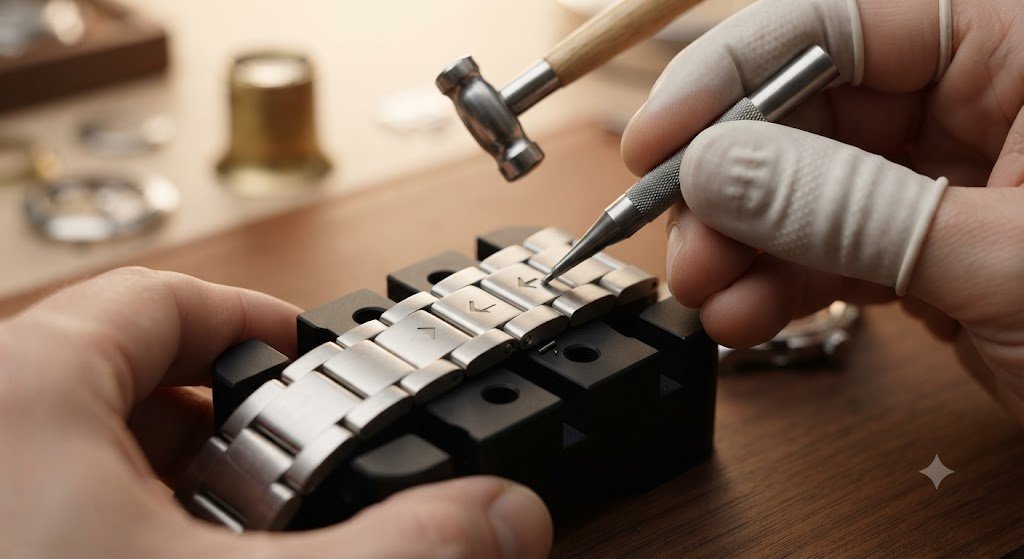
Place the bracelet into the bracelet holder so the link you’re removing is fully supported.
Position the engraved arrow so it points downward.
Step 2: Align the Pin Punch
Place the pin punch directly over the center of the pin.
Proper alignment is important because angled pressure may bend the pin or scratch the bracelet.
Step 3: Tap Gently
Using the lightweight hammer, apply gentle taps until the pin begins to move.
Avoid striking hard.
Small, controlled taps are far safer than excessive force.
Step 4: Remove the Pin
Once enough of the pin extends from the opposite side, carefully pull it out with your fingers or tweezers.
Place the pin somewhere safe.
Small watch pins are surprisingly easy to lose.
Step 5: Remove the Desired Links
Separate the necessary number of links.
If you’re unsure how many to remove, start with fewer rather than more.
You can always repeat the process later.
Step 6: Reconnect the Bracelet
Align the remaining links.
Insert the pin from the opposite direction of the engraved arrow.
Gently tap it until it sits completely flush with the bracelet.
Check that the link moves freely without excessive play.
Fine-Tune the Fit Using the Clasp
Many people immediately remove links when the bracelet feels slightly loose.
However, your watch may already include an easier solution.
Micro-Adjustment Holes
Most folding clasps feature two to four small adjustment holes.
These allow you to move the spring bar slightly without removing any links.
This provides a more precise fit—especially useful during seasonal temperature changes when wrists naturally expand or shrink.
To adjust:
- Open the clasp completely.
- Use a spring bar tool to compress the spring bar.
- Slide it into a different adjustment hole.
- Ensure it locks securely before wearing the watch.
A micro-adjustment of just a few millimeters can make a noticeable difference in comfort.
Essential Safety Tips
Resizing a bracelet is straightforward when done carefully, but several common mistakes can damage the bracelet.
Always remember these precautions:
- Never force a pin that refuses to move.
- Always follow the engraved directional arrows.
- Support the bracelet before striking any pin.
- Work slowly and carefully.
- Keep removed links and pins together for future adjustments.
- Protect polished surfaces with a microfiber cloth.
- Double-check that every pin is fully seated before wearing the watch.
Taking your time is far safer than rushing the job.
When You Should Stop and Visit a Professional
Some situations require specialized tools or experience.
Consider consulting a professional watchmaker if:
- The bracelet uses tiny screws you cannot remove safely.
- A pin becomes bent during removal.
- The bracelet appears damaged or loose.
- The watch is particularly valuable or collectible.
- You’re working on a luxury mechanical timepiece.
- The bracelet includes ceramic or precious metal links.
Professional resizing is usually quick and inexpensive compared to repairing accidental damage.
Common Mistakes to Avoid
Even experienced collectors occasionally make simple errors.
Avoid these common problems:
- Removing too many links at once.
- Taking all links from one side of the clasp.
- Using household nails instead of proper pin punches.
- Hitting pins with excessive force.
- Forgetting the direction of the arrows.
- Misplacing removed links or pins.
- Skipping the micro-adjustment option.
A careful, methodical approach almost always produces the best results.
How to Check the Final Fit
After adjusting the bracelet, wear the watch for several hours before deciding whether additional changes are necessary.
A properly fitted metal bracelet should:
- Stay centered on your wrist.
- Move slightly without sliding excessively.
- Feel secure without leaving deep pressure marks.
- Allow comfortable wrist movement.
- Remain comfortable throughout the day.
Remember that wrists naturally change size depending on temperature, hydration, and activity level. A bracelet that feels perfect in the morning may feel slightly tighter later in the day.
Caring for Your Metal Bracelet After Adjustment
Once your bracelet fits correctly, regular maintenance helps preserve its appearance and longevity.
A few simple habits make a noticeable difference:
- Wipe the bracelet with a soft microfiber cloth after wearing it.
- Clean between the links occasionally using a soft brush and mild soapy water (only if appropriate for your watch’s water resistance).
- Dry the bracelet thoroughly after cleaning.
- Inspect pins and screws periodically for signs of loosening.
- Remove the watch before using harsh cleaning chemicals or performing heavy manual work.
Routine care helps maintain both the bracelet’s finish and its structural integrity.

Final Thoughts
Learning how to adjust a metal watch band at home is a practical skill that can improve both the comfort and enjoyment of your watch collection. With the right tools, careful technique, and a little patience, many standard metal bracelets can be resized safely without professional assistance.
The key is to work slowly, respect the bracelet’s construction, and never force components that resist movement. Simple adjustments—such as removing a link or using the clasp’s micro-adjustment holes—can dramatically improve the way a watch feels on your wrist.
Most importantly, know your limits. If you encounter unusual resistance, specialized bracelet designs, or a valuable vintage or luxury watch, seeking help from a qualified watchmaker is always the safest choice. A properly adjusted bracelet not only looks more refined but also allows you to wear your timepiece with confidence, comfort, and appreciation for the craftsmanship it represents.
You Might Also Like
- Anklet Sizing Guide and Measurement: How to Measure and Choose the Perfect Fit
- Jewelry Condition Reports and Certifications Resale Value: Why Documentation Matters in the Secondary Market
- How to Measure Your Wrist for Bracelet Size: The Complete Guide to Link Bracelets and Chains
