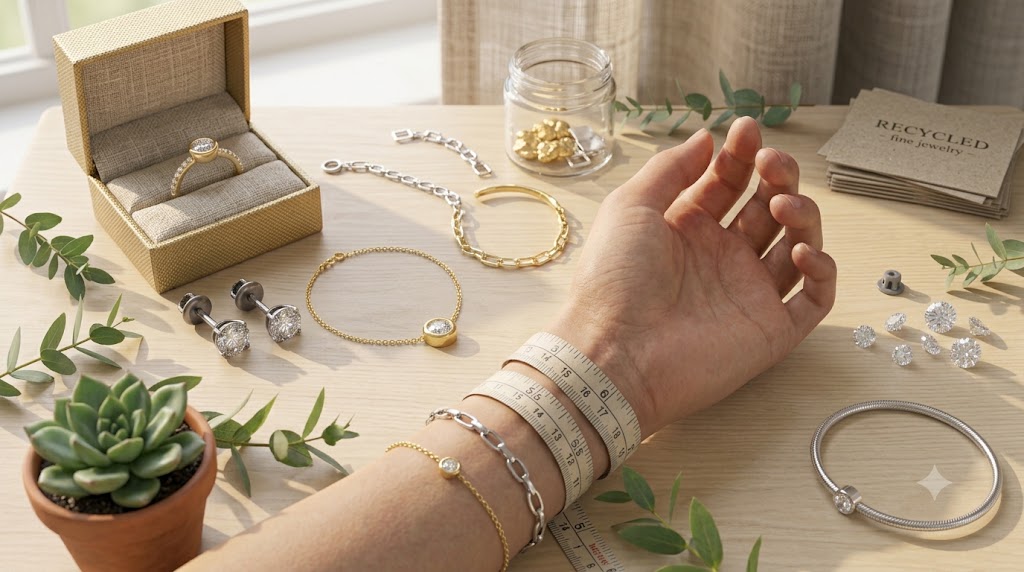
Measuring your bracelet size before shopping online is one of the easiest ways to avoid buying jewelry that doesn’t fit. A bracelet that’s too tight can feel uncomfortable after just a few hours, while one that’s too loose may constantly slide around your wrist—or worse, slip off without you noticing.
The good news is that finding your correct bracelet size takes only a few minutes. With a flexible measuring tape, a piece of string, or even a strip of paper, you can get an accurate measurement right at home.
In this guide, you’ll learn simple ways to measure your wrist, understand how different bracelet fits feel, and discover the right method for sizing bangles before making your next purchase.
Why Bracelet Size Matters
Bracelet size affects much more than comfort. The right fit helps your jewelry look better, stay secure, and feel natural throughout the day.
A well-fitted bracelet should:
- Feel comfortable without squeezing your wrist.
- Stay securely in place during daily activities.
- Move naturally without constantly slipping.
- Match the style you prefer, whether that’s fitted, relaxed, or somewhere in between.
Since sizing isn’t exactly the same across every jewelry brand, knowing your wrist measurement gives you a reliable starting point before checking a retailer’s size chart.
How to Measure Your Wrist at Home
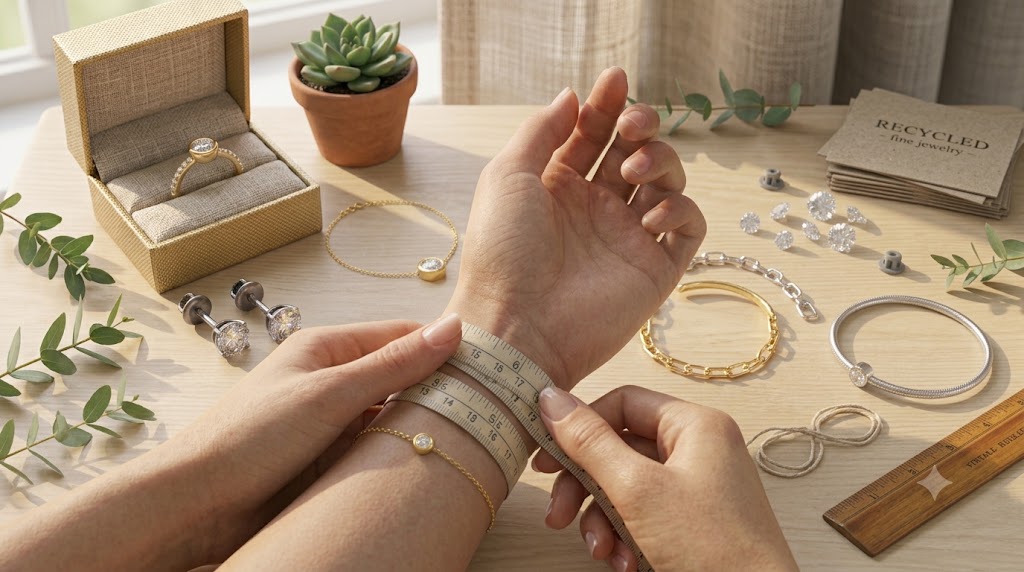
Measuring your wrist is simple, and you don’t need any special tools. Both of the methods below provide reliable results.
Method 1: Use Paper or String
If you don’t own a flexible measuring tape, a strip of paper, ribbon, or string works just as well.
What You’ll Need
- A strip of paper or string
- A pen or pencil
- A ruler with inches and centimeters
Steps
Wrap the paper or string around your wrist just above the wrist bone, where you normally wear a bracelet.
Make sure it sits comfortably against your skin without pulling it tight.
Mark the point where both ends meet.
Lay the strip flat and measure the length with your ruler.
Write down your measurement in both inches and centimeters so it’s easy to compare with online sizing charts.
For example, if your wrist measures 6.5 inches (16.5 cm), that’s your actual wrist circumference before adding extra room for comfort.
Method 2: Use a Flexible Measuring Tape
A soft measuring tape is the quickest and most accurate option.
Wrap it around your wrist just above the wrist bone.
Keep it snug, but don’t pull it tightly against your skin.
Read the measurement where the tape overlaps and record it in inches and centimeters.
That’s all there is to it.
Choosing the Right Bracelet Fit
Bracelet fit is just as important as your wrist measurement. Most bracelets aren’t meant to match your exact wrist size—they need a little extra room so they can move comfortably. For a closer look at how much room to leave, see our guide to wrist size vs. bracelet size.
Snug Fit
If you like bracelets that stay close to your wrist with very little movement, add:
- ¼–½ inch
- 0.6–1.3 cm
For example:
- Wrist: 6.5 in (16.5 cm)
- Bracelet: 6.75–7 in (17.1–17.8 cm)
This fit works especially well for delicate chain bracelets and minimalist designs.
Comfort Fit
A comfort fit is the most popular choice because it offers a balance between security and freedom of movement.
Add:
- ¾–1 inch
- 1.9–2.5 cm
Example:
- Wrist: 6.5 in (16.5 cm)
- Bracelet: 7.25–7.5 in (18.4–19 cm)
It’s a great option for everyday wear and suits most bracelet styles.
Loose Fit
If you enjoy bracelets that move freely and create a more relaxed look, choose a loose fit.
Add:
- 1–1¼ inches
- 2.5–3.2 cm
This style pairs particularly well with layered bracelets and casual outfits.
Quick Bracelet Fit Guide
| Fit Style | Extra Length | Metric Equivalent |
|---|---|---|
| Snug Fit | ¼–½ inch | 0.6–1.3 cm |
| Comfort Fit | ¾–1 inch | 1.9–2.5 cm |
| Loose Fit | 1–1¼ inches | 2.5–3.2 cm |
How to Measure for Bangles
Bangle sizing is slightly different because bangles have no clasp: instead of your wrist, you measure the widest part of your hand, since the bangle has to slide over it. Bring your thumb across your palm, wrap a measuring tape or string around the widest part of your hand, and compare that measurement with the retailer’s bangle size chart. Our dedicated guide to measuring for bangles and rigid bracelets covers the full method, size conversion, and the difference between closed bangles and cuffs.
Tips for Accurate Measurements
Bracelet measurements are most accurate when you follow a few simple habits.
- Measure your wrist at room temperature.
- Avoid measuring immediately after exercise.
- Measure the wrist where you plan to wear the bracelet.
- Take the measurement twice to confirm the result.
- Always compare your size with the brand’s sizing chart before ordering.
Even small differences between jewelry brands can affect the final fit.
Common Bracelet Sizes
While every manufacturer may use slightly different sizing, these ranges are common for adult bracelets.
| Size | Inches | Centimeters |
|---|---|---|
| Small | 6.5–7 in | 16.5–17.8 cm |
| Medium | 7–7.5 in | 17.8–19 cm |
| Large | 7.5–8 in | 19–20.3 cm |
| Extra Large | 8–8.5 in | 20.3–21.6 cm |
Use these measurements as a starting point, then confirm the exact sizing with the retailer before placing your order.
Which Bracelet Fit Works Best?
Bracelet styles often look and feel better with different fits.
Chain bracelets usually feel most comfortable with a standard comfort fit, giving them enough room to move naturally.
Tennis bracelets tend to look best when they’re slightly fitted. They should move gently without twisting too much.
Cuff bracelets need enough space to slide over your wrist but should remain secure once in place.
Bangles should always be sized using your hand measurement instead of your wrist measurement.
Choosing the right fit for each style improves both comfort and appearance.
Final Thoughts
Measuring your bracelet size at home is a simple step that can make online jewelry shopping much easier. Whether you use a measuring tape, string, or a strip of paper, taking a few minutes to measure your wrist can help you avoid ordering a bracelet that feels too tight or too loose.
Keep in mind that your wrist measurement is only the starting point. Adding a little extra length allows you to choose the fit that feels most comfortable for your style and the type of bracelet you’re wearing.
If you’re buying a bangle, don’t forget to measure the widest part of your hand instead of your wrist. Finally, before completing your purchase, compare your measurements with the retailer’s sizing chart. That extra minute can make all the difference and help you enjoy a bracelet that fits comfortably from the very first wear.
You Might Also Like
- Anklet Sizing Guide and Measurement: How to Measure and Choose the Perfect Fit
- Jewelry Condition Reports and Certifications Resale Value: Why Documentation Matters in the Secondary Market
- How to Measure Your Wrist for Bracelet Size: The Complete Guide to Link Bracelets and Chains