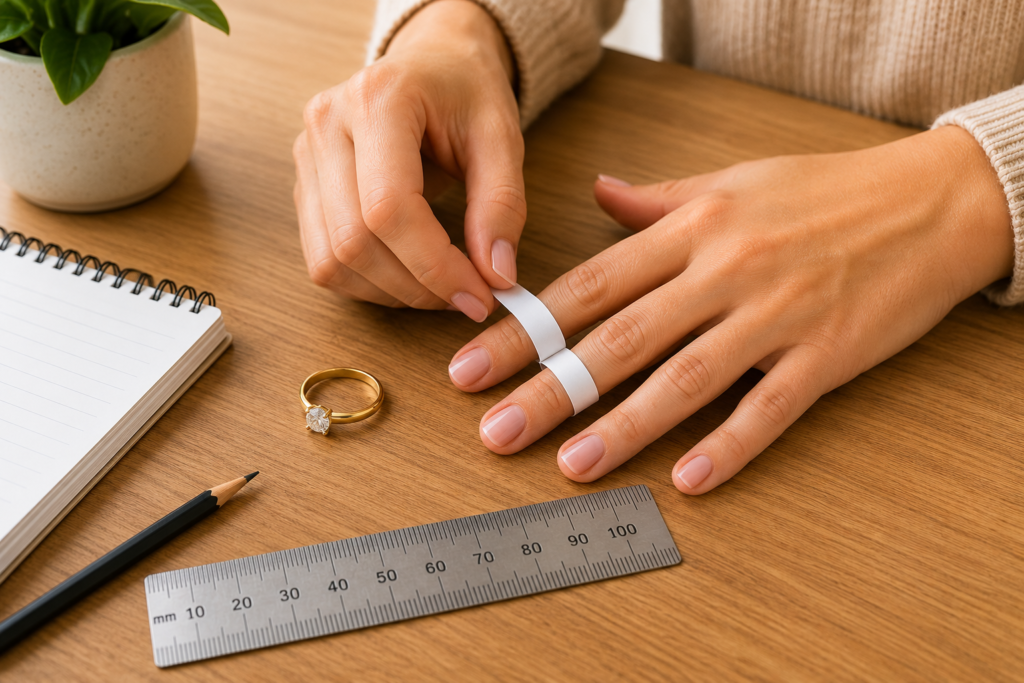
Buying a ring online has never been easier. Whether you’re shopping for an engagement ring, a wedding band, or a stylish everyday accessory, thousands of beautiful designs are just a few clicks away. But there’s one common problem many shoppers face: ordering the wrong ring size.
A ring that’s too tight can be uncomfortable and difficult to remove, while one that’s too loose may slip off and get lost. Fortunately, you don’t need professional tools to find your ring size. With a few simple household items and careful measurements, you can determine your size accurately from the comfort of your home.
This guide explains two easy and reliable methods for measuring your ring size, along with expert tips to help you get the most accurate results before making your purchase.
Why Measuring Your Ring Size Matters
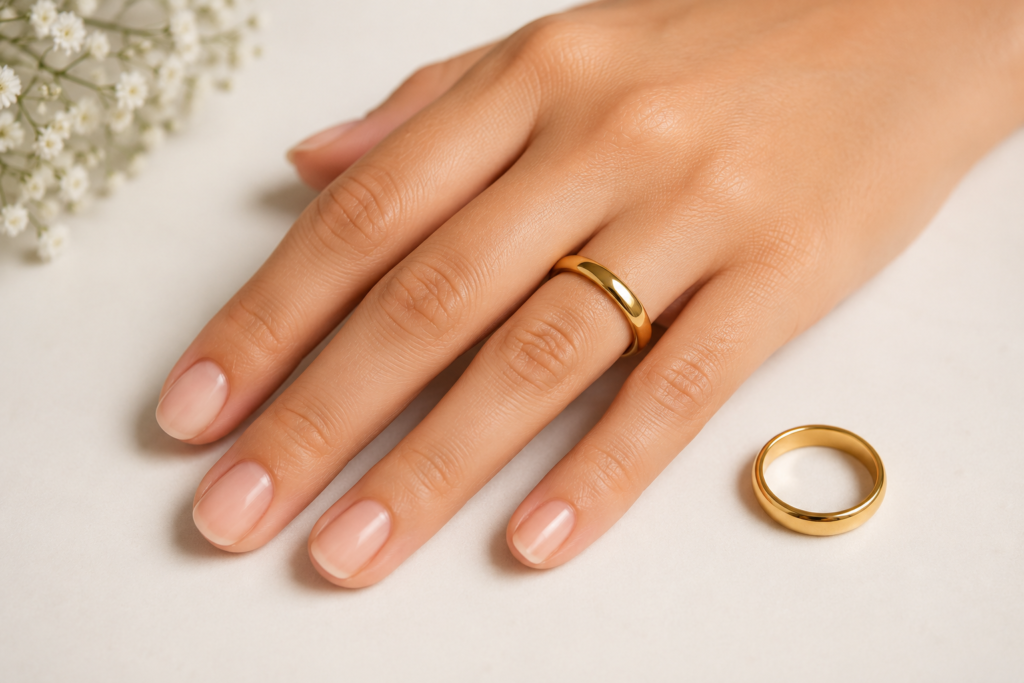
A properly fitting ring should slide comfortably over your knuckle while feeling secure enough that it won’t fall off during normal activities.
Taking a few extra minutes to measure correctly can help you:
- Avoid costly exchanges or returns.
- Shop online with greater confidence.
- Enjoy a more comfortable fit.
- Reduce the risk of losing your ring.
- Choose the correct size for special occasions or gifts.
Even small measurement errors can make a noticeable difference, so accuracy is important.
Method 1: The Paper or String Test
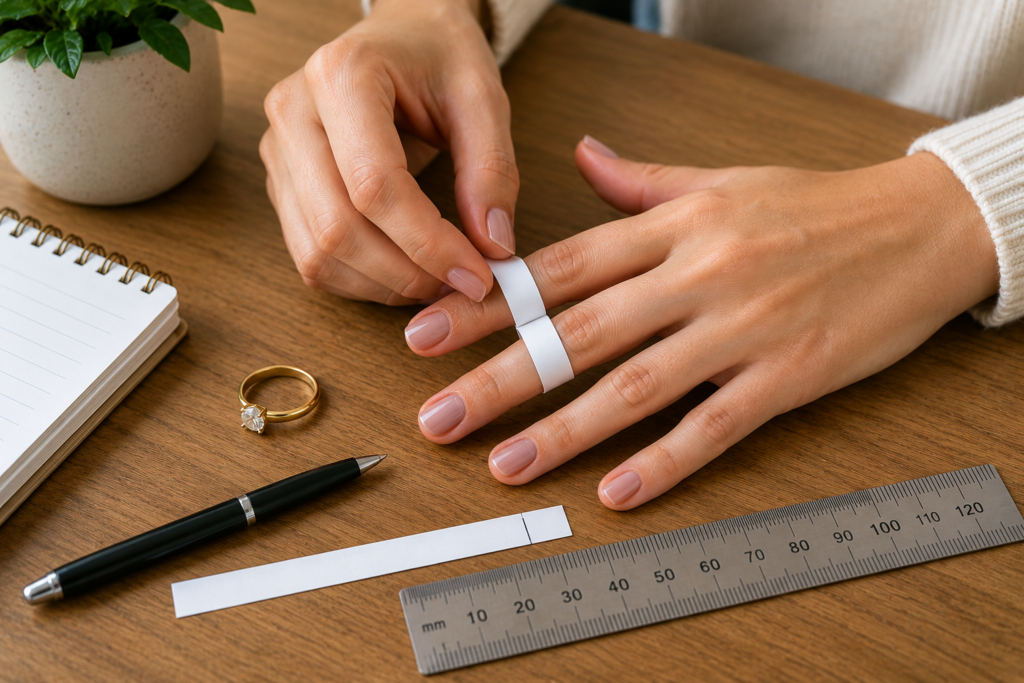
This is one of the easiest ways to estimate your ring size using common household materials.
What You’ll Need
- A thin strip of paper or a piece of non-stretch string
- A pen or pencil
- A ruler with millimeter (mm) markings
- A calculator (optional)
Step-by-Step Instructions
Step 1: Wrap the Paper Around Your Finger
Wrap the strip of paper or string around the finger where you’ll wear the ring.
Position it close to the base of your finger, where the ring will naturally sit.
Step 2: Make a Small Mark
Once the paper fits comfortably—not too tight and not too loose—mark the point where the two ends meet.
The paper should move over your knuckle with slight resistance.
Step 3: Measure the Length
Lay the paper flat and use a ruler to measure the distance between the starting point and the mark.
Record the measurement in millimeters.
This measurement represents the circumference of your finger.
Step 4: Compare With a Ring Size Chart
Use your circumference measurement to compare it with a standard US ring size chart.
If your measurement falls between two sizes, most jewelers recommend choosing the larger size for added comfort.
Tips for Better Accuracy
For the most reliable result:
- Repeat the process at least two or three times.
- Use a thin strip of paper rather than thick cardboard.
- Avoid pulling the paper too tightly.
- Keep the paper level around your finger.
Consistency is usually a good sign that you’ve measured correctly.
Method 2: Measure a Ring You Already Own
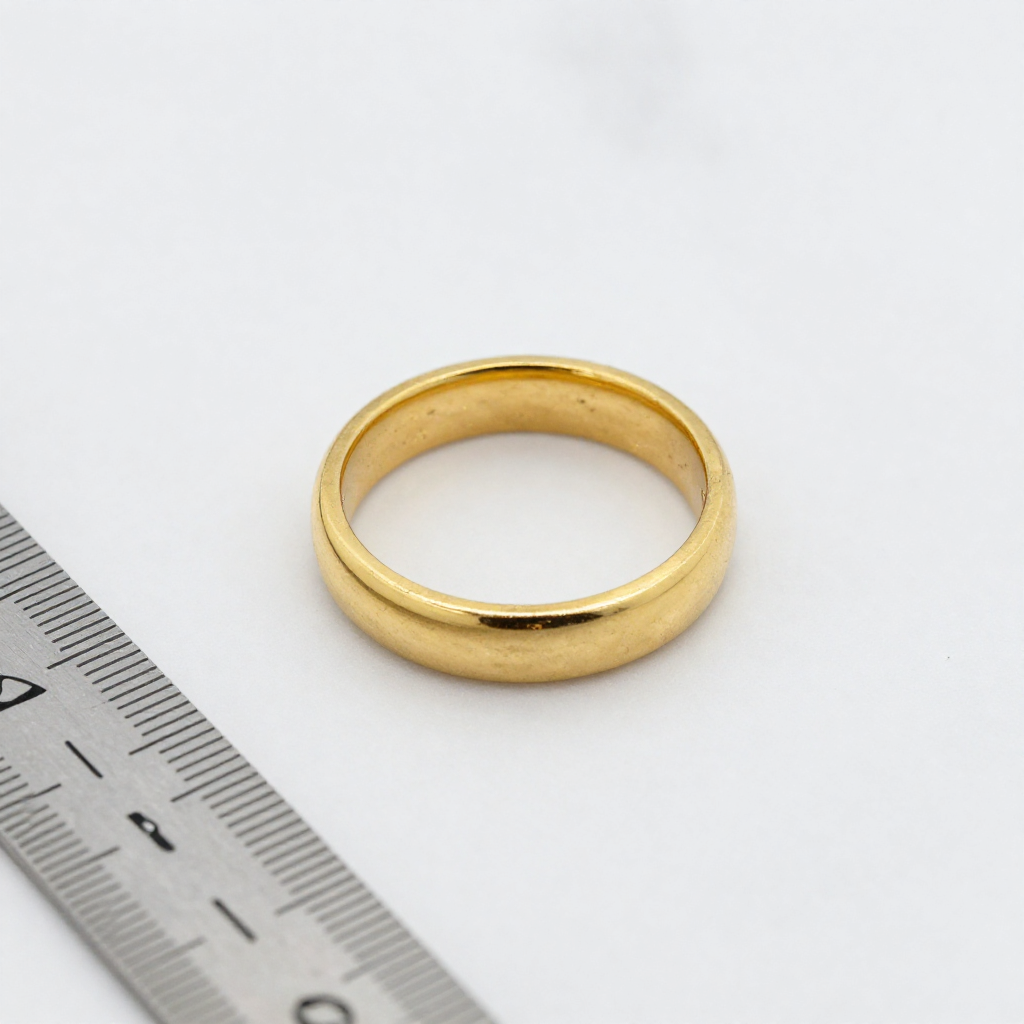
If you already have a ring that fits perfectly on the same finger, this method can be even more accurate.
What You’ll Need
- A ring that fits comfortably
- A ruler with millimeter markings
Step-by-Step Instructions
Step 1: Place the Ring on a Flat Surface
Lay the ring on a clean, flat table where it won’t move while you’re measuring.
Step 2: Measure the Inside Diameter
Measure the inside edge of the ring from one side directly across to the opposite side.
Only measure the inside diameter—not the outer edges.
Step 3: Record the Measurement
Write down the inside diameter in millimeters.
This number can then be compared to a standard US ring size chart.
Because you’re measuring an existing ring that already fits well, this method often provides excellent accuracy.
Golden Tips for the Perfect Measurement
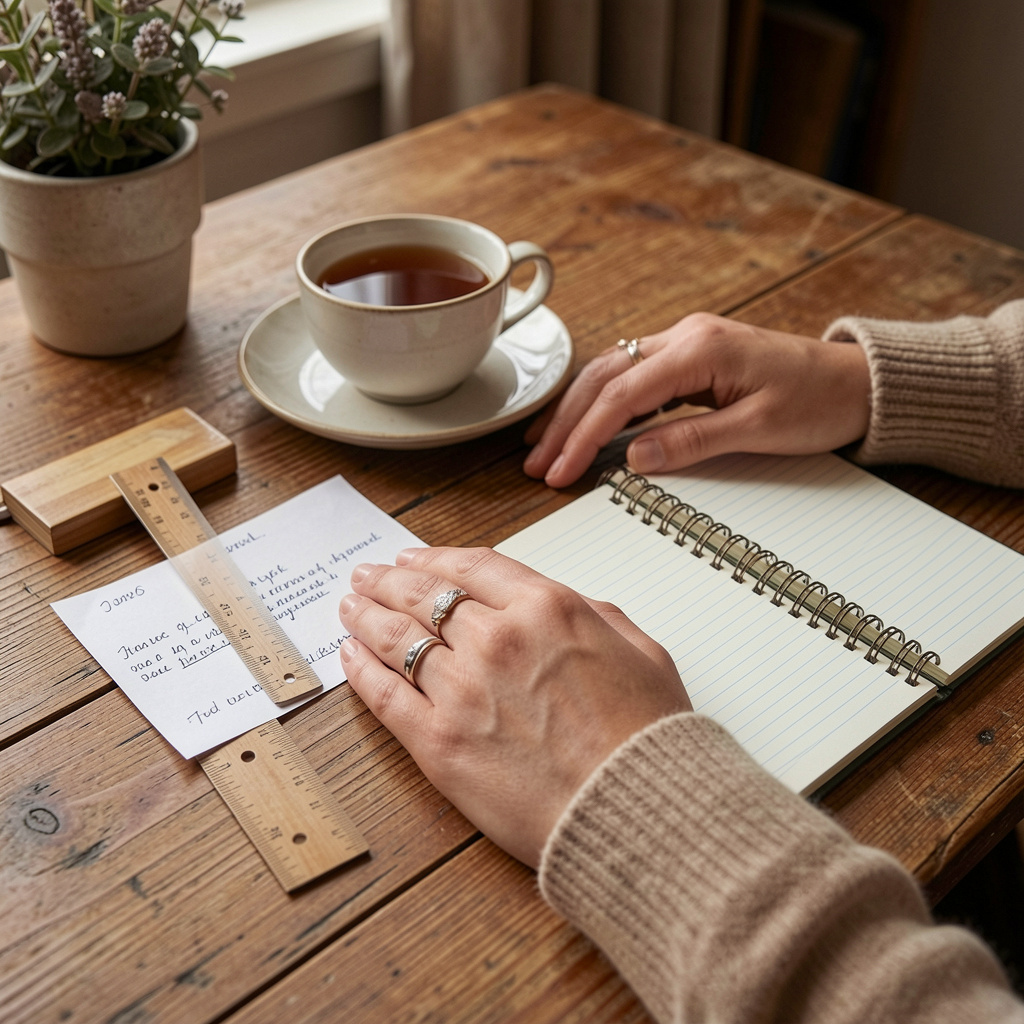
Your finger size isn’t always exactly the same throughout the day.
Several factors can cause small changes, so timing your measurement correctly makes a difference.
Measure at the End of the Day
Most people’s fingers are slightly larger during the evening.
Measuring later in the day often provides a more comfortable everyday fit.
Avoid Measuring Cold Fingers
Cold weather causes fingers to shrink temporarily.
If your hands feel cold, warm them naturally before measuring.
Don’t Measure After Intense Exercise
Physical activity can temporarily increase finger size due to swelling.
Wait until your body has returned to its normal temperature.
Consider Your Knuckles
Some people have knuckles that are wider than the base of the finger.
If that’s true for you, make sure the ring can comfortably slide over your knuckle while still fitting securely afterward.
Measure More Than Once
One measurement isn’t always enough.
Taking two or three measurements on different days helps confirm your size and reduces the chance of mistakes.
Simple US Ring Size Conversion Chart
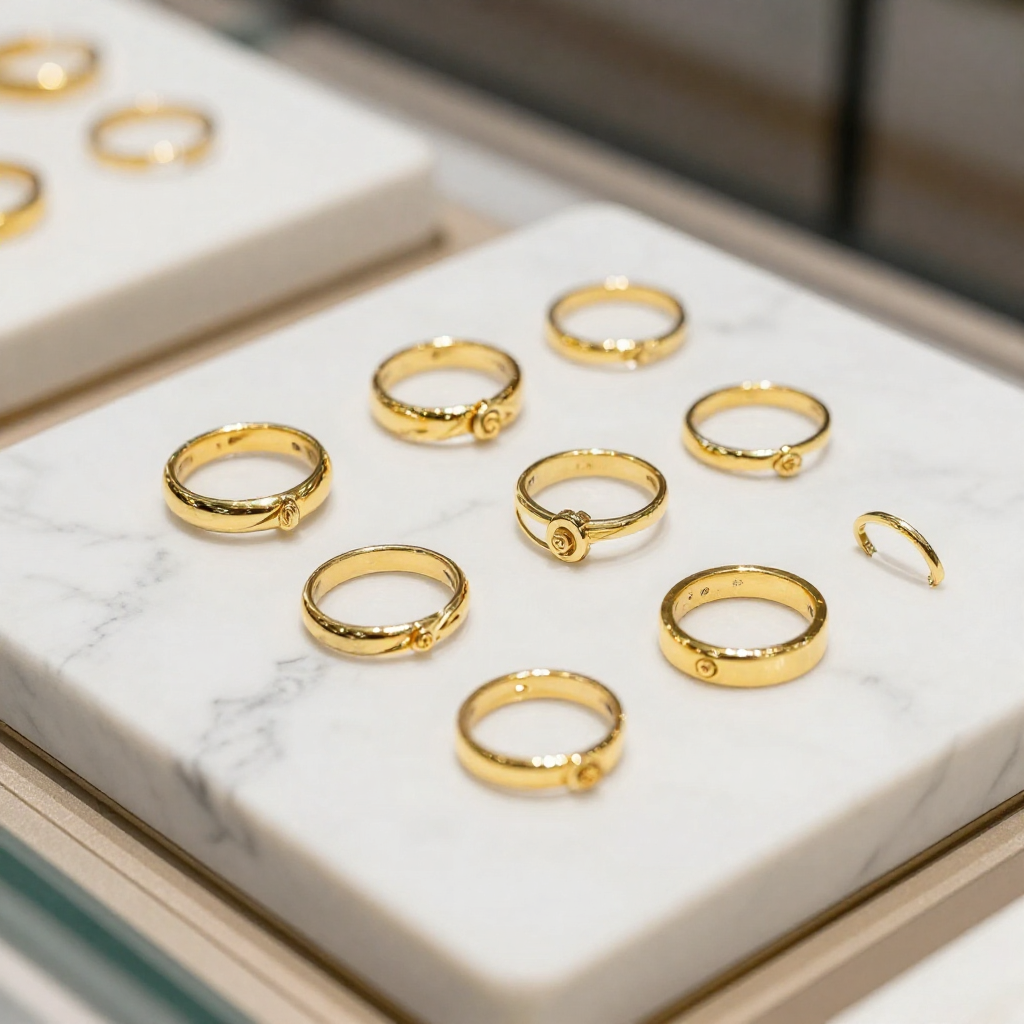
The chart below provides a basic reference for common US ring sizes.
| Inside Diameter (mm) | Finger Circumference (mm) | US Ring Size |
|---|---|---|
| 16.5 mm | 52.0 mm | Size 6 |
| 17.3 mm | 54.5 mm | Size 7 |
| 18.1 mm | 57.0 mm | Size 8 |
| 18.9 mm | 59.5 mm | Size 9 |
| 19.8 mm | 62.1 mm | Size 10 |
| 20.6 mm | 64.6 mm | Size 11 |
| 21.4 mm | 67.2 mm | Size 12 |
Keep in mind that some jewelry brands may have slight variations. Always check the retailer’s sizing guide if one is available.
Common Ring Sizing Mistakes
Avoiding these common mistakes can improve the accuracy of your measurements.
- Pulling the paper or string too tightly.
- Measuring over swollen fingers.
- Using stretchy string or elastic materials.
- Forgetting to account for large knuckles.
- Measuring only once.
- Using a ruler without millimeter markings.
Small details can make a significant difference when choosing a ring size.
When Should You Get Professionally Measured?
While home methods work well for most people, professional sizing may be worth considering if you’re purchasing:
- An expensive engagement ring.
- A custom-made ring.
- A ring that cannot be resized easily.
- A ring with a wide band, which may require a slightly larger size.
Professional jewelers use specialized tools that provide highly precise measurements.
Final Thoughts
Finding your ring size at home is easier than many people think. With nothing more than a strip of paper, a ruler, or a ring you already own, you can get a reliable measurement in just a few minutes.
Remember that finger size naturally changes throughout the day, so taking multiple measurements under comfortable conditions will usually produce the most accurate result. Paying attention to details like temperature, knuckle size, and proper measuring technique can make all the difference.
Before placing your next jewelry order, take the time to measure twice and compare your results with a standard US ring size chart. A few extra minutes of preparation can help you avoid unnecessary returns and ensure your new ring fits comfortably from the moment you put it on.
You Might Also Like
- Anklet Sizing Guide and Measurement: How to Measure and Choose the Perfect Fit
- Jewelry Condition Reports and Certifications Resale Value: Why Documentation Matters in the Secondary Market
- How to Measure Your Wrist for Bracelet Size: The Complete Guide to Link Bracelets and Chains