Brooches and pins are small accessories that can change the whole feel of an outfit. A single piece can add interest to a plain jacket, brighten a scarf, or give a cardigan a more finished look. The trick is not to follow one strict rule, but to choose a placement, size and combination that suits both the clothing and the occasion.
A quick note on words: “brooch” and “pin” overlap a lot. In everyday use, a brooch is often a larger, more decorative piece, while a pin tends to be smaller and simpler, but the terms are used loosely and this guide treats them together.
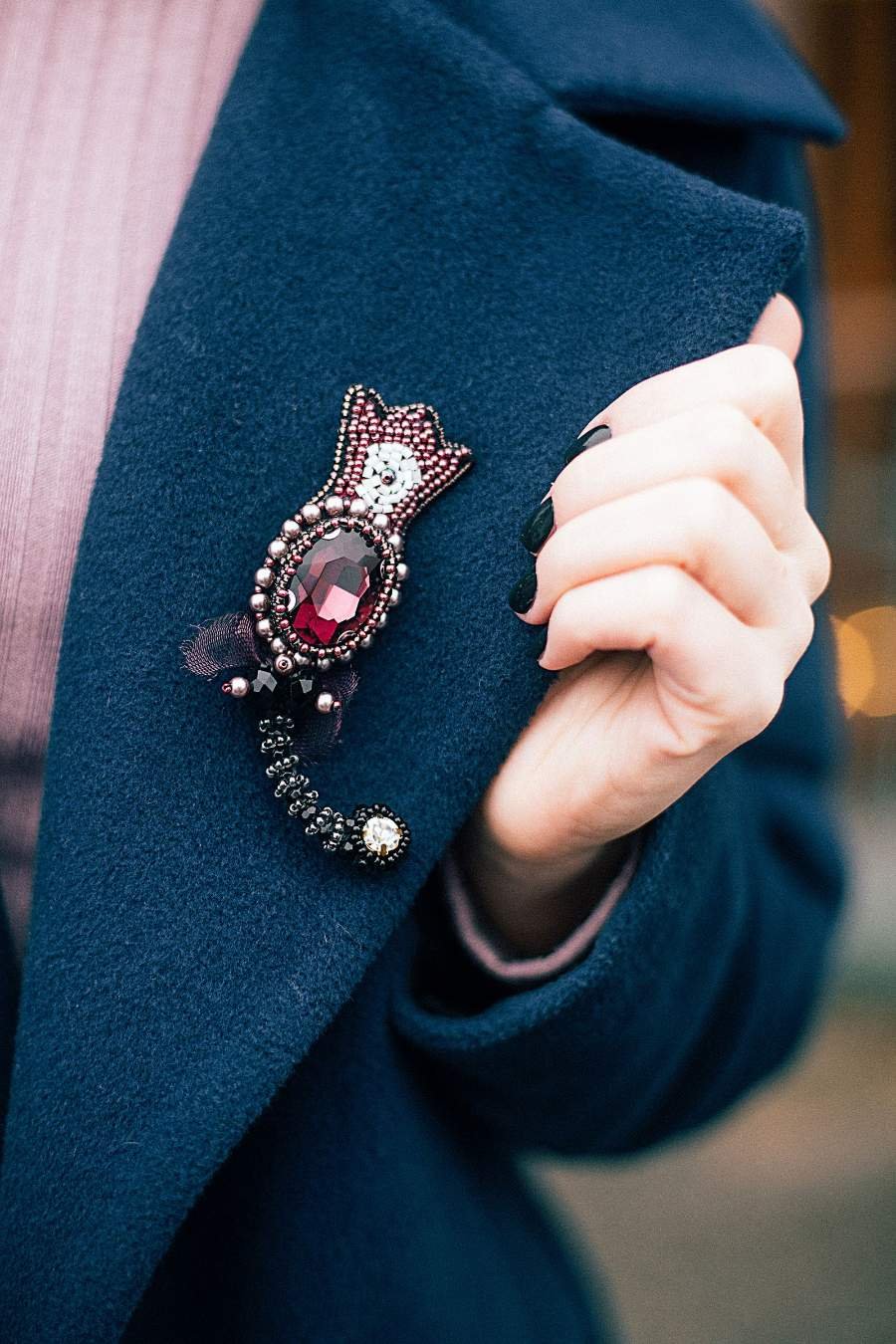
Where to Wear a Brooch or Pin
There is no single correct place for a brooch. Different placements create different effects, and the best choice often depends on the shape of the garment and how much attention you want the accessory to draw.
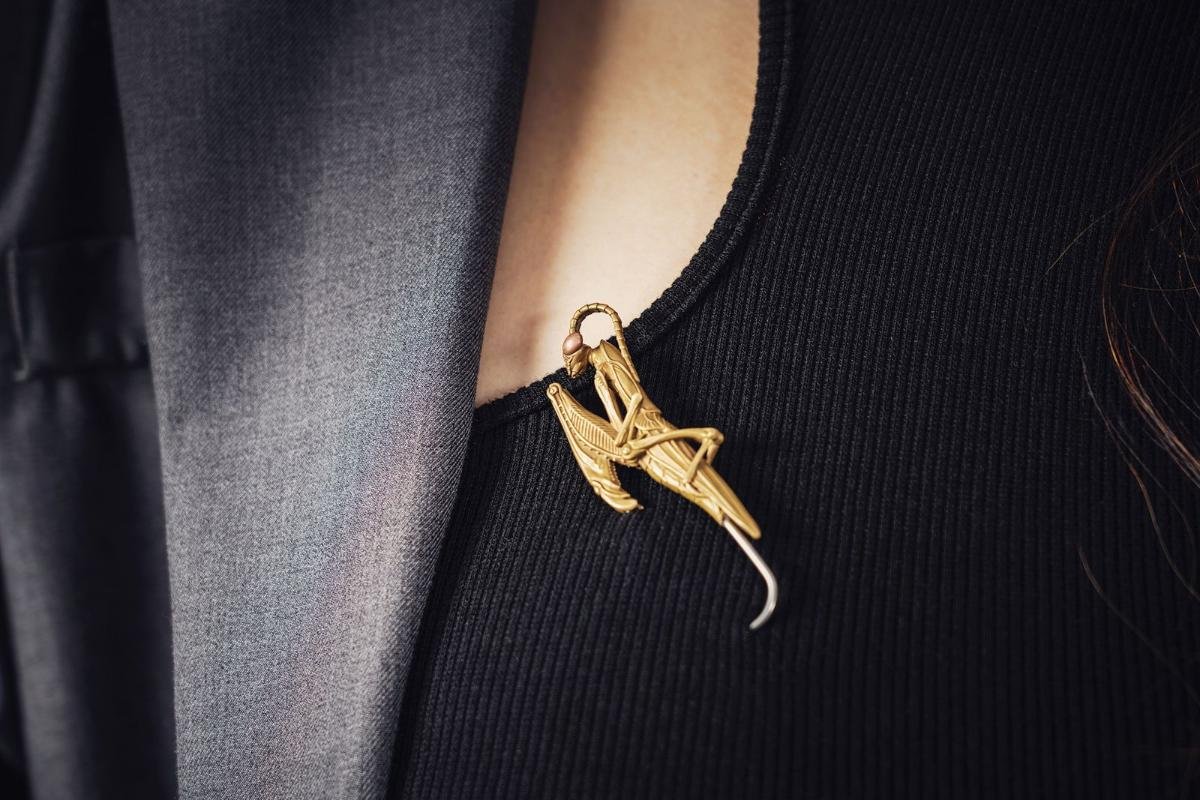
On a jacket or blazer lapel
The lapel is one of the easiest places to start. A brooch on the upper part of a lapel becomes part of the outfit without competing with the whole garment. A floral or geometric brooch can add personality to a plain blazer, while a smaller pin creates a quieter detail. For balance, avoid placing a very large brooch directly over other bulky details such as big buttons or heavy embellishments.
On a collar
A brooch can work on a shirt, blouse, coat or other structured collar. A small pin near the collar point makes a neat, understated accent, while a larger piece can suit a wider collar when the rest of the outfit is simple. Be mindful of very thin fabrics, because a heavy piece can pull on delicate material and leave visible marks.
On a scarf
On a scarf, a brooch can be decorative and, depending on the fabric and construction, help hold part of the scarf in place. Place it where it does not create excessive tension. Silk and other lightweight materials deserve particular care, so test the fastening on a hidden area if you are unsure how the fabric will react.
On a hat
A brooch can add an unexpected detail to a hat with a fairly simple shape. Keep the size in proportion: a large statement piece may suit a structured hat, while a small pin is better for a lighter or smaller design. Make sure the fastening is secure and does not change how the hat sits.
On a bag
A brooch can personalize a fabric bag or tote, which is handy when an outfit already has plenty of detail and you want the jewelry away from the neckline. Consider the thickness of the fabric first, and whether the pin could catch on other objects. A piece that suits a sturdy fabric may not suit a thin textile.
On a cardigan
Cardigans offer several options: near the upper chest, close to the neckline, or slightly toward the shoulder. Because knitwear can stretch or snag, take extra care with heavier brooches. A pin back or brooch stabilizer can help spread some of the weight, depending on the garment, but test the approach on a hidden area first.
On a dress
A brooch works especially well on a simple dress with open space for the accessory to stand out. Try the upper chest, the shoulder area or near a neckline. On a patterned dress, a smaller brooch often gives a more balanced result than a large statement piece.
Matching Brooches to Outfits and Occasions
Brooch styling gets easier when you think about overall visual balance instead of matching every detail exactly.
Match the mood, not every color
A brooch does not have to be the same color as your clothes. Instead, ask whether its general character works with the outfit:
- A floral brooch can soften a structured outfit.
- A geometric piece can complement clean, simple clothing.
- A vintage-inspired brooch can add character to classic-looking pieces.
- A statement brooch can become the focal point of a simple outfit.
- Small pins can add subtle personality without dominating the look.
Matching metals exactly is not a requirement either. Mixing finishes can work when the combination looks intentional, though that is a matter of personal taste. Our guide to mixing metals has more ideas.
Consider the occasion
The same brooch can create different impressions depending on what it is worn with. For everyday outfits, a small pin or simple brooch adds interest without feeling formal. For work or more polished occasions, a restrained shape and moderate size are easier to fit into a structured outfit. For celebrations or evening events, a more decorative or statement-style brooch can be the centerpiece of the look. There is no universal rule about what is “too much”; what matters is whether the piece suits the setting and the rest of the outfit.
Let one piece lead
If a brooch is especially eye-catching, it can help to keep the surrounding accessories fairly simple. Other pieces do not have to disappear; the brooch just needs enough visual room to be appreciated.
Brooch Styles and How to Use Them
Brooches come in many shapes, but thinking in broad style groups makes choosing easier.
- Floral brooches add softness and movement. They work naturally with dresses, blouses, cardigans, jackets and scarves, and range from subtle small flowers to bold statement blooms.
- Geometric brooches usually look cleaner and more structured. They suit simple tailoring, straight lines, plain fabrics and minimalist outfits, and can be a good choice when a floral piece would feel too ornate.
- Vintage-inspired brooches bring a nostalgic feeling to a modern outfit. They do not need to be worn with traditionally vintage clothing; pairing one with a simple contemporary outfit can make it stand out.
- Statement brooches are designed to attract attention, so give them room against a simple jacket, coat, dress or plain knit.
- Small pins are perhaps the easiest way to experiment. They can be worn alone or combined, and they work well for casual outfits.
If a piece is genuinely vintage or antique, rather than simply vintage-inspired, inspect the clasp and pin mechanism before wearing it. Our beginner’s guide to identifying vintage jewelry is a helpful starting point.
How to Group Several Brooches
Wearing multiple brooches can create a more personal look, but placement matters.
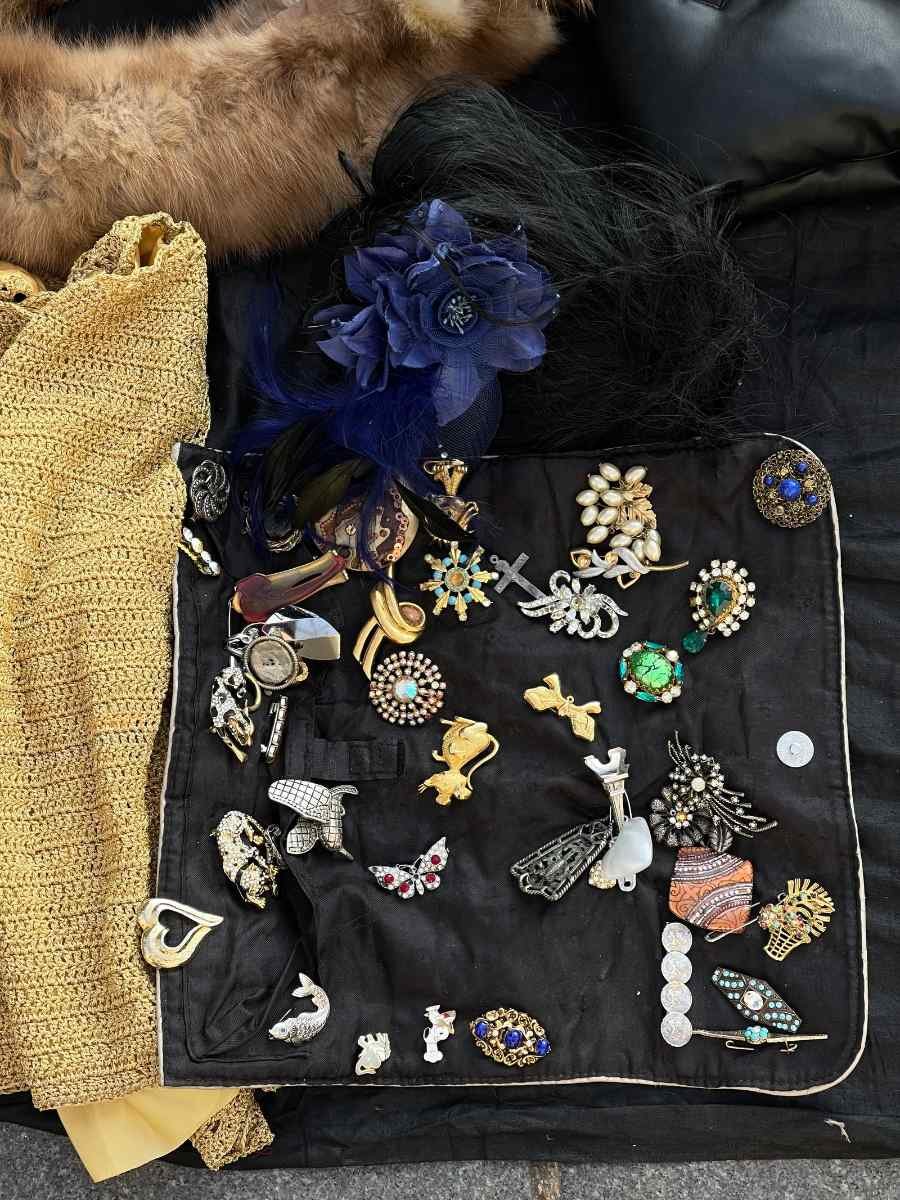
Create a visual cluster
Instead of scattering several brooches across an outfit, try grouping them in one general area. Three small pins can form a loose cluster on a lapel or upper chest. They do not have to be perfectly aligned, and a little variation in height and spacing makes the group feel more natural.
Mix sizes carefully
One larger brooch surrounded by two or three smaller pins creates a clear focal point, while several pieces of similar size give a more uniform look. Avoid adding pieces just because there is empty space; once the group feels complete, another pin can make it look crowded.
Mix styles with a connection
Different brooches do not need to match, but a shared element helps tie them together:
- Similar colors
- Related shapes
- Similar metal finishes
- A shared theme
- A similar visual scale
How to Fasten a Brooch Without Damaging Fabric
A beautiful brooch can still be a problem if it pulls, stretches, snags or punctures the material. A simple routine helps:
- Check the fabric. Notice its thickness, weave or knit, and overall delicacy.
- Check the brooch. Make sure the pin and clasp work properly and have no sharp or damaged parts.
- Choose a suitable position. Avoid placing a heavy brooch where the fabric is already under tension.
- Insert the pin carefully. Do not force it through tightly woven or delicate material.
- Close the catch completely. Confirm the pin is secure before you move around.
- Check the fabric from the front. Look for pulling, puckering, stretching or visible holes.
- Reposition if needed. If the fabric looks stressed, pick another spot or a lighter accessory.
Heavy pins can stretch or snag delicate fabrics such as knits, silk and thin materials. For these, a pin back or brooch stabilizer can help support the accessory and reduce strain in general terms. Test any approach on a hidden area first.
Be especially careful with vintage and antique brooches
Older brooches may have fragile clasps, worn pin mechanisms or delicate construction. Before wearing one, check that the clasp closes securely and that the pin does not look loose or damaged. If you have any doubt, have the piece checked by a qualified jeweler before attaching it to clothing.
Brooch Styling Ideas at a Glance
| Outfit | Suggested placement | Styling idea |
|---|---|---|
| Blazer or jacket | Lapel | Use one medium or statement brooch as the focal point |
| Button-up shirt | Collar or upper chest | Try a small geometric or floral pin |
| Scarf | Near a fold or gathered section | Use a brooch to add decoration while helping hold the scarf |
| Hat | Side or band area | Match the scale of the brooch to the hat |
| Fabric bag | Front or upper section | Use a sturdy pin only if the material can support it |
| Cardigan | Upper chest or shoulder | Choose a lighter piece to reduce stretching |
| Simple dress | Shoulder or neckline area | Let the brooch provide the main decorative detail |
| Coat | Lapel or upper chest | A larger brooch can work well against a simple coat |
These are starting points, not strict rules. Fabric, garment construction, brooch weight and personal taste all matter.
Caring for and Storing Brooches
Good styling starts with keeping the jewelry in good condition.
Store pieces separately
Brooches can scratch or tangle with other jewelry, especially when they have exposed pins, textured surfaces or delicate details. Individual compartments or soft storage areas keep pieces from rubbing together, and the pin should always be closed before storing. Our jewelry storage guide has more organizing ideas.
Keep moisture and chemicals away
Avoid unnecessary contact with perfume, hairspray, cleaning products and other substances that can affect some jewelry materials or finishes. If a brooch gets dirty, use a cleaning approach suited to its specific materials rather than assuming every piece can be treated the same way.
Inspect before wearing
A quick check can prevent problems later. Look at the pin, the clasp, any hinges or moving parts, the decorative elements, and any signs of looseness or damage. If something looks unstable, set the piece aside until it can be inspected properly.
Keep pins away from children and pets
Brooch pins are sharp and can cause injuries if handled carelessly. Keep closed brooches and loose pins stored securely away from children and pets, especially when several are in use or a fastening part has come loose.
Frequently Asked Questions
Where is the best place to wear a brooch?
The lapel is one of the easiest starting points, but brooches also work on collars, scarves, hats, bags, cardigans and dresses. The best spot depends on the garment, fabric, brooch size and overall outfit.
Can I wear more than one brooch at a time?
Yes. Several small brooches can be grouped in a cluster, or one larger piece can be paired with smaller pins. A shared color, shape, finish or theme helps the combination feel intentional.
Can a brooch damage delicate clothing?
Yes. Heavy pins can stretch or snag delicate fabrics such as knits, silk and thin materials. A pin back or brooch stabilizer may help in some situations, but test the approach on a hidden area first.
How do I know if a vintage brooch is safe to wear?
Check the clasp and pin mechanism before wearing it. Vintage and antique pieces may have fragile or worn fastenings, so a qualified jeweler can inspect the brooch if its condition is uncertain.
Should my brooch match my jewelry exactly?
No. Exact matching is a matter of taste, not a requirement. Similar colors, finishes, shapes or general style can create coordination without making every accessory identical.
How should I store brooches?
Store them individually, or in a way that stops pins and surfaces from rubbing against other jewelry. Close the clasps before storage and keep brooches and loose pins away from children and pets.
Final Thoughts
Brooches and pins are wonderfully flexible accessories because they can change the character of an outfit without a full wardrobe change. A small pin can add a quiet detail to a cardigan, while a larger brooch can become the focal point of a simple jacket or dress.
The most useful styling rule is to consider the whole outfit: scale, fabric, placement, occasion, and how much attention you want the accessory to receive. Practicality matters too. Check the fastening, protect delicate fabrics, be cautious with heavy pieces, and inspect vintage or antique brooches before wearing them. When the pin is secure and the fabric can support it, a brooch is a simple, personal way to make an outfit feel more distinctive.
