
Master the art of necklace layering with simple styling tips that help you create elegant, balanced, and personalized jewelry combinations.
Introduction: Why Necklace Layering Has Become a Modern Style Essential
Necklace layering has evolved from a fashion trend into a timeless styling technique. Instead of relying on a single statement necklace, today’s jewelry lovers embrace the freedom of combining multiple chains, pendants, and textures to create a look that feels unique and personal.
One of the biggest advantages of layering is its versatility. A carefully styled necklace stack can elevate a simple white T-shirt, complement an elegant evening dress, or add personality to a business-casual outfit. Whether your style is minimalist, bohemian, classic, or contemporary, layering allows you to express your individuality without purchasing an entirely new jewelry collection.
The best part? You probably already own everything you need to get started. By mixing pieces you already have in your jewelry box, you can create countless fresh combinations that feel intentional, stylish, and effortlessly chic.
This guide will walk you through the essential principles of necklace layering, helping you build beautiful combinations that are comfortable to wear and easy to recreate every day.
Start with the Right Foundation: Mix Different Lengths
Every successful necklace stack begins with proper spacing.
The most common mistake beginners make is choosing chains that are nearly the same length. This causes necklaces to overlap, compete for attention, and become tangled throughout the day.
Instead, create clear visual separation by combining different chain lengths.
A simple layering formula might include:
- 14–16 inches: Choker or collar necklace
- 18 inches: Classic everyday chain
- 20–22 inches: Pendant necklace
- 24 inches or longer: Long chain or statement piece
Each necklace should have enough room to stand out while naturally guiding the eye from top to bottom.
Besides creating a balanced look, varying lengths also helps reduce tangling as the necklaces move independently.
A helpful way to picture it: your necklaces should fall like a staircase, not a pile. If you are wearing only two, keep their lengths at least two inches apart so each one stays visible.
Mix Textures and Chain Thickness
Layering isn’t only about length—it also depends on contrast.
Combining necklaces with different textures and thicknesses creates depth and visual interest without making your outfit feel cluttered.
Beautiful combinations include:
- A delicate cable chain with a chunky paperclip chain
- A fine snake chain paired with a textured rope chain
- A minimalist chain layered beneath a bold statement necklace
- A polished chain mixed with hammered or twisted links
- A minimalist pendant with a strand of small pearls
- A simple gold chain paired with a beaded necklace
Think of each necklace as contributing a different texture to the overall composition.
If every chain has the same thickness and style, the finished look may appear flat. Mixing slim, medium, and slightly bolder designs creates a sophisticated, curated effect.
As a general rule, let one necklace act as the focal point while the others provide subtle support.
Breaking the Myth: You Can Mix Gold and Silver
For years, fashion advice suggested that gold and silver should never be worn together.
Today, that rule has largely disappeared.
Mixing metals is now considered one of the easiest ways to create a contemporary, fashion-forward look. When done intentionally, combining yellow gold, white gold, sterling silver, or even rose gold adds dimension and versatility.
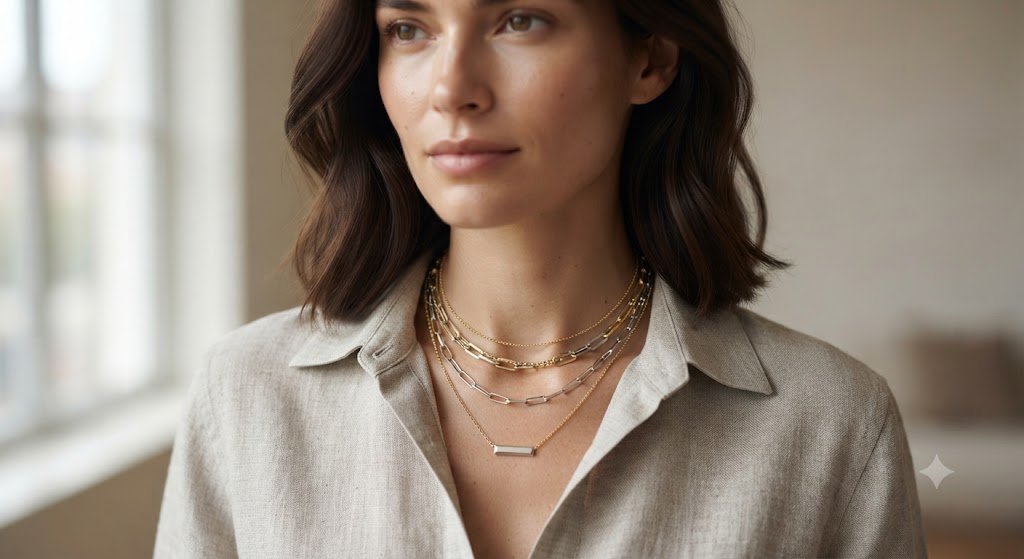
How to Make Mixed Metals Look Intentional
Follow these simple guidelines:
- Repeat each metal at least twice within your outfit.
- Keep the overall style consistent, even if the metals differ.
- Choose similar chain styles for a cohesive appearance.
- Balance warm and cool tones evenly rather than allowing one metal to dominate completely.
For example, you might wear:
- A gold pendant necklace
- A silver chain
- Gold hoop earrings
- A silver bracelet
Repeating both metals throughout your accessories creates harmony and makes the combination appear carefully planned instead of accidental.
Modern jewelry collections often include mixed-metal pieces specifically designed to bridge different finishes together.
Let Pendants Take Center Stage
Pendant necklaces naturally become the focal point of most layered looks.
To create balance, surround a statement pendant with simpler chains that enhance rather than compete with it.
For example:
- A short, delicate chain close to the neckline
- A medium-length pendant necklace
- A longer minimalist chain underneath
This arrangement allows the pendant to attract attention while maintaining an elegant layered effect.
If your pendant features a colorful gemstone or intricate design, avoid adding multiple decorative necklaces nearby. Too many competing details can overwhelm the overall composition.
Instead, let the pendant tell the story while the surrounding chains provide subtle texture.
Your focal piece does not have to be a pendant. A birthstone necklace, a vintage medallion, an engraved charm or a noticeably bolder chain can all play the same role, as long as the other layers stay quieter.
Adjust for Comfort with Chain Extenders
Comfort is just as important as appearance.
Even beautifully layered necklaces can become frustrating if they constantly twist, overlap, or sit awkwardly.
Chain extenders are one of the easiest solutions.
These inexpensive accessories allow you to adjust the length of individual necklaces by one or more inches, making it easier to create proper spacing between each layer.
Benefits of chain extenders include:
- Greater flexibility when styling different outfits
- Reduced tangling
- Better balance between necklaces
- More comfortable everyday wear
Some necklace clasps also include built-in extension links, allowing you to customize your stack without purchasing additional accessories.
Taking a few moments to adjust your layers before leaving home can make a noticeable difference throughout the day.
Step-by-Step Guide to Building the Perfect Necklace Stack
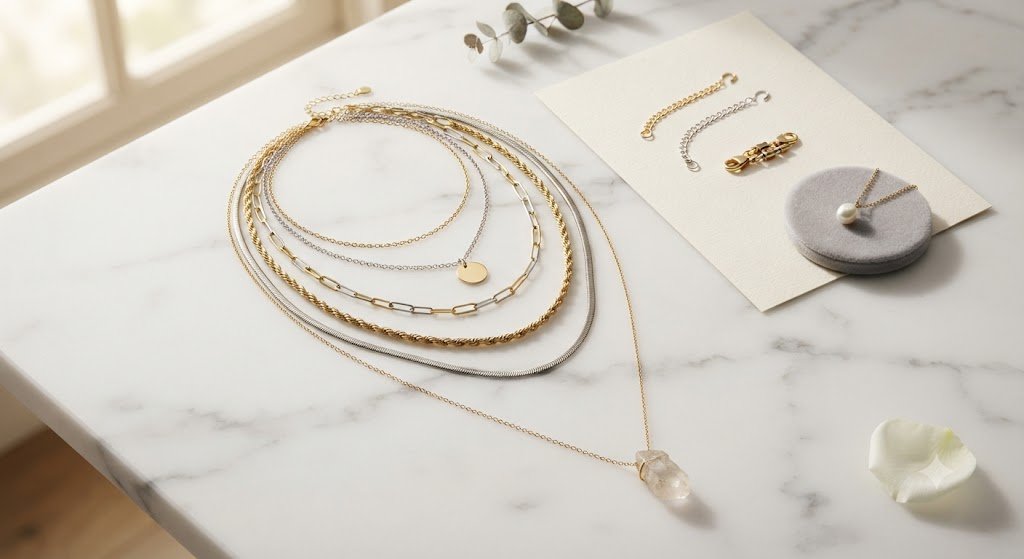
If you’re unsure where to begin, follow this simple process:
Step 1: Choose Your Base Necklace
Start with the shortest necklace, such as a choker or a delicate chain.
Step 2: Add a Mid-Length Piece
Select a necklace that sits a few inches lower than the first to create natural separation.
Step 3: Introduce a Focal Point
Choose one pendant or statement necklace that becomes the centerpiece of the stack.
Step 4: Finish with a Longer Chain
Complete the look with a longer necklace that elongates the overall silhouette.
Step 5: Check the Balance
Before heading out, stand in front of a mirror and make sure:
- Each necklace remains visible.
- The chains don’t overlap excessively.
- The focal pendant sits naturally.
- The overall look feels balanced rather than crowded.
Remember that sometimes three necklaces create a more elegant appearance than five.
Balancing Necklaces with the Rest of Your Look
Balanced jewelry layering isn’t about wearing as many accessories as possible.
It’s about allowing each piece to complement the others.
If you’re wearing several layered necklaces, consider choosing smaller earrings and simpler rings.
If your bracelet stack is bold, you may not need multiple statement necklaces at the same time.
Whenever you’re getting dressed, ask yourself:
- Which piece should stand out first?
- Does one area look too busy?
- Would removing one accessory improve the overall look?
Often, less creates a stronger impression.
How to Stack Rings
Ring stacking is one of the simplest ways to add personality to your everyday style.
The goal isn’t filling every finger with jewelry. Instead, it’s creating a balanced look that feels effortless.
Wear Thin Bands Together
Slim bands are perfect for stacking because they stay comfortable while adding subtle detail.
Mixing different finishes creates even more visual interest.
Try combining:
- Smooth polished bands
- Twisted rings
- Textured bands
- Thin gemstone rings
The small differences make each ring stand out without looking overwhelming.
Try Midi Rings
Midi rings sit above your main knuckle instead of at the base of your finger.
These delicate pieces add another layer without making your hands look crowded.
They’re especially beautiful when paired with classic stacking bands.
Create a Focal Finger
Instead of decorating every finger equally, choose one finger to become the highlight.
For example:
- Stack three rings on your index finger.
- Wear a single band on your ring finger.
- Leave your pinky finger bare.
This simple technique creates balance and gives your hands a more polished appearance.
Easy Jewelry Layering Ideas
Jewelry layering ideas don’t have to be complicated.
If you’re just getting started, try one of these combinations.
Everyday Minimalist
- 14-inch choker
- 16-inch chain
- 18-inch pendant
- Two slim rings
- One delicate chain bracelet
Modern Chic
- Paperclip chain
- Coin pendant
- Rope chain
- Stacked gold bands
- Slim bangle with a tennis bracelet
Casual Weekend
- Long pendant necklace
- Delicate chain
- Mixed-metal rings
- Beaded bracelet
- Thin cuff bracelet
These combinations provide a great starting point while giving you plenty of room to add your own personal style.
Protect Your Layered Necklaces After Wearing Them
A beautiful necklace stack deserves proper care once the day is over.
One of the easiest ways to create frustrating knots is tossing layered necklaces into a drawer while they’re still intertwined.
Instead, remove each necklace individually before storing it.
To keep your collection organized:
- Hang necklaces separately whenever possible.
- Store each chain in its own compartment.
- Fasten clasps before putting necklaces away.
- Use velvet-lined organizers or soft fabric pouches to prevent scratches and tangles.
- Clean them regularly with a soft microfiber cloth.
- Remove layered necklaces before swimming, exercising, or sleeping.
If you’d like more detailed storage ideas, be sure to read our guide on The Ultimate Jewelry Storage Guide: How to Organize Your Collection, where you’ll find practical tips for protecting every type of jewelry and preventing tangles over the long term.
Good storage habits not only save time but also help preserve your jewelry’s beauty for years to come.
Common Layering Mistakes to Avoid
Even experienced jewelry lovers occasionally make styling mistakes.
Avoid these common pitfalls:
- Choosing necklaces that are all the same length.
- Wearing too many statement pieces at once.
- Ignoring chain thickness and texture.
- Being afraid to mix gold and silver.
- Forgetting to adjust necklace lengths for different necklines.
- Storing layered necklaces together after wearing them.
- Ignoring comfort, such as chains that twist or pull throughout the day.
- Adding extra layers just because you own them.
Keeping your combinations simple and intentional almost always produces the most sophisticated results.
Final Thoughts
Layering works best when it stays flexible. The principles above give you a starting point, but the right stack depends on your neckline, your outfit and which pieces you actually enjoy wearing. Start with two or three necklaces, change one thing at a time, and stop adding as soon as the look begins to feel crowded.
If a combination keeps tangling or feels uncomfortable, it is not working, however good it looks in the mirror. Treat each stack as an experiment, keep the pieces you reach for most, and let the rest wait for a different outfit.
You Might Also Like
- The History and Meaning of Cameo Jewelry: A Timeless Art Worn Through the Ages
- How to Wear Pearl Jewelry in a Modern Way: Breaking Old Myths
- Jewelry for Formal Events: How to Choose the Perfect Pieces Without Overdoing It
