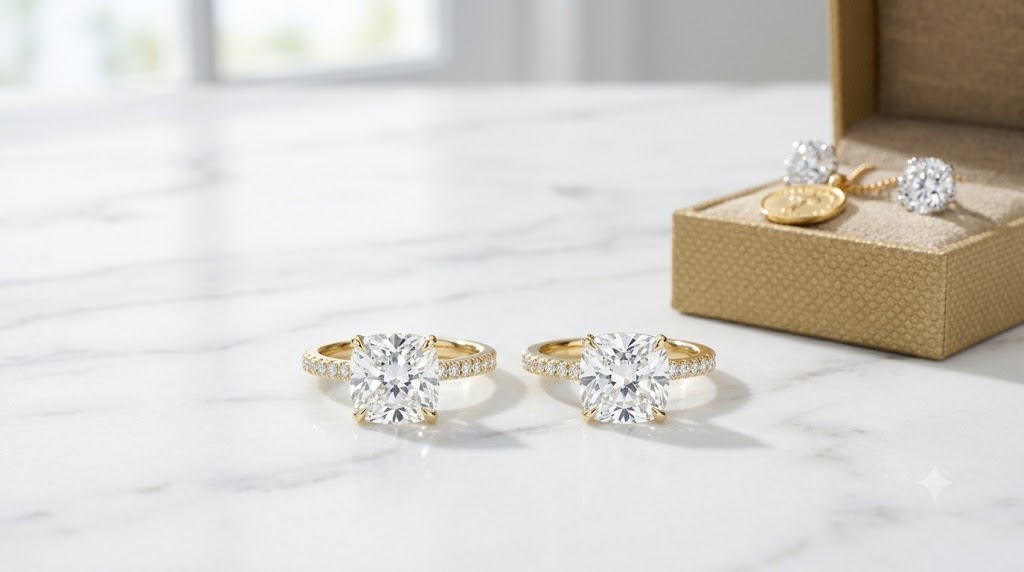
Lab-grown vs. natural diamonds is one of the biggest questions facing jewelry buyers today. Whether you’re shopping for an engagement ring, diamond earrings, or a timeless necklace, you’ve probably noticed that lab-grown diamonds have become much more common in recent years. But are they actually real diamonds?
The answer is yes. Lab-grown diamonds aren’t fake, synthetic-looking stones or cheap imitations. They have the same chemical composition, crystal structure, and sparkle as natural diamonds. The biggest difference isn’t how they look—it’s how they were created.
If you’re trying to decide between a lab-grown and a natural diamond, understanding what sets them apart will help you choose the option that best matches your budget, values, and personal style.
What Are Lab-Grown Diamonds?
Lab-grown diamonds are real diamonds created in highly controlled laboratory environments instead of forming naturally underground.
Using advanced technology, scientists recreate the same heat and pressure that occur deep within the Earth. The result is a genuine diamond with the same physical, chemical, and optical properties as a mined diamond.
Like natural diamonds, lab-grown diamonds are graded using the internationally recognized 4 Cs:
- Cut
- Color
- Clarity
- Carat Weight
They’re also incredibly durable, making them an excellent choice for engagement rings and jewelry designed for everyday wear.
The Biggest Difference Is Their Origin
The difference between lab-grown and natural diamonds comes down to one thing: where they come from.
Natural Diamonds
Natural diamonds formed billions of years ago beneath the Earth’s surface.
Over an incredibly long period, carbon atoms were exposed to intense heat and pressure, gradually transforming into diamonds. Later, volcanic activity carried these gemstones closer to the surface, where they were eventually discovered and mined.
Because this process takes billions of years, every natural diamond carries a unique geological history that many buyers find meaningful.
Their rarity is one of the main reasons natural diamonds have remained highly valued for generations.
Lab-Grown Diamonds
Lab-grown diamonds are created using modern technology that reproduces the same natural conditions inside specialized facilities.
The two most common production methods are:
HPHT (High Pressure High Temperature)
This process mimics the extreme pressure and heat responsible for forming natural diamonds deep underground.
CVD (Chemical Vapor Deposition)
This method grows a diamond crystal layer by layer inside a chamber filled with carbon-rich gases.
Instead of taking billions of years, both techniques can produce a finished diamond in just a few weeks.
Although their origin is different, the end result is still a real diamond.
Can You Tell the Difference?
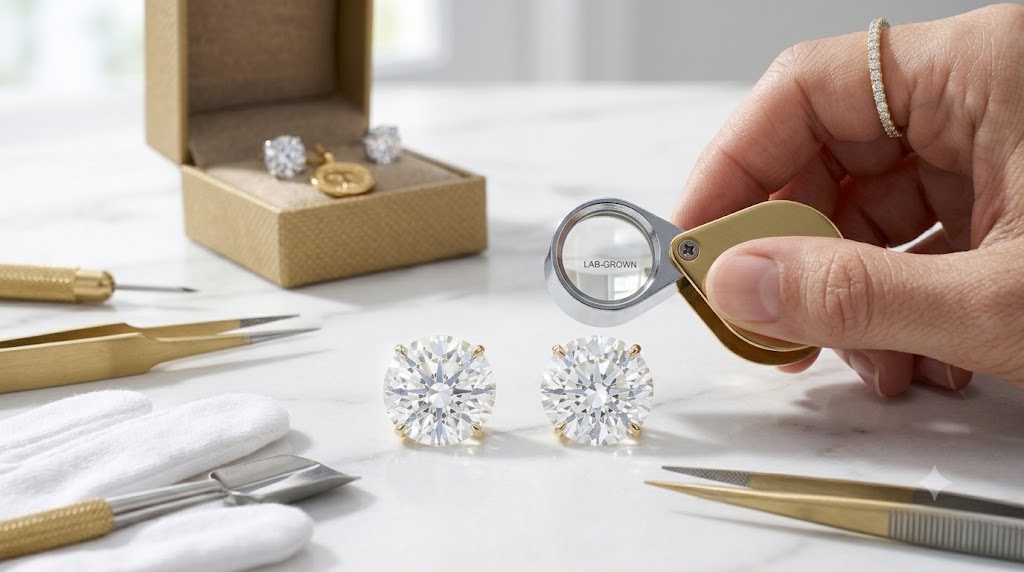
Lab-grown diamonds look virtually identical to natural diamonds.
In fact, even experienced jewelers usually can’t tell them apart simply by looking. Specialized laboratory equipment is often required to determine whether a diamond was mined or created in a laboratory.
Both types are graded using the same international standards based on the 4 Cs:
- Cut
- Color
- Clarity
- Carat Weight
That means a well-cut lab-grown diamond can display exactly the same brilliance, fire, and sparkle as a natural diamond of similar quality.
For the average buyer, appearance alone isn’t enough to tell the difference.
Price and Long-Term Value
Diamond prices are often the biggest deciding factor for shoppers.
Because lab-grown diamonds can be produced more efficiently, they typically cost 30% to 70% less than natural diamonds with similar specifications.
That price difference gives buyers more flexibility to:
- Choose a larger diamond.
- Upgrade to better clarity.
- Select a higher color grade.
- Stay within their original budget.
For couples shopping for engagement rings, this can make a noticeable difference.
What About Resale Value?
Natural diamonds have traditionally held stronger resale value than lab-grown diamonds.
However, resale prices depend on many different factors, including market demand, certification, quality, and the retailer’s policies.
As production technology continues to improve, lab-grown diamonds have become more affordable, which may influence their resale value over time.
Still, most people purchase diamonds to celebrate important moments rather than as financial investments.
Sustainability and Ethical Considerations
Choosing a diamond isn’t only about appearance or price. Many buyers also consider environmental and ethical factors.
Lab-grown diamonds appeal to consumers who want an alternative to traditional mining.
Some potential advantages include:
- No large-scale mining.
- Less land disturbance.
- Greater supply chain transparency.
- Controlled production environments.
That said, sustainability isn’t always a simple comparison.
Producing diamonds in a laboratory requires significant energy, and the environmental impact depends on how that electricity is generated.
At the same time, many natural diamond companies have invested heavily in responsible sourcing, environmental programs, and ethical mining practices.
For shoppers who value sustainability, researching individual brands is just as important as choosing between natural and lab-grown diamonds.
Quick Comparison
| Feature | Lab-Grown Diamond | Natural Diamond |
|---|---|---|
| Origin | Created in a laboratory | Formed naturally inside the Earth |
| Composition | Pure carbon | Pure carbon |
| Crystal Structure | Identical | Identical |
| Appearance | Visually identical | Visually identical |
| Creation Time | Several weeks | Billions of years |
| Price | Usually 30–70% lower | Generally higher |
| Resale Value | Often lower | Typically stronger |
| Grading | Uses the same 4 Cs | Uses the same 4 Cs |
Limited Natural Supply
Natural diamonds are finite geological resources.
No new technology can accelerate the Earth’s natural formation process, which contributes to their perceived scarcity.
While mining continues in various parts of the world, economically viable deposits are limited, and production from many established mines has gradually declined over time.
This limited supply helps support long-term demand for desirable natural diamonds, particularly those with exceptional characteristics.
A More Established Secondary Market
Natural diamonds have been bought, sold, traded, and auctioned for generations.
As a result, there is a more developed resale ecosystem that includes:
- Professional jewelry buyers
- Auction houses
- Estate jewelry dealers
- Luxury retailers
- Specialized diamond traders
This established infrastructure generally makes it easier to resell high-quality natural diamonds, although resale prices still vary depending on market conditions, certification, cut quality, and overall demand.
Technology Increases Supply
Unlike natural diamonds, laboratory production can expand as manufacturing technology improves.
As production becomes more efficient:
- Manufacturing costs decrease.
- Supply increases.
- Retail prices often decline.
- New generations of production equipment improve output.
This continuous technological progress has contributed to falling retail prices for many lab-grown diamonds over recent years.
Resale Challenges
The resale market for lab-grown diamonds is still developing.
Because newly produced stones continue to become more affordable, previously purchased lab-grown diamonds may face increased competition from brand-new stones available at lower prices.
As a result, resale values have generally experienced greater downward pressure compared to natural diamonds.
This does not mean lab-grown diamonds lack value—they simply serve a different purpose for many buyers.
Initial Cost vs. Future Return
One of the most important financial considerations is the relationship between purchase price and potential resale value.
A lower purchase price does not necessarily translate into a better investment, just as a higher purchase price does not guarantee stronger resale performance.
The key is understanding what you’re paying for and what you expect in return.
Market Comparison
| Factor | Natural Diamonds | Lab-Grown Diamonds |
|---|---|---|
| Initial purchase price | Generally higher | Generally lower |
| Supply | Naturally limited | Technology-driven and expandable |
| Secondary market | Well established | Still developing |
| Typical resale demand | Generally stronger | More limited |
| Long-term price stability | Often more stable, depending on quality | More affected by production trends |
| Best suited for | Long-term ownership, heirloom potential, collectors | Budget-conscious buyers, larger stones, everyday luxury |
This comparison illustrates that each option serves different priorities rather than one being universally superior.
Liquidity and Market Expectations
Liquidity refers to how easily an asset can be sold at a fair market price.
Natural diamonds typically benefit from:
- Greater recognition among buyers.
- More established resale channels.
- Higher demand for certified quality stones.
- Stronger interest from estate jewelry markets.
Lab-grown diamonds can certainly be resold, but market demand and pricing may vary more significantly because of the continuing decline in production costs and expanding supply.
Neither category should be viewed as a highly liquid financial asset comparable to publicly traded securities.
The Modern Consumer’s Perspective
Today’s jewelry buyers often have goals that extend beyond investment.
Many consumers prioritize:
- Larger carat sizes within their budget.
- Excellent visual appearance.
- Ethical sourcing considerations.
- Environmental priorities.
- Personal enjoyment over resale value.
For these buyers, lab-grown diamonds offer an attractive opportunity to maximize beauty while reducing upfront cost.
Others place greater importance on rarity, tradition, heirloom value, or the possibility of stronger long-term resale demand, making natural diamonds a better fit for their priorities.
The best choice depends on the purpose of the purchase rather than a single definition of value.
When a Natural Diamond May Be the Better Choice
A natural diamond may be worth considering if you:
- Value long-term ownership.
- Appreciate geological rarity.
- Plan to create a family heirloom.
- Prefer a more established resale market.
- Are purchasing a high-quality certified stone.
Which Diamond Is Right for You?
Choosing the right diamond depends entirely on what matters most to you.
A lab-grown diamond may be the better choice if you:
- Want a larger diamond for your budget.
- Prefer modern technology.
- Value affordability.
- Like laboratory-created gemstones.
A natural diamond may be a better fit if you:
- Appreciate rarity.
- Value billions of years of natural history.
- Prefer traditionally mined gemstones.
- Consider resale value important.
Neither option is objectively better. Both offer exceptional durability, beauty, and brilliance when purchased from a trusted jeweler.
Common Myths About Lab-Grown Diamonds
Lab-grown diamond myths often create confusion, especially for first-time buyers.
Myth: Lab-grown diamonds are fake.
Reality: They’re genuine diamonds with the same chemical, physical, and optical properties as natural diamonds.
Myth: They don’t sparkle as much.
Reality: Sparkle depends primarily on the quality of the cut, not where the diamond was formed.
Myth: They’re the same as cubic zirconia.
Reality: Cubic zirconia is a diamond simulant made from a completely different material. Lab-grown diamonds are real diamonds.
Myth: Natural diamonds are always better.
Reality: The best choice depends on your priorities. Some buyers value rarity, while others focus on affordability, sustainability, or getting a larger stone for the same budget.
Final Thoughts
Lab-grown vs. natural diamonds isn’t about choosing a “better” diamond—it’s about choosing the one that best fits your lifestyle and priorities. Both options are genuine diamonds that offer outstanding durability, brilliance, and beauty. The main differences come down to their origin, price, rarity, and long-term resale potential.
If you appreciate the history and uniqueness of a gemstone formed deep within the Earth over billions of years, a natural diamond may be the perfect choice. If you want to maximize your budget while enjoying the same sparkle and durability, a lab-grown diamond is an excellent alternative. Either way, selecting a high-quality diamond from a reputable jeweler ensures you’ll own a piece that can be treasured for years to come.
You Might Also Like
- Gold Karats Investment Value Comparison: Is 24K, 18K, or 14K Gold the Best Choice?
- Natural vs. Lab-Grown Diamonds: Investment Value and Resale Impact Explained
- Fine Jewelry vs. Fashion Jewelry: How to Know What You’re Buying