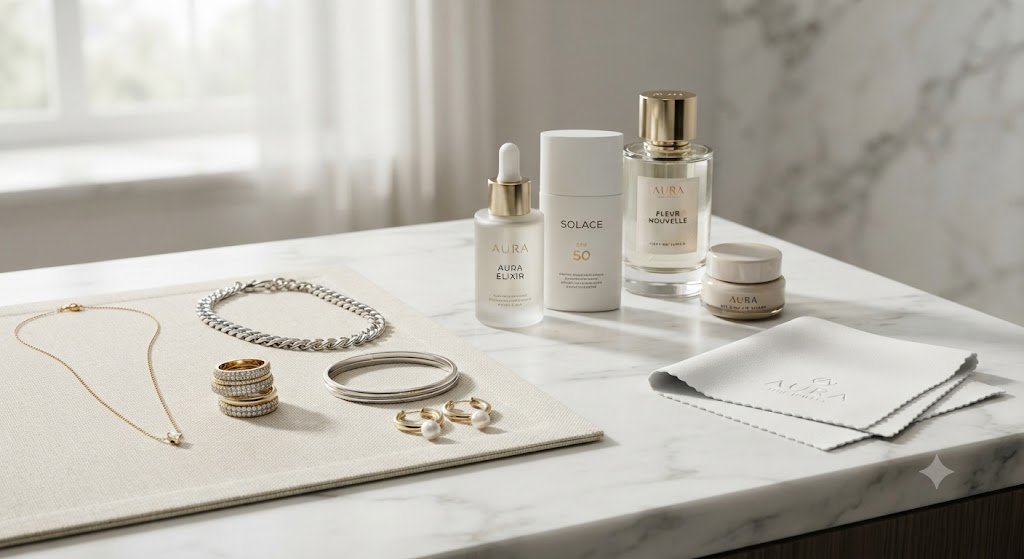
Daily jewelry is designed to be worn and enjoyed, but even the highest-quality pieces are not immune to everyday wear. While scratches and accidental bumps are easy to notice, many of the biggest threats to your favorite accessories are practically invisible. Sweat, skincare products, perfumes, and household chemicals can gradually affect both precious metals and gemstones, often without obvious warning signs.
The good news is that protecting your jewelry doesn’t require expensive products or complicated routines. A few simple habits can significantly extend the life of your collection while helping each piece maintain its shine and beauty for years to come.
Why Everyday Exposure Matters
Jewelry is constantly exposed to substances that most people never think about. Throughout the day, your rings, necklaces, bracelets, and earrings come into contact with moisture, natural skin oils, cosmetics, cleaning products, and environmental pollutants.
Individually, these exposures may seem harmless. Over time, however, they can create buildup, dull polished surfaces, discolor certain metals, and even weaken delicate settings.
Understanding these everyday risks is the first step toward preventing unnecessary damage.
How Sweat Affects Jewelry
Sweating is completely natural, but it can have surprising effects on jewelry.
Human sweat contains water, salts, and naturally occurring acids. The exact composition varies from person to person, but its slightly acidic pH can slowly react with certain metal alloys.
Gold Alloys
Pure 24K gold is highly resistant to corrosion, but most everyday jewelry is made from alloys such as 10K or 14K gold. These contain additional metals—including copper, silver, nickel, or zinc—to improve strength and durability.
Over time, frequent exposure to sweat can affect these alloy metals, sometimes leading to:
- Slight discoloration
- Loss of shine
- Surface tarnishing
- Faster wear on gold-plated finishes
This doesn’t mean quality gold jewelry is poor—it simply means that regular maintenance helps preserve its appearance.
Sterling Silver
Sterling silver naturally reacts with sulfur compounds in the air, but sweat can accelerate the tarnishing process.
If you wear silver jewelry during workouts, hot weather, or other activities that cause heavy perspiration, you may notice darkening appearing sooner than expected.
Fortunately, gentle cleaning usually restores its original brightness.
The Invisible Beauty Routine That Can Damage Jewelry
Many jewelry owners avoid obvious hazards but overlook everyday beauty products.
Unfortunately, lotions and cosmetics often leave behind residues that build up over time.
Common Products That Can Affect Jewelry
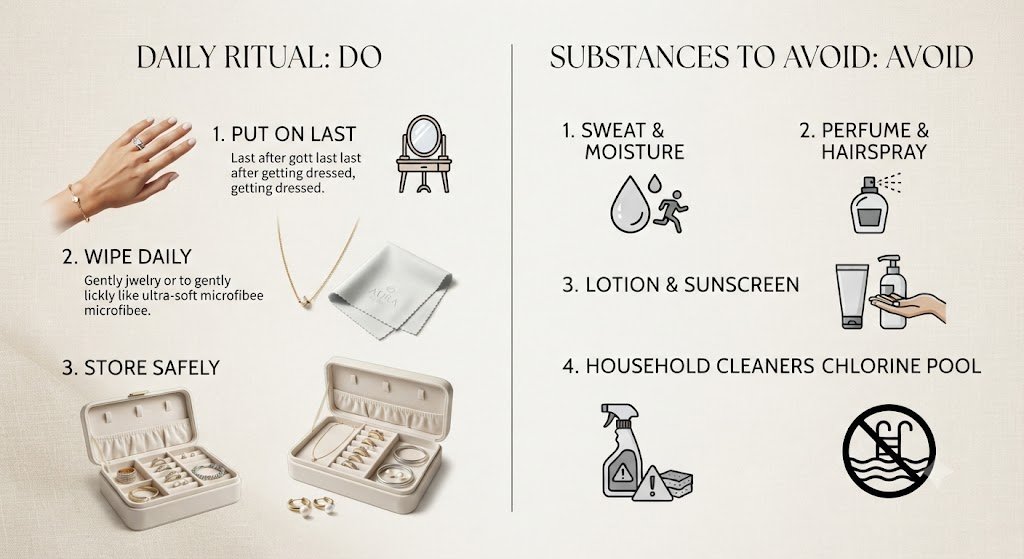
Avoid exposing your jewelry to excessive amounts of:
- Sunscreen
- Body lotion
- Face moisturizer
- Perfume
- Hair spray
- Makeup setting spray
- Self-tanning products
These products don’t usually cause immediate damage, but they create a thin film that reduces sparkle and attracts dirt.
For gemstones, residue can block light from entering the stone properly, making even diamonds appear dull.
Household Chemicals Can Be Even More Harmful
Beauty products are only part of the story.
Many household cleaning agents contain ingredients that are much harsher than people realize.
Be especially careful with:
- Bleach
- Chlorine
- Ammonia-based cleaners
- Strong bathroom cleaners
- Oven cleaners
- Degreasers
- Pool chemicals
These substances can weaken certain metal alloys, damage protective finishes, and even affect some gemstones over time.
If you’re cleaning your home, it’s always safest to remove your jewelry beforehand.
The Golden Rule: “Last On, First Off”
Professional jewelers often recommend one simple habit above all others:
Last On
Put your jewelry on only after you have finished applying:
- Moisturizer
- Sunscreen
- Makeup
- Perfume
- Hair products
This minimizes direct contact with chemical ingredients.
First Off
At the end of the day, remove your jewelry before:
- Showering
- Washing dishes
- Exercising
- Swimming
- Applying nighttime skincare
This single routine dramatically reduces unnecessary exposure and helps preserve both metals and gemstones.
A Simple Daily Cleaning Habit
You don’t need to deep-clean your jewelry every day.
Instead, spend less than a minute caring for it after wearing it.
Daily Care Routine
After removing your jewelry:
- Use a clean, dry microfiber cloth.
- Gently wipe every surface.
- Pay extra attention to the underside of rings and pendant settings.
- Store each piece in a clean, dry place.
This removes fingerprints, skin oils, moisture, and cosmetic residue before they have time to build up.
Small daily habits often make a much bigger difference than occasional intensive cleaning.
Jewelry Care Checklist: What to Avoid
To help your jewelry last longer, avoid these common mistakes whenever possible:
- Wearing jewelry while exercising heavily
- Swimming in chlorinated pools or hot tubs
- Applying perfume directly onto jewelry
- Wearing rings while cleaning with chemicals
- Leaving jewelry covered in lotion or sunscreen
- Storing pieces while still damp
- Using abrasive cleaning products
- Ignoring regular maintenance
None of these activities automatically ruin jewelry, but repeated exposure can shorten its lifespan.
Preventive Maintenance Saves Money
Many jewelry repairs are preventable.
Regular care helps reduce:
- Professional polishing
- Stone tightening
- Replating services
- Deep tarnish removal
- Surface refinishing
It also allows you to notice small problems—such as loose stones or worn prongs—before they become expensive repairs.
Think of jewelry maintenance the same way you think about maintaining a quality watch or leather shoes. A little attention today helps prevent larger problems tomorrow.
Does Every Type of Jewelry React the Same Way?
Not exactly.
Different materials respond differently to everyday exposure.
Gold
Solid gold is highly resistant to corrosion, although lower-karat alloys may lose some brightness over time if not cleaned regularly.
Sterling Silver
Silver tarnishes naturally and may require more frequent cleaning, especially in humid environments or after exposure to sweat.
Gold-Plated Jewelry
Gold-plated pieces have only a thin outer layer of gold, making them more vulnerable to friction, moisture, and chemicals. Gentle handling is especially important.
Gemstones
Many gemstones tolerate normal wear well, but porous stones—such as pearls, opals, and turquoise—require extra care because they can absorb moisture and chemicals more easily.
Knowing what your jewelry is made from allows you to choose the safest care routine.
Building Healthy Jewelry Habits
Protecting your jewelry doesn’t require perfection. It simply requires consistency.
Simple habits like removing rings before workouts, wiping pieces after wearing them, and storing them properly can dramatically extend their lifespan.
Over months and years, these small actions help preserve shine, reduce tarnish, and keep settings in better condition.
Sweat and skin chemistry are also common tarnish triggers — our guide on identifying why your jewelry is tarnishing breaks down the most common patterns and fixes.
Final Thoughts
Even beautifully crafted jewelry experiences natural wear over time, especially when exposed to sweat, cosmetics, and household chemicals. While these everyday substances may seem harmless, repeated exposure can gradually affect the appearance of precious metals and gemstones.
Fortunately, preventing damage is remarkably simple. Following the “last on, first off” rule, wiping your jewelry with a soft cloth after each use, and avoiding unnecessary contact with harsh chemicals can keep your favorite pieces looking their best for many years.
Think of jewelry care as a long-term investment rather than an occasional chore. A few minutes of attention today can preserve the beauty, durability, and sentimental value of your collection well into the future.
You Might Also Like
- Common Jewelry Care Mistakes You Need to Avoid
- How to Clean Sterling Silver Tarnish at Home: A Safe Step-by-Step Guide
- Sterling Silver Cleaning Methods Compared: Which One Should You Use?
