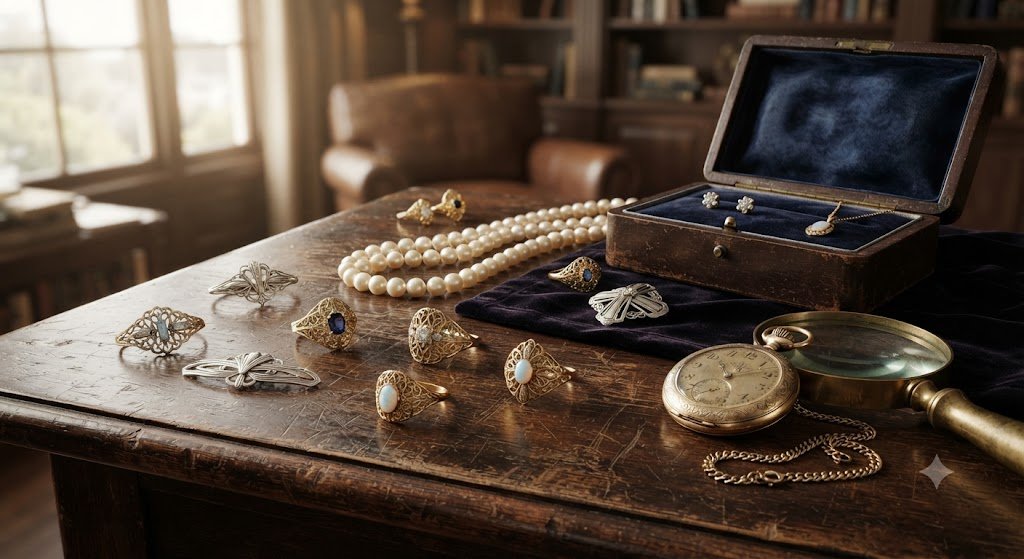
Vintage jewelry has a timeless appeal that continues to attract collectors, jewelry enthusiasts, and anyone who appreciates craftsmanship with a story behind it. Whether you’ve inherited a family heirloom, discovered an interesting piece at an estate sale, or found a beautiful ring in an antique shop, it’s natural to wonder if it has historical or financial value.
However, identifying vintage jewelry is about much more than simply guessing its age. Factors such as craftsmanship, materials, hallmarks, condition, and provenance all play important roles in determining whether a piece is truly valuable.
The good news is that you don’t need to be an expert to perform an initial evaluation. By learning a few basic techniques, you can better understand what you own while avoiding mistakes that could accidentally reduce its value.
What Makes Jewelry “Vintage”?
Many people assume that any old piece of jewelry is considered vintage, but that’s not always the case.
In general, vintage jewelry refers to pieces that are approximately 20 to 100 years old and reflect the styles, materials, and craftsmanship of the period in which they were made. Jewelry that is more than 100 years old is typically classified as antique jewelry.
There’s also costume jewelry, which is different from both vintage and antique fine jewelry. Costume pieces are usually made from non-precious metals, glass, acrylic, or synthetic stones rather than gold, platinum, or natural gemstones. Although some vintage costume jewelry can become highly collectible—especially pieces from well-known designers—its value is often based on rarity, design, and historical significance rather than the intrinsic value of its materials.
Understanding these categories is the first step toward making a more accurate assessment.
Start by Looking for Hallmarks
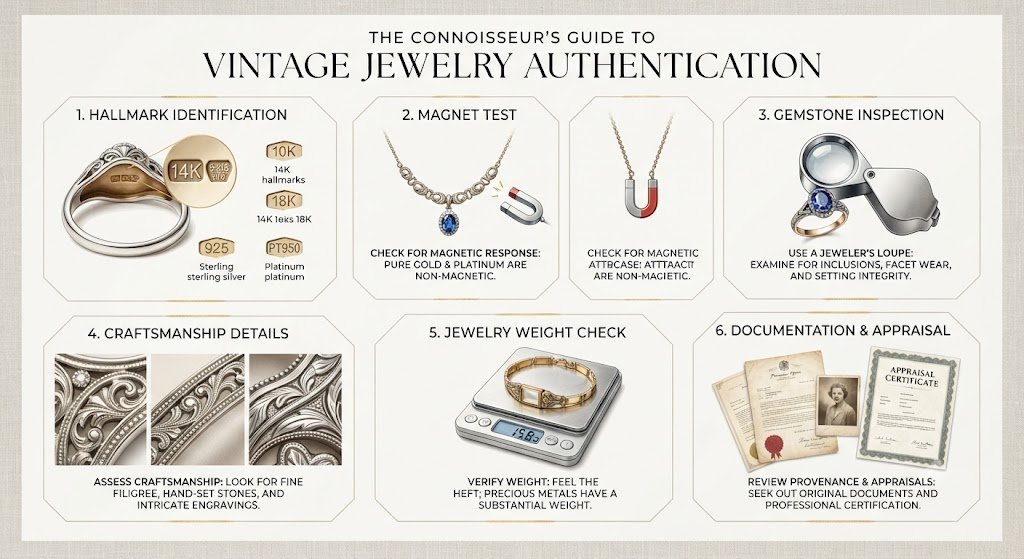
One of the easiest and most reliable ways to learn more about a jewelry piece is by searching for its hallmarks.
Hallmarks are tiny stamps applied by manufacturers that identify the metal’s purity, the maker, or sometimes the country of origin.
Use a jeweler’s loupe or a small magnifying glass with good lighting and carefully inspect hidden areas such as:
- Inside ring bands
- Necklace clasps
- Bracelet closures
- Pendant bails
- Earring backs or posts
Common purity marks include:
- 10K, 14K, 18K – Gold purity
- 375, 585, 750 – European gold fineness marks
- 925 or Sterling – Sterling silver
- PT950 or PLAT – Platinum
You may also discover a manufacturer’s logo, initials, or trademark. These markings can help identify the age, origin, and authenticity of a piece.
Don’t be discouraged if you can’t find a hallmark. Some older handcrafted pieces have worn stamps that are difficult to read, while others may never have been marked at all. Missing hallmarks don’t automatically mean a piece lacks value.
A simple jeweler’s loupe is an inexpensive tool, but it can reveal details that are impossible to see with the naked eye. Spending a few extra minutes examining these small markings often provides valuable clues before you consider professional testing.
Perform a Few Simple Quality Checks
You don’t need specialized equipment to perform a basic inspection at home. Several simple observations can help you distinguish quality jewelry from inexpensive fashion accessories.
The Magnet Test
One of the quickest tests involves using a small household magnet.
Gold, silver, and platinum are not magnetic, so genuine precious metals generally won’t be attracted to a magnet.
Hold the magnet close to the jewelry without forcing contact.
If the piece sticks firmly, it may contain iron or another ferrous metal commonly found in inexpensive jewelry.
However, remember that this is only a preliminary test. Some authentic jewelry contains small steel springs inside clasps or other mechanical parts, while certain inexpensive metals are also non-magnetic. The magnet test should never be used as the sole method of authentication.
Look for Signs of Wear
Years of normal use leave clues about a piece’s construction quality.
Carefully inspect areas that receive the most friction, including:
- The bottom of rings
- Bracelet edges
- Necklace clasps
- Pendant backs
- Earring posts
Solid precious metals usually wear evenly over time without revealing another color underneath.
If you notice:
- Peeling surfaces
- Flaking finishes
- Copper-colored metal beneath the surface
- Uneven plating
the jewelry is more likely to be gold-plated or costume jewelry rather than solid gold or silver.
Natural wear is expected on vintage jewelry, but high-quality materials tend to age much more gracefully than inexpensive plated pieces.
Weight and Construction Can Reveal Quality
Another detail beginners often overlook is how a piece feels in the hand.
Fine jewelry generally has a noticeable sense of substance because precious metals are naturally denser than inexpensive alloys.
Ask yourself:
- Does the jewelry feel solid?
- Is it heavier than expected?
- Are the links sturdy?
- Do the settings appear secure?
- Does everything feel carefully assembled?
Vintage jewelry was frequently crafted using thicker metals and traditional manufacturing techniques that emphasized durability.
By comparison, inexpensive costume jewelry often feels unusually light, hollow, or fragile.
Construction quality is equally important.
Pay close attention to details such as:
- Smooth solder joints
- Even polishing
- Secure gemstone settings
- Symmetrical designs
- Clean finishing around clasps and hinges
These subtle details often reveal the level of craftsmanship behind a piece and can help distinguish fine jewelry from mass-produced accessories.
Examine the Gemstone Settings
If the jewelry contains gemstones, don’t focus only on the stones themselves. The way they are mounted can tell you a great deal about the overall quality of the piece.
Well-made vintage jewelry commonly features professional settings such as:
- Prong settings
- Bezel settings
- Channel settings
- Pavé settings
These techniques securely hold gemstones while protecting them during everyday wear.
In contrast, stones that are simply glued into place are generally found in lower-cost costume jewelry.
This doesn’t necessarily mean the piece has no collectible value, but professionally set stones usually indicate better craftsmanship and a higher standard of manufacturing.
Even if you’re unable to identify the gemstones yourself, examining how they’re secured provides valuable insight into the quality of the jewelry as a whole.
Why Provenance Matters
A vintage jewelry piece isn’t valuable solely because of the materials used to create it. Its history can also play a significant role in both its sentimental and market value.
If you’ve inherited jewelry from a family member or acquired it from an estate, preserve as much information as possible. Helpful records include:
- Original purchase receipts
- Jewelry boxes or branded packaging
- Certificates of authenticity
- Old photographs showing the jewelry being worn
- Letters, notes, or family stories connected to the piece
This information is known as provenance.
While provenance doesn’t always increase the monetary value of a piece, it often makes jewelry more attractive to collectors and can provide important historical context. It also becomes extremely useful for insurance claims, estate planning, and professional appraisals.
Taking clear photographs and keeping digital copies of any documents is a simple way to preserve your jewelry’s history for future generations.
Vintage Jewelry Evaluation Checklist
Before assuming a piece is valuable, go through this quick checklist:
- ✔ Check for metal purity hallmarks such as 10K, 14K, 18K, 375, 585, 750, 925, Sterling, PT950, or PLAT.
- ✔ Look for manufacturer marks, signatures, or logos.
- ✔ Perform a simple magnet test.
- ✔ Inspect the jewelry for peeling, flaking, or exposed base metal.
- ✔ Notice whether the piece feels solid rather than unusually light.
- ✔ Examine gemstone settings for professional craftsmanship.
- ✔ Check for signs of careful construction and quality finishing.
- ✔ Preserve any receipts, certificates, or family history related to the jewelry.
- ✔ Avoid aggressive cleaning until you’ve identified the materials.
If several of these indicators are present, your jewelry may deserve a more detailed evaluation by a professional.
Step 1: Don’t Clean It Yet
It’s tempting to polish an inherited piece before looking at it closely, but resist that urge. Cleaning can remove patina, loosen old settings, or wash away small details that matter to an appraiser. Set it aside as-is until you’ve gone through the steps below.
Step 5: Try the Magnet Test — Carefully
Hold a small magnet near the piece. Little or no attraction is a good sign for precious metal content, while strong attraction usually points to iron or another inexpensive base metal. This isn’t definitive on its own — some genuine pieces have small magnetic components in the clasp — so treat it as one data point, not a final answer.
Step 6: Look for Signs of Real Craftsmanship
Hand engraving, filigree metalwork, hand-cut gemstones, and detailed clasps are techniques less common in modern mass-produced jewelry. Their presence doesn’t guarantee a piece is valuable, but it’s often a sign of the more careful, labor-intensive construction found in older fine jewelry.
Two Assumptions Worth Dropping
Age by itself doesn’t make a piece valuable — plenty of old jewelry is costume rather than fine jewelry. And a missing hallmark doesn’t automatically mean a piece is fake; some genuine older pieces were never stamped, or the mark has simply worn away over decades of wear. Neither assumption should decide what you do with a piece on its own.
When to Consult a Professional Appraiser
Some pieces require more than a visual inspection.
If your jewelry contains valuable gemstones such as diamonds, sapphires, rubies, emeralds, or other precious stones, only a certified gemologist or qualified jewelry appraiser can accurately determine its authenticity and value.
A professional appraisal can:
- Verify precious metal purity.
- Identify natural, treated, or laboratory-grown gemstones.
- Estimate current market value.
- Detect previous repairs or alterations.
- Provide written documentation for insurance or estate purposes.
Seeking expert advice is especially important before selling, restoring, resizing, or making permanent modifications. Improper cleaning or repairs can unintentionally reduce the value of certain vintage pieces.
Caring for Vintage Jewelry
Once you’ve identified a promising vintage piece, proper care helps preserve both its beauty and value.
Store each item separately in a soft pouch or a jewelry box with individual compartments to prevent scratches. Keep jewelry in a cool, dry place away from direct sunlight and excessive humidity.
Avoid exposing vintage jewelry to perfumes, household cleaners, chlorine, or harsh chemicals, as these substances can damage both precious metals and gemstones over time.
When cleaning is necessary, use only methods appropriate for the specific materials involved. If you’re unsure about the metal or gemstones, it’s best to consult a professional before attempting any deep cleaning.
Regular care and careful handling can help preserve vintage jewelry for decades to come.
Frequently Asked Questions
How old does jewelry have to be to be considered vintage?
Most experts classify jewelry between approximately 20 and 100 years old as vintage. Pieces older than 100 years are generally considered antique.
Can vintage costume jewelry be valuable?
Yes. Vintage costume jewelry from well-known designers or limited production collections can become highly collectible, even if it isn’t made from precious metals.
Should I clean vintage jewelry before having it appraised?
Not necessarily. Improper cleaning may remove desirable patina or damage delicate finishes. When in doubt, have the jewelry evaluated before attempting any restoration.
Can hallmarks guarantee authenticity?
No. Hallmarks provide valuable clues, but they should always be considered alongside craftsmanship, materials, and professional testing when necessary.
Final Thoughts
Learning how to identify and value vintage jewelry is both enjoyable and practical. By understanding hallmarks, examining craftsmanship, checking construction quality, evaluating gemstone settings, and preserving provenance, you can make more informed decisions about the jewelry you own.
It’s important to remember that financial value is only one part of the story. Many vintage pieces carry family memories, represent remarkable craftsmanship, or reflect the artistic styles of a particular era. These qualities often make them meaningful regardless of their market price.
As your knowledge grows, you’ll become more confident in recognizing quality workmanship and appreciating the details that distinguish exceptional jewelry from ordinary pieces. Every vintage treasure has its own story, and preserving these timeless creations is a meaningful way to celebrate history, craftsmanship, and sustainable collecting for future generations.
You Might Also Like
- Gold Karats Investment Value Comparison: Is 24K, 18K, or 14K Gold the Best Choice?
- Natural vs. Lab-Grown Diamonds: Investment Value and Resale Impact Explained
- Fine Jewelry vs. Fashion Jewelry: How to Know What You’re Buying
