Choosing jewelry should be an enjoyable experience, not one that leaves your skin feeling itchy, irritated, or uncomfortable. Yet for millions of people, wearing certain metals can quickly lead to redness, rashes, or swelling, turning a favorite accessory into a source of frustration.
If you’ve ever removed a ring, bracelet, or pair of earrings only to notice irritation where the jewelry touched your skin, you’re certainly not alone. In most cases, the problem isn’t caused by precious metals like gold or platinum. Instead, it’s often linked to specific alloys—especially nickel—that are commonly used during the manufacturing process.
Fortunately, understanding which metals are considered hypoallergenic makes it much easier to choose jewelry you can wear comfortably every day. In this guide, you’ll learn why some metals trigger skin reactions, which materials are generally the safest for sensitive skin, and what to look for before buying your next piece.
Why Does Jewelry Cause Skin Irritation?
Many people believe they are allergic to gold or silver, but that’s rarely the case.
Pure precious metals are generally well tolerated by the skin. The irritation usually comes from the additional metals mixed into jewelry alloys to improve strength, durability, or affordability.
These added metals can sometimes trigger allergic contact dermatitis, particularly in people with sensitive skin.
Among all jewelry metals, nickel is by far the most common cause of allergic reactions.
Nickel: The Most Common Jewelry Allergen
Nickel is widely used because it is durable, inexpensive, and easy to work with. It strengthens softer metals and helps manufacturers produce affordable jewelry.
Unfortunately, it is also one of the leading causes of jewelry-related skin irritation worldwide.
Common symptoms include:
- Redness around the jewelry.
- Itching or burning sensations.
- Dry or flaky skin.
- Small bumps or a mild rash.
- Swelling, especially around pierced ears.
These reactions may appear within hours of wearing jewelry or develop gradually after repeated exposure.
Some people wear nickel-containing jewelry for years before developing sensitivity, which is why reactions sometimes seem to appear unexpectedly.
If you notice these symptoms regularly, switching to nickel-free jewelry often provides immediate relief.
The Best Hypoallergenic Metals
Fortunately, several metals are naturally gentle on sensitive skin and are commonly recommended by jewelers and dermatologists.
Platinum
Platinum is widely regarded as one of the safest choices for people with metal sensitivities.
Because of its exceptionally high purity and natural resistance to corrosion, platinum rarely causes allergic reactions. It is also incredibly durable, making it an excellent option for engagement rings, wedding bands, and jewelry intended for everyday wear.
Benefits of platinum include:
- Naturally hypoallergenic.
- Extremely durable.
- Resistant to tarnishing.
- Ideal for long-term daily wear.
Although platinum typically costs more than many other metals, its durability and comfort often make it a worthwhile investment.
Nickel-Free 14K and 18K Gold
Gold can be an excellent choice for sensitive skin—as long as it is made using nickel-free alloys.
Many high-quality jewelers replace nickel with skin-friendly metals such as silver, copper, or palladium.
Understanding the difference between common gold purities can also help:
- 18K gold contains 75% pure gold, making it richer in color and generally gentler on sensitive skin.
- 14K gold contains 58.3% pure gold while offering an excellent balance between durability and comfort.
Before purchasing, always verify that the jewelry is specifically labeled nickel-free, especially if you have experienced allergic reactions in the past.
Titanium
Titanium has become increasingly popular for both fine jewelry and everyday accessories.
Its remarkable strength, lightweight feel, and natural resistance to corrosion make it one of the best materials available for sensitive skin.
Titanium is also highly biocompatible, which explains why it is commonly used in medical implants.
Advantages of titanium include:
- Extremely lightweight.
- Highly durable.
- Naturally hypoallergenic.
- Comfortable enough for continuous wear.
Titanium rings and earrings are particularly popular among people looking for low-maintenance jewelry.
Surgical Stainless Steel
Not every type of stainless steel is identical, but high-quality surgical stainless steel is considered a reliable option for many people with mild skin sensitivities.
Although some grades contain very small amounts of nickel, the metal is tightly bonded within the alloy, significantly reducing direct contact with the skin.
Its durability and affordability make surgical stainless steel one of the most practical choices for everyday jewelry.
It is especially popular for:
- Earrings.
- Body jewelry.
- Watches.
- Bracelets.
- Necklaces worn daily.
How Gold-Plated Jewelry Can Affect Sensitive Skin
Gold-plated jewelry often looks nearly identical to solid gold when new, but the difference lies beneath the surface.
Gold plating consists of a very thin layer of gold applied over another metal.
As this outer layer gradually wears away through everyday use, the underlying metal becomes exposed.
If that base metal contains nickel or another irritating alloy, skin reactions may begin even if the jewelry initially felt comfortable.
For people with sensitive skin, solid precious metals or high-quality nickel-free jewelry generally provide greater long-term comfort than inexpensive plated pieces.
Practical Tips for People with Sensitive Skin
Living with sensitive skin doesn’t mean giving up beautiful jewelry.
A few simple habits can greatly reduce the likelihood of irritation.
Look for Nickel-Free Labels
Reputable jewelers usually indicate whether their jewelry is nickel-free.
Reading product descriptions carefully before purchasing can save you both money and discomfort.
Choose High-Quality Materials
Whenever possible, invest in jewelry made from platinum, titanium, solid gold, sterling silver, or other trusted hypoallergenic materials.
Higher-quality jewelry not only feels more comfortable but also tends to last much longer.
Test New Jewelry Before Wearing It All Day
Before wearing a new piece to work, a wedding, or another important event, try wearing it at home for several hours.
This allows you to identify any possible skin reaction before committing to extended wear.
Keep Jewelry Clean
Sweat, lotions, sunscreen, and everyday dirt can build up on jewelry over time.
Regular cleaning helps keep both your skin and your jewelry in better condition.
Use cleaning methods appropriate for the specific metal and gemstones involved, and gently wipe jewelry with a soft cloth after each use.
Remove Jewelry During Intense Activities
Even hypoallergenic jewelry benefits from occasional breaks.
Activities such as exercising, swimming, gardening, or cleaning the house expose your jewelry to sweat, moisture, and chemicals that may irritate sensitive skin or damage certain metals over time.
Removing jewelry before these activities helps protect both your skin and your favorite pieces while extending their lifespan.
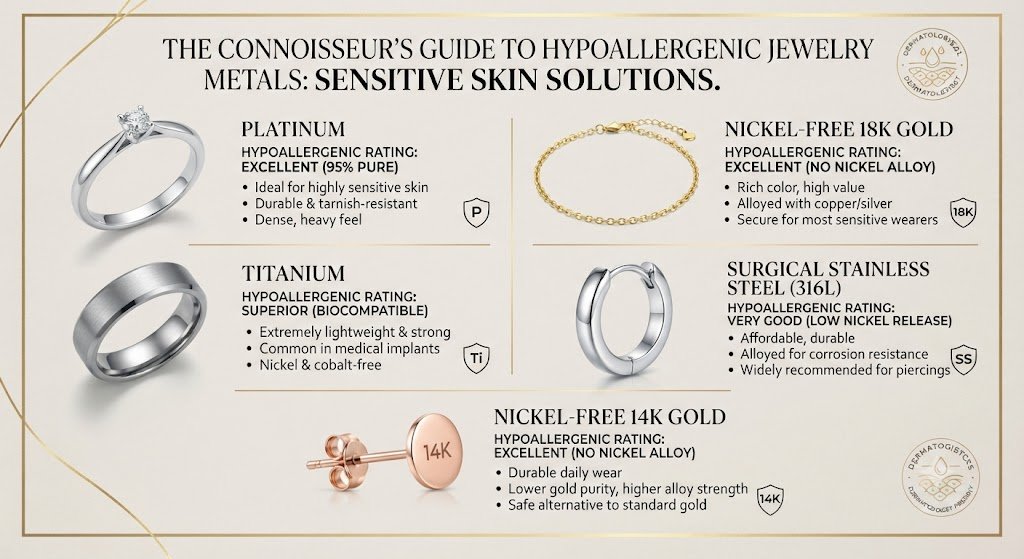
Recommended Metals for Sensitive Skin
If you have sensitive skin, these metals are generally considered the safest choices:
Platinum
One of the most hypoallergenic jewelry metals available. Platinum is naturally resistant to tarnish and corrosion, making it an excellent choice for everyday wear.
Nickel-Free 18K Gold
With a higher percentage of pure gold, 18K nickel-free gold offers a luxurious appearance while remaining comfortable for many people with sensitive skin.
Nickel-Free 14K Gold
A durable and practical option that balances strength, beauty, and everyday comfort.
Titanium
Lightweight, exceptionally strong, and naturally biocompatible, titanium is one of the best choices for people prone to skin irritation.
Surgical Stainless Steel
Medical-grade surgical stainless steel is a durable, affordable option that works well for many individuals with mild metal sensitivities.
Metals to Avoid If You Have Sensitive Skin
While everyone’s skin is different, these materials are more likely to cause irritation:
Nickel-Containing Alloys
Nickel is the leading cause of jewelry-related allergic reactions and should generally be avoided if you’ve experienced skin irritation in the past.
Low-Quality Costume Jewelry
Fashion jewelry made with inexpensive mixed metals often contains nickel or other materials that may trigger allergic reactions.
Unknown Metal Blends
If a product doesn’t clearly identify its materials, it’s difficult to know whether it contains skin-irritating alloys.
Worn Gold-Plated Jewelry
As gold plating wears away over time, the underlying base metal may become exposed. If that metal contains nickel, irritation can develop even if the jewelry was comfortable when it was new.
Shopping Tips for Hypoallergenic Jewelry
A little research before buying jewelry can make a significant difference.
Before making a purchase, consider these questions:
- Is the jewelry clearly labeled as nickel-free?
- Does the product specify the exact type of metal used?
- Is the gemstone or metal described in detail?
- Does the seller offer an authenticity guarantee?
- Is there a reasonable return or exchange policy?
- Does the jeweler have positive customer reviews?
Buying from reputable jewelers who provide transparent product information gives you greater confidence in the quality and safety of your purchase.
Frequently Asked Questions
Can I be allergic to gold?
True allergies to pure gold are uncommon. In most cases, reactions are caused by alloy metals—especially nickel—rather than the gold itself.
Is sterling silver safe for sensitive skin?
Sterling silver (925) is generally well tolerated by many people. However, some silver jewelry may include alloys that can cause irritation in particularly sensitive individuals. Choosing high-quality sterling silver from reputable jewelers is usually the safest approach.
Is titanium better than gold for sensitive skin?
Titanium is one of the most hypoallergenic metals available and is an excellent option for sensitive skin. However, high-quality nickel-free 14K or 18K gold is also suitable for many people.
Should I stop wearing jewelry if I have sensitive skin?
Not at all. Most people with sensitive skin can comfortably wear jewelry by choosing hypoallergenic materials and avoiding metals known to trigger allergic reactions.
How can I tell if jewelry contains nickel?
Check the product description or ask the jeweler directly. Reputable retailers often label their jewelry as nickel-free if it is designed for sensitive skin.
Final Thoughts
Having sensitive skin doesn’t mean you have to stop wearing jewelry you love. In many cases, choosing the right materials makes all the difference. By understanding how different metals interact with your skin, you can avoid unnecessary irritation while building a jewelry collection that’s both beautiful and comfortable.
Platinum, nickel-free gold, titanium, and high-quality surgical stainless steel are among the best options for everyday wear. These materials offer an excellent balance of durability, style, and skin compatibility, making them ideal choices for anyone with metal sensitivities.
When shopping for new jewelry, always pay attention to material descriptions, quality craftsmanship, and the reputation of the jeweler. Investing in well-made, hypoallergenic pieces not only helps protect your skin but also ensures your jewelry will remain beautiful for years to come.
Ultimately, the best jewelry is jewelry you can wear with confidence. By choosing skin-friendly metals and taking proper care of your favorite pieces, you can enjoy comfort, elegance, and lasting quality every time you accessorize.
You Might Also Like
- Gold Karats Investment Value Comparison: Is 24K, 18K, or 14K Gold the Best Choice?
- Natural vs. Lab-Grown Diamonds: Investment Value and Resale Impact Explained
- Fine Jewelry vs. Fashion Jewelry: How to Know What You’re Buying
