Learn why jewelry naturally tarnishes, what causes it to lose its shine, and the simple daily habits that will keep your favorite pieces looking brilliant for years.
Introduction: Why Does Jewelry Turn Dark?
Few things are more disappointing than opening your jewelry box, reaching for a favorite ring or necklace, and discovering that it has become dull or dark. Many people immediately assume the jewelry is fake or defective, but in most cases, that’s far from the truth.
Tarnishing is a completely natural chemical process that affects many genuine metals, especially sterling silver and certain gold alloys. It happens gradually as the metal reacts with substances in its environment, including oxygen, sulfur compounds, moisture, and even the natural chemistry of your skin.
The good news is that tarnish is usually a surface reaction rather than permanent damage. With proper care and storage, you can significantly slow the process and keep your jewelry looking beautiful for many years.
Understanding why jewelry tarnishes is the first step toward preventing unnecessary wear and protecting both the beauty and value of your collection.
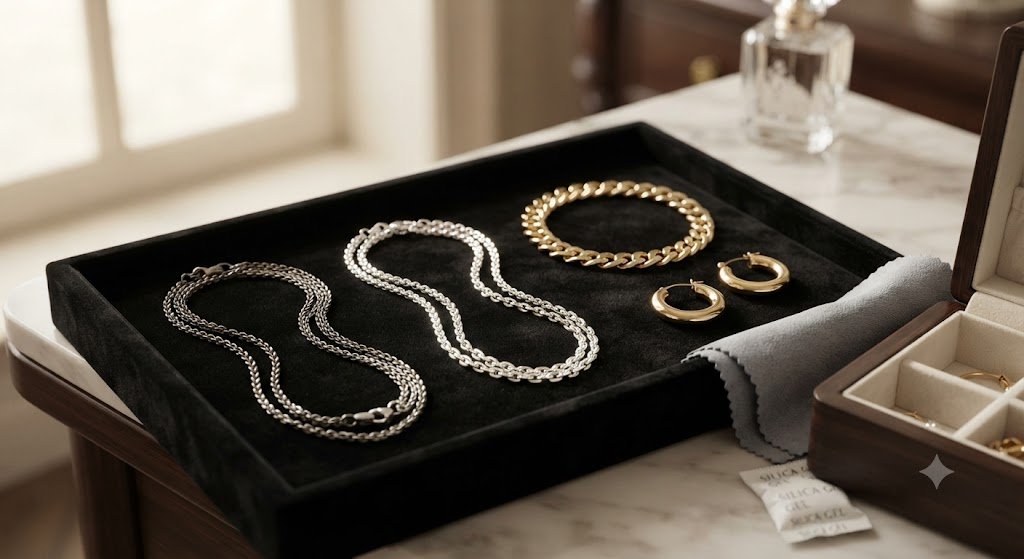
Understanding the Chemistry of Tarnish
Tarnish occurs when the surface of a metal reacts with elements in the surrounding environment.
For sterling silver, the primary culprit is sulfur. Tiny sulfur compounds found naturally in the air combine with the silver to form a thin layer of silver sulfide, which appears as gray, brown, or black discoloration.
Moisture speeds up this chemical reaction, which is why jewelry often tarnishes faster in humid climates.
Your own body chemistry also plays an important role.
Every person’s skin has a unique pH level, and sweat naturally contains salts and minerals. Some people have slightly more acidic skin than others, causing certain jewelry to tarnish more quickly.
Several factors can accelerate oxidation:
- Humidity
- Oxygen exposure
- Sulfur compounds in the air
- Sweat
- Individual skin pH
- Air pollution
- High temperatures
None of these factors indicate poor-quality jewelry—they are simply part of how many precious metals naturally behave over time.
The Hidden Impact of Everyday Chemicals
Many common personal care products leave invisible residues that slowly affect jewelry.
These products may not damage your jewelry immediately, but repeated exposure can dull its finish and encourage tarnishing.
Common examples include:
- Perfume
- Body lotion
- Sunscreen
- Makeup
- Hair spray
- Soap residue
- Household cleaning products
- Hand sanitizer
These substances can accumulate on the surface of metals and gemstones, trapping moisture and making oxidation occur more quickly.
Follow the Golden Rule
Professional jewelers often recommend one simple habit that dramatically reduces chemical exposure:
Jewelry should always be the last thing you put on and the first thing you take off.
A simple daily routine looks like this:
- Apply skincare products.
- Use perfume.
- Style your hair.
- Get dressed.
- Put on your jewelry.
At the end of the day, remove your jewelry before washing your face, showering, exercising, or applying nighttime skincare products.
This small habit can greatly extend the life and shine of your favorite pieces.
Smart Storage Makes a Big Difference
Many people focus on cleaning jewelry but overlook one of the biggest causes of tarnishing: improper storage.
Air is the enemy of polished metals.
The more oxygen and moisture your jewelry is exposed to, the faster oxidation occurs.
Store Jewelry Correctly
For the best protection:
- Store jewelry in airtight zip-lock bags whenever possible.
- Remove as much air as possible before sealing the bag.
- Add silica gel packets to absorb excess moisture.
- Keep each piece stored separately to prevent scratches.
- Store jewelry in a cool, dry place away from direct sunlight.
Jewelry boxes lined with soft velvet or microfiber provide additional protection against friction while helping preserve delicate finishes.
Avoid storing jewelry in bathrooms, where constant humidity from showers can dramatically speed up tarnishing.
Why Different Metals Tarnish Differently
Not all jewelry reacts to the environment in the same way.
Understanding the properties of different metals helps you care for each piece appropriately.
Sterling Silver
Sterling silver (925) contains 92.5% pure silver and 7.5% other metals, usually copper.
Copper improves strength but also increases the likelihood of tarnishing.
Regular cleaning and proper storage are especially important for silver jewelry.
Gold Jewelry
Pure gold is highly resistant to oxidation.
However, most jewelry is made from 14K or 18K gold, which contains alloy metals that improve durability.
These alloys may develop slight discoloration over many years, particularly with frequent exposure to chemicals.
Even so, gold generally requires less maintenance than silver.
Gold-Plated Jewelry
Gold-plated pieces consist of a thin layer of gold applied over a base metal.
Because the gold coating is relatively thin, abrasive cleaning or excessive friction can gradually wear it away.
Plated jewelry should be cleaned gently with a soft cloth and protected from water, chemicals, and heavy daily wear whenever possible.
The Toothpaste Myth: Why DIY Cleaning Can Do More Harm Than Good
One of the most common jewelry care myths is that toothpaste safely cleans precious metals.
While toothpaste may remove some surface tarnish, it is not designed for jewelry.
Most toothpaste formulas contain mild abrasives intended to polish tooth enamel.
Those same abrasives can scratch:
- Gold
- Silver
- Platinum
- Pearls
- Soft gemstones
- Polished finishes
Over time, repeated use may permanently damage your jewelry.
Other household cleaning methods that should generally be avoided include:
- Baking soda scrubbing
- Bleach
- Vinegar soaks for delicate jewelry
- Harsh chemical cleaners
- Steel wool
- Rough brushes
Instead, use jewelry cleaners specifically formulated for the type of metal or gemstone you’re caring for, and always follow the manufacturer’s instructions.
When It’s Time to Visit a Professional Jeweler
Routine home care is excellent for everyday maintenance, but some situations require expert attention.
Professional jewelers have specialized equipment designed to clean jewelry safely without damaging delicate settings or gemstones.
Consider professional cleaning if:
- Tarnish repeatedly returns very quickly.
- Jewelry contains delicate gemstones.
- The piece has intricate filigree or detailed engraving.
- Stones appear loose.
- Plating has worn away.
- The jewelry is antique or an heirloom.
Many jewelers use ultrasonic cleaning or specialized immersion solutions appropriate for specific materials.
In addition to cleaning, professionals often inspect prongs, clasps, and settings, helping identify small issues before they become expensive repairs.
First: Is It Tarnish, or Something Else?
Before troubleshooting further, it helps to confirm what you’re looking at. Tarnish is a surface discoloration — usually gray, yellow, or black — that forms a film you can typically clean off. Wear or plating damage looks different: a dull or discolored patch that doesn’t lift with cleaning, often revealing a different-colored metal underneath on plated pieces. If cleaning doesn’t restore the shine, you’re likely dealing with worn plating rather than tarnish, and no amount of polishing will bring it back.
It Tarnishes Fast Even Though You Barely Wear It
Tarnish doesn’t require skin contact — oxygen, humidity, and airborne sulfur compounds are enough to trigger the reaction on their own. Jewelry left in a humid bathroom, an unlined drawer, or anywhere air can circulate freely will often tarnish faster than pieces worn daily and wiped clean afterward. Sealed, airtight storage with minimal humidity is the fix here, not wearing the piece less.
It Tarnishes Right Where It Touches Your Skin
If discoloration follows the exact shape of a ring band or the back of an earring, your own skin chemistry is likely a factor. Everyone’s sweat has a slightly different pH and salt composition, and more acidic sweat reacts faster with metal alloys. This is a normal variation between people, not a sign of a defective piece — it simply means jewelry may need cleaning more often to stay ahead of it.
It Got Worse After Exercise, Hot Weather, or Swimming
Sweat, heat, and humidity all speed up the same chemical reaction, so a noticeable change after a workout or a hot day usually isn’t a coincidence. Chlorinated pools and saltwater are even more aggressive, both accelerating tarnish and, on plated pieces, wearing down the surface layer faster than normal daily wear would. Following the “last on, first off” rule — putting jewelry on after these activities rather than before — addresses this cause directly.
It Happened After Lotion, Perfume, or Hairspray
Many everyday products contain ingredients that react with metal on contact, and a sudden tarnish spike after getting ready for the day often traces back to this rather than the jewelry itself. Applying skincare and fragrance before putting jewelry on, rather than after, removes most of this exposure.
Tarnish Prevention Tips
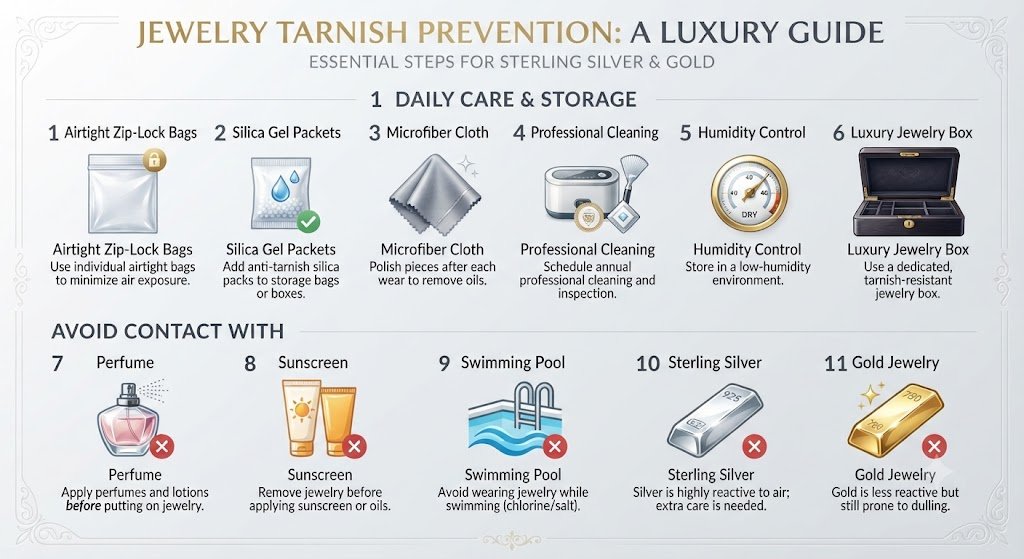
Keeping jewelry beautiful doesn’t require complicated routines.
Follow these simple habits to slow oxidation and preserve shine:
- ✔ Put your jewelry on last and remove it first.
- ✔ Wipe each piece with a soft microfiber cloth after wearing.
- ✔ Store jewelry in airtight zip-lock bags whenever practical.
- ✔ Add silica gel packets to reduce humidity during storage.
- ✔ Keep each item separate to prevent scratches.
- ✔ Avoid exposing jewelry to perfumes, lotions, sunscreen, and household cleaners.
- ✔ Remove jewelry before swimming, exercising, or cleaning.
- ✔ Schedule professional cleaning for valuable or delicate pieces when needed.
Consistency is far more effective than occasional deep cleaning.
Final Thoughts
Tarnishing is a natural part of owning many types of fine jewelry and should never be mistaken for poor quality or defective craftsmanship. Sterling silver, certain gold alloys, and other precious metals naturally react with air, moisture, sulfur compounds, and everyday substances over time. Fortunately, these reactions can often be slowed dramatically through proper care and thoughtful storage.
Simple habits—such as following the “last on, first off” rule, storing jewelry in airtight bags with silica gel, keeping pieces clean, and avoiding harsh chemicals—can make a remarkable difference in preserving their brilliance. Equally important is avoiding abrasive home remedies like toothpaste, which may cause scratches that cannot be reversed.
Ultimately, beautiful jewelry deserves consistent care rather than occasional rescue. By treating each piece with patience and attention, you’ll protect not only its shine but also its sentimental and financial value. A little preventive maintenance today ensures that your favorite jewelry will continue to sparkle and tell its story for many years to come.
You Might Also Like
- Common Jewelry Care Mistakes You Need to Avoid
- How to Clean Sterling Silver Tarnish at Home: A Safe Step-by-Step Guide
- Sterling Silver Cleaning Methods Compared: Which One Should You Use?
