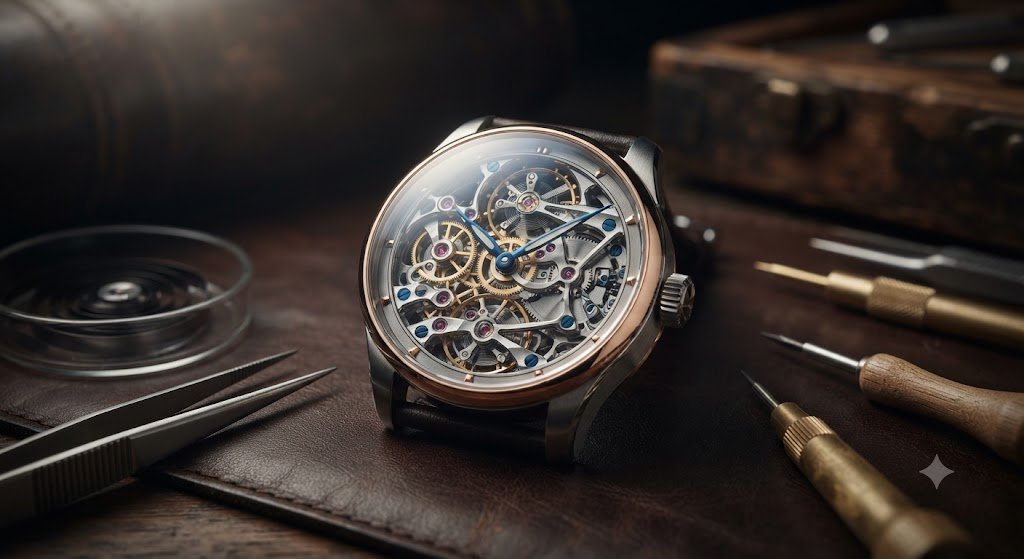
Understanding Watch Complications: Where Art Meets Mechanical Ingenuity
Luxury mechanical watches are admired not only for telling time but also for showcasing centuries of innovation, craftsmanship, and engineering excellence. Among enthusiasts, one of the most fascinating aspects of fine watchmaking is the world of watch complications.
In horology, a complication is any function beyond the simple display of hours, minutes, and seconds. Whether it’s tracking the date, measuring elapsed time, displaying the phases of the moon, or automatically accounting for leap years, each complication adds another layer of mechanical sophistication.
Unlike smartwatches or digital devices, mechanical complications perform these tasks using nothing but tiny gears, springs, cams, wheels, and levers working together in perfect harmony. Every additional function requires extraordinary precision, making complicated watches true masterpieces of microengineering.
For collectors, complications represent the highest expression of traditional watchmaking. They combine technical brilliance with artistic beauty, transforming an ordinary timepiece into a wearable work of mechanical art.
The Most Popular Watch Complications
Some complications have become legendary among collectors due to their engineering complexity and historical significance.
The most celebrated include:
- Perpetual Calendar
- Chronograph
- Tourbillon
- Moon Phase
- GMT (Dual Time Zone)
- Annual Calendar
- Power Reserve Indicator
- World Time
- Minute Repeater
- Split-Seconds Chronograph (Rattrapante)
Each complication tells a different story about the evolution of fine watchmaking.
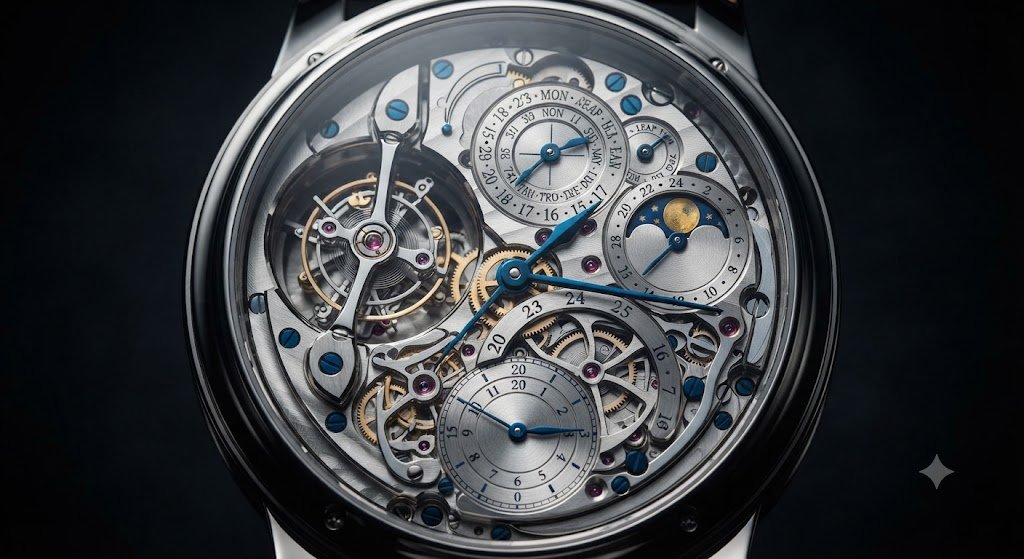
Perpetual Calendar: A Mechanical Computer on Your Wrist
Among all calendar complications, the Perpetual Calendar stands as one of the greatest achievements in mechanical horology.
Unlike a standard date display that requires adjustment at the end of shorter months, a perpetual calendar automatically recognizes:
- Months with 30 days
- Months with 31 days
- February
- Leap years
When properly maintained and kept running, a perpetual calendar can accurately display the correct date for decades without manual correction, requiring adjustment only during exceptional calendar events such as the year 2100.
This remarkable capability is achieved entirely through an intricate system of gears, levers, and specially shaped cams programmed to follow the Gregorian calendar.
For collectors, the perpetual calendar represents mechanical intelligence at its finest. It demonstrates how centuries-old engineering can solve an incredibly complex mathematical problem without electronics or software.
Chronograph: Precision Timing with a Legendary Heritage
The Chronograph is one of the world’s most recognizable watch complications.
Essentially, it functions as a mechanical stopwatch integrated into a wristwatch, allowing the wearer to measure elapsed time independently of the standard time display.
Most chronographs feature two or three pushers that allow users to:
- Start timing
- Stop timing
- Reset the timer
Racing Legacy
Chronographs became closely associated with motorsports during the twentieth century. Drivers relied on them to record lap times and monitor race performance long before digital timing systems became available.
This connection gave birth to many iconic racing watches that remain highly sought after today.
Aviation History
Pilots also depended on chronographs for navigation, fuel calculations, flight planning, and timing critical maneuvers.
Their reliability made them indispensable cockpit instruments for decades.
Everyday Practicality
Although originally developed for professionals, chronographs remain highly useful for everyday activities such as:
- Timing workouts
- Measuring cooking times
- Tracking meetings
- Monitoring parking meters
- Recording travel intervals
Their combination of practicality and sporty aesthetics makes them one of the most versatile complications ever created.
Tourbillon: The Pinnacle of Haute Horlogerie
Few complications inspire greater admiration than the Tourbillon.
Invented in 1801 by the legendary French watchmaker Abraham-Louis Breguet, the tourbillon was designed to reduce the effects of gravity on a watch’s escapement.
Pocket watches often remained in the same vertical position for long periods, allowing gravity to create small timing inconsistencies.
Breguet’s revolutionary solution placed the escapement inside a rotating cage that continuously changed its position. By constantly rotating, the mechanism averaged positional errors and improved overall accuracy.
Why Collectors Love Tourbillons
Modern wristwatches constantly change position throughout the day, reducing the original practical benefit of the tourbillon.
However, collectors continue to value this complication because it represents one of the greatest technical achievements in watchmaking.
Building a tourbillon requires:
- Hundreds of miniature components
- Extraordinary hand-finishing
- Exceptional precision
- Extensive adjustment by skilled watchmakers
Watching the rotating cage through an open dial provides a mesmerizing display of mechanical artistry that few other complications can match.
Today, the tourbillon is widely regarded as one of the ultimate symbols of haute horlogerie.
Moon Phase: Poetry Written in Gears
Not every complication exists purely for practical reasons.
The Moon Phase complication celebrates the artistic side of watchmaking by tracking the approximately 29.5-day lunar cycle.
Traditional moon phase displays feature beautifully decorated discs showing golden moons, deep blue skies, and stars that slowly rotate beneath a small aperture.
The result is both scientifically impressive and visually captivating.
Many high-end moon phase mechanisms are so precise that they require correction only after many years of continuous operation.
Beyond its technical achievement, the moon phase remains one of the most romantic complications ever created, connecting astronomy, history, and craftsmanship in a single elegant display.
Why Complicated Watches Hold Their Value
Luxury watches featuring sophisticated complications often command higher prices than simpler models, and many continue to perform well in the collector market over time.
Several factors contribute to their long-term appeal.
Exceptional Engineering
Complicated movements require years of research, development, and assembly by highly trained watchmakers.
The greater the complexity, the more expertise is required to manufacture each watch.
Limited Production
Many complicated watches are produced in relatively small numbers because of the time and skill involved in their construction.
Scarcity naturally increases desirability among collectors.
Horological Prestige
Complications such as perpetual calendars and tourbillons represent milestones in the history of mechanical watchmaking.
Owning one means owning a piece of engineering history.
Strong Collector Interest
High-quality complicated watches from respected manufacturers often attract significant attention from collectors who value craftsmanship, rarity, heritage, and technical innovation.
Although no investment is guaranteed to appreciate, watches featuring prestigious complications frequently retain their desirability better than simpler mass-produced models.
How to Choose Your First Watch Complication
Starting a collection of complicated mechanical watches can seem intimidating, but choosing the right first complication makes the journey much more enjoyable.
Consider Your Lifestyle
Select a complication you’ll actually use.
If you enjoy sports or travel frequently, a chronograph or GMT may be more practical than a highly specialized complication.
Balance Simplicity and Function
Many beginners start with a chronograph because it combines useful functionality with timeless design.
More advanced collectors often expand into perpetual calendars or moon phase watches as their appreciation for mechanical watchmaking grows.
Buy Quality Over Quantity
Focus on:
- Reliable movements
- Excellent craftsmanship
- Trusted manufacturers
- Good servicing support
- Timeless designs
A well-made mechanical watch provides satisfaction for decades.
Choose What Inspires You
The best complication is the one that genuinely fascinates you.
Whether you’re captivated by the graceful motion of a tourbillon, the engineering of a perpetual calendar, or the elegance of a moon phase display, personal appreciation is what makes collecting truly rewarding.
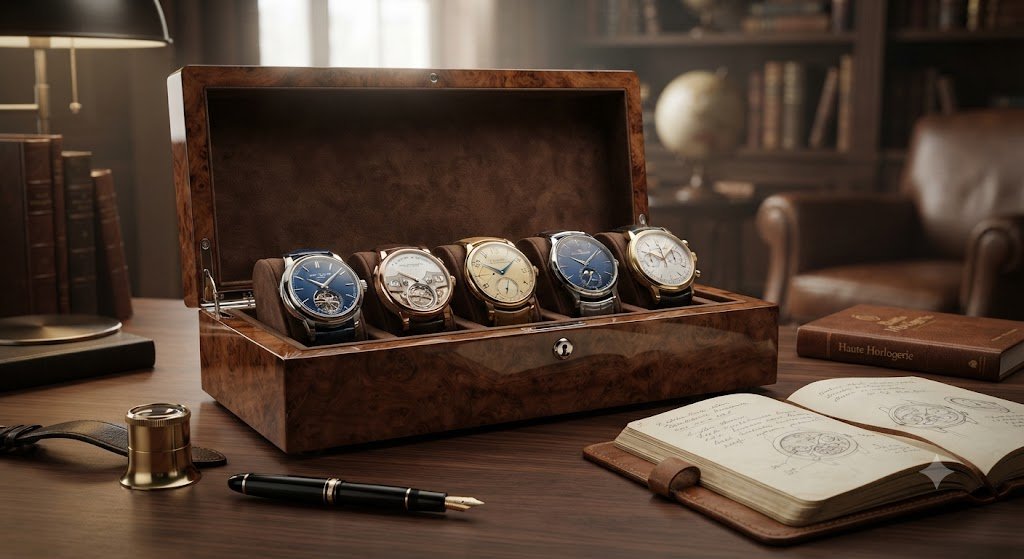
Final Thoughts
Watch complications represent far more than additional functions on a dial. They embody centuries of innovation, precision engineering, and artistic craftsmanship that continue to define the world of haute horlogerie. Every perpetual calendar, chronograph, tourbillon, and moon phase mechanism demonstrates humanity’s remarkable ability to solve complex challenges using nothing more than finely crafted mechanical components.
For collectors, these complications are more than practical tools—they are living works of art that celebrate tradition, creativity, and technical mastery. Each movement tells a story of generations of watchmakers who dedicated their lives to pushing the limits of mechanical possibility.
Whether you’re purchasing your first luxury timepiece or expanding an established collection, understanding watch complications allows you to appreciate what truly separates exceptional mechanical watches from ordinary timekeepers. In the end, a beautifully crafted complication is not simply a feature—it is a timeless expression of human innovation, designed to inspire admiration for generations to come.
You Might Also Like
- Common Jewelry Care Mistakes You Need to Avoid
- How to Clean Sterling Silver Tarnish at Home: A Safe Step-by-Step Guide
- Sterling Silver Cleaning Methods Compared: Which One Should You Use?
