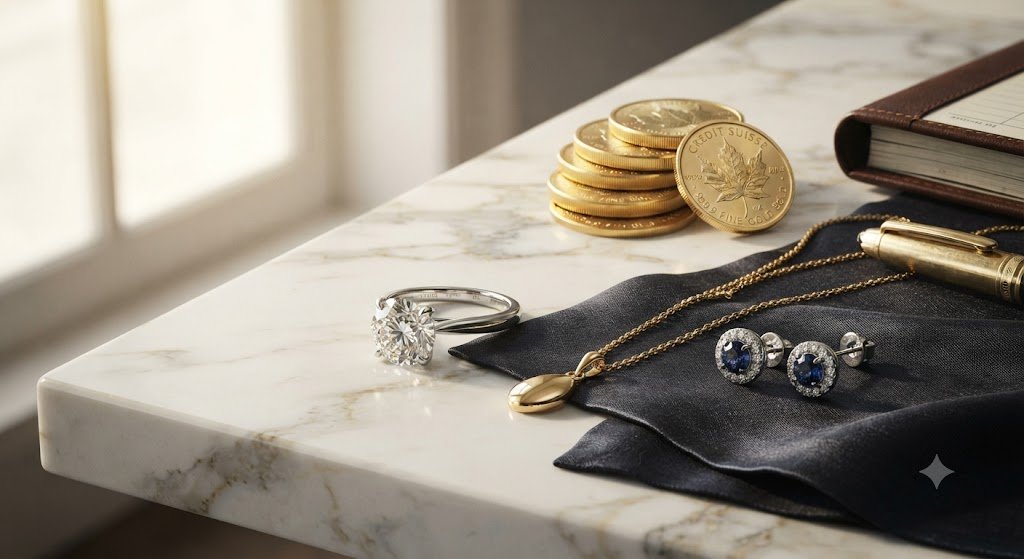
Investing often brings to mind stocks, real estate, or precious metals. Yet for centuries, fine jewelry has also been viewed as a way to preserve wealth while offering something few other assets can: the ability to wear and enjoy your investment.
Not every piece of jewelry increases in value, however. Fashion accessories and mass-produced pieces typically lose value over time, while high-quality jewelry made from precious metals and genuine gemstones has a much better chance of maintaining—or in some cases increasing—its worth.
If you’re considering buying jewelry with long-term value in mind, understanding what makes a piece truly valuable is the first step. This guide explains the fundamentals of investing in fine jewelry, the factors that influence its market value, and how to make informed purchasing decisions.
Fine Jewelry vs. Fashion Jewelry
Before thinking about jewelry as an investment, it’s important to distinguish between fine jewelry and fashion jewelry.
Fine jewelry is crafted from precious metals such as gold, platinum, or high-quality silver and often features natural gemstones like diamonds, sapphires, emeralds, or rubies. These materials have intrinsic value and are designed to last for decades with proper care.
Fashion jewelry, on the other hand, is primarily created for style rather than long-term durability. It often uses plated metals, synthetic stones, or inexpensive alloys. While these pieces can be beautiful and trendy, they generally have little resale value once purchased.
If your goal is long-term value, focus your attention on fine jewelry made with quality materials and expert craftsmanship.
What Gives Jewelry Real Investment Value?
Not all expensive jewelry is necessarily a good investment. Several factors work together to determine whether a piece is likely to retain or increase its value over time.
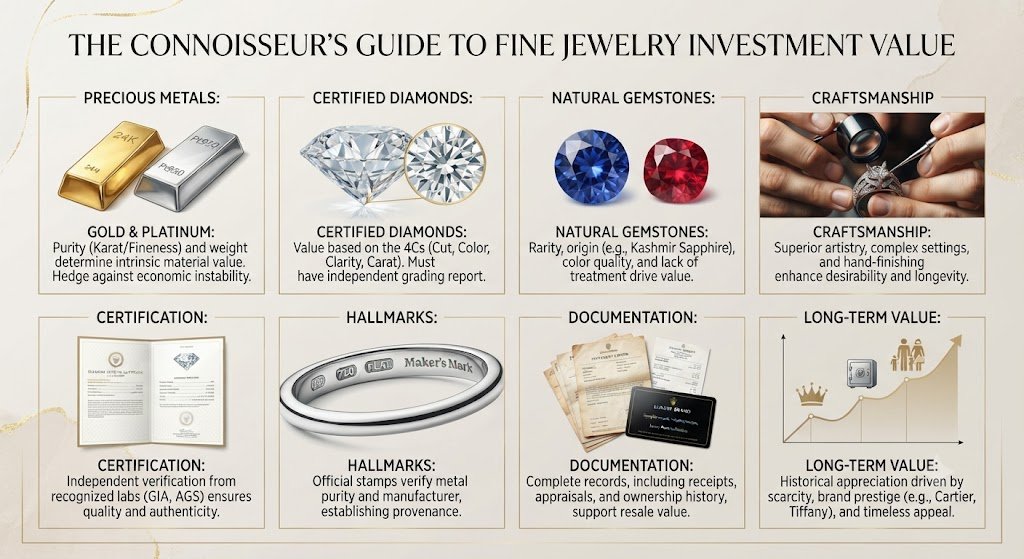
Precious Metals
The metal itself forms the foundation of a jewelry item’s value.
Gold has been recognized worldwide as a store of wealth for thousands of years. Platinum is even rarer than gold and is highly valued for its durability and naturally white appearance.
Higher-purity metals generally command higher prices, although they may also be softer and require more careful handling.
Gemstone Quality
Natural gemstones vary tremendously in value.
Professionally graded diamonds are evaluated according to the famous 4 Cs:
- Cut
- Color
- Clarity
- Carat Weight
Colored gemstones such as sapphires, rubies, and emeralds are valued based on color intensity, clarity, origin, rarity, and overall condition.
Exceptional stones with certified quality often hold their value better than average commercial-grade gems.
Craftsmanship
Fine craftsmanship contributes significantly to a jewelry piece’s desirability.
Well-made settings, precise stone placement, smooth finishes, and durable construction increase both beauty and longevity. Poor workmanship can reduce resale value even when expensive materials are used.
Brand and Provenance
Some jewelry commands premium prices because of its history or maker.
Pieces from respected luxury jewelers, limited collections, or historically significant designers may sell for far more than the value of their raw materials alone.
Documentation proving ownership history, original packaging, and certificates can further strengthen market value.
Gold: A Global Store of Value
Among all precious metals, gold remains one of the most widely recognized stores of wealth.
Unlike many luxury goods that depreciate rapidly after purchase, gold maintains intrinsic value because it is traded globally as a commodity. Its price changes with international markets rather than fashion trends alone.
Jewelry made from solid 14K, 18K, or higher-purity gold contains measurable amounts of precious metal that contribute directly to its overall worth.
While craftsmanship and design certainly matter, the gold itself provides a foundation of value regardless of changing styles.
This is one reason why many families pass gold jewelry from one generation to the next—it combines sentimental significance with lasting material value.
Understanding the Risks
Although fine jewelry can preserve wealth, it should not be viewed as a guaranteed investment.
Unlike publicly traded stocks, jewelry cannot always be sold immediately at market value. Finding the right buyer may take time, especially for unique or high-value pieces.
Other factors can also affect resale value:
- Changes in precious metal prices
- Demand for certain gemstone styles
- Overall market conditions
- Brand popularity
- Condition of the jewelry
It’s also worth remembering that luxury branding can significantly increase retail prices. A designer name may add substantial value, but part of what you’re paying for is reputation, exclusivity, and craftsmanship—not just the metal or gemstones.
For this reason, it’s helpful to buy jewelry because you genuinely appreciate it, rather than expecting guaranteed financial returns.
Why Certification Matters
Documentation plays a crucial role in protecting your investment.
Certified diamonds and gemstones provide independent verification of important characteristics such as authenticity, quality, and grading.
For diamonds, reports from respected gemological laboratories—such as the Gemological Institute of America (GIA)—offer buyers greater confidence and transparency.
When purchasing valuable jewelry, ask for:
- Diamond or gemstone grading reports
- Proof of metal purity
- Purchase receipts
- Warranty information
- Original certificates whenever available
These documents make future resale, insurance, and appraisal much easier.
Jewelry Care Is Part of Protecting Your Investment
Even the highest-quality jewelry can lose value if neglected.
Scratches, loose stones, worn prongs, and poor maintenance can significantly reduce resale prices.
Fortunately, protecting your investment doesn’t require complicated routines.
Simple Maintenance Tips
- Remove jewelry before swimming or exercising.
- Avoid exposing pieces to harsh household chemicals.
- Store each item separately to prevent scratches.
- Clean jewelry with appropriate methods based on the gemstone and metal.
- Have valuable pieces professionally inspected every year or two.
Routine maintenance helps preserve both appearance and structural integrity for many years.
Buyer Checklist
Before purchasing fine jewelry as an investment, review the following checklist:
✔ Choose solid gold or platinum whenever possible.
✔ Verify the authenticity of gemstones.
✔ Request grading reports for valuable diamonds.
✔ Check metal purity hallmarks.
✔ Buy from reputable jewelers with clear return policies.
✔ Keep all certificates, receipts, and original packaging.
✔ Understand current market prices before making a purchase.
✔ Consider timeless designs that remain desirable across changing fashion trends.
✔ Think long term rather than expecting quick profits.
Should You Buy Jewelry as an Investment?
For many buyers, the answer depends on expectations.
If you’re looking for an asset that can be bought and sold instantly, jewelry may not be the ideal choice.
However, if you appreciate fine craftsmanship, enjoy wearing beautiful pieces, and understand the importance of quality materials, fine jewelry offers a unique combination of personal enjoyment and long-term value.
Unlike many luxury purchases that lose appeal after a few years, a well-made piece of fine jewelry can become part of your family’s history while retaining meaningful financial worth.
If gold purity specifically is part of your decision, our comparison of gold karats as an investment breaks down how 14K, 18K, and 24K hold value differently.
Final Thoughts
Fine jewelry occupies a special place among luxury purchases because it blends beauty, craftsmanship, and lasting value. While not every ring, necklace, or bracelet should be viewed as an investment, carefully selected pieces made from precious metals and genuine gemstones often stand the test of time.
The smartest approach is to focus on quality rather than trends. Look for solid materials, reliable certification, excellent craftsmanship, and reputable sellers. These factors provide a stronger foundation for long-term value than fashion alone.
Most importantly, choose jewelry that you truly enjoy wearing. If its value grows over the years, that’s an added benefit—but the greatest investment is owning something that brings lasting satisfaction every time you put it on.
You Might Also Like
- Gold Karats Investment Value Comparison: Is 24K, 18K, or 14K Gold the Best Choice?
- Natural vs. Lab-Grown Diamonds: Investment Value and Resale Impact Explained
- Fine Jewelry vs. Fashion Jewelry: How to Know What You’re Buying
