Choosing a gemstone for everyday jewelry involves more than color and appearance. A stone that looks beautiful in a ring has to handle much more contact and friction than the same stone worn in earrings or a pendant. The Mohs hardness scale is a useful starting point because it helps explain how easily a gemstone can be scratched, but it is only one part of the durability picture.
What Is the Mohs Hardness Scale?
The Mohs scale is a relative system for comparing how resistant one mineral is to being scratched by another. It runs from 1 to 10, with talc at the soft end and diamond at the hard end. The important word is relative: the steps between numbers are not evenly spaced, so a mineral rated 10 is not simply twice as hard as one rated 5.
A simple look at the scale
Some familiar reference points:
- 1, talc: extremely soft
- 2, gypsum: very easily scratched
- 3, calcite: relatively soft
- 4, fluorite: moderate-low hardness
- 5, apatite: moderate hardness
- 6, orthoclase feldspar: moderate-high hardness
- 7, quartz: good scratch resistance
- 8, topaz: high hardness
- 9, corundum: very high hardness
- 10, diamond: the hardest on the Mohs scale
Many popular jewelry gemstones fall somewhere between about 6 and 9. This matters because everyday dust and grit can contain hard mineral particles, so a gemstone does not have to touch another piece of jewelry to pick up fine scratches over time.
Hardness is not the same as durability
Mohs hardness measures scratch resistance, not toughness. A gemstone can be quite hard and still be vulnerable to a sharp knock. Cleavage, fractures, inclusions, treatments and the way a stone is cut all affect how it handles daily use.
Think of hardness as answering one question: how resistant is this stone to being scratched? It does not answer how likely the stone is to survive a hard impact without chipping or breaking. That difference matters most when choosing stones for rings.
Which Gemstones Are Best for Everyday Wear?
No single hardness number automatically makes a gemstone suitable or unsuitable for daily jewelry. Hardness is a useful guide when you combine it with the type of jewelry and how it will be worn. The figures below are approximate and meant as a practical guide, not a laboratory identification method.
Common gemstones compared
| Gemstone | Approx. Mohs hardness | Everyday rings | Earrings and pendants |
|---|---|---|---|
| Diamond | 10 | Excellent scratch resistance | Excellent |
| Sapphire | 9 | Excellent | Excellent |
| Ruby | 9 | Excellent | Excellent |
| Topaz | 8 | Good, with care around impacts | Excellent |
| Emerald | 7.5–8 | Fair to good, with extra care | Very good |
| Amethyst | 7 | Good | Very good |
| Citrine | 7 | Good | Very good |
| Garnet | 6.5–7.5 | Good, depending on type and setting | Very good |
| Peridot | 6.5–7 | Fair to good | Very good |
| Moonstone | 6–6.5 | Better for occasional wear | Good |
| Opal | 5.5–6.5 | Better for occasional wear | Good with care |
| Turquoise | 5–6 | Better for occasional wear | Good with care |
| Pearl | About 2.5–4.5 | Generally not ideal for rough daily wear | Very good with care |
These categories are deliberately broad. The real durability of a gemstone also depends on its internal structure, treatments, shape, setting and how the jewelry is used.
The best choices for everyday rings
Rings usually experience more physical contact than other jewelry. They can bump countertops, door handles, desks and tools throughout the day. For strong scratch resistance, diamond, sapphire and ruby are among the most practical choices. Topaz also offers good scratch resistance, though its cleavage means impact deserves some thought. Other stones around 7 on the scale can work well in rings too, especially when the design offers good protection.
The safest approach is not to look only for the highest number. Consider the whole combination of hardness, toughness, setting, stone shape and lifestyle. If you are also planning around fit, see how gemstone size affects ring size.
Why earrings and pendants are easier
Earrings and pendants generally take fewer direct knocks than rings. A gemstone with moderate hardness can be perfectly enjoyable in a pendant or a pair of earrings even if it would need more caution in a ring. That is one reason softer or more delicate stones make lovely statement pieces when worn somewhere they are less likely to hit hard surfaces.
Hardness of Popular Jewelry Stones
Looking at individual gemstones makes the scale easier to understand.
Diamond, ruby and sapphire
Diamond ranks at 10, while ruby and sapphire are varieties of corundum at around 9. Their hardness gives them excellent resistance to everyday scratching. Even so, they are not indestructible: a hard impact can still damage a stone depending on its structure, inclusions, cut and setting.
Topaz
Topaz is around 8, which gives it good scratch resistance. The caution is that topaz has pronounced cleavage, so a knock in the wrong place can matter more than the hardness number suggests. It can be lovely for everyday jewelry, but a protective setting and sensible handling are worthwhile, especially in rings.
Emerald
Emerald is generally around 7.5 to 8, but its everyday durability is more complicated than that number suggests. Natural emeralds commonly contain inclusions, and many are treated to improve their appearance. For that reason an emerald ring may deserve more care than its rating alone would indicate, while earrings and pendants can be easier choices for frequent wear.
Amethyst and citrine
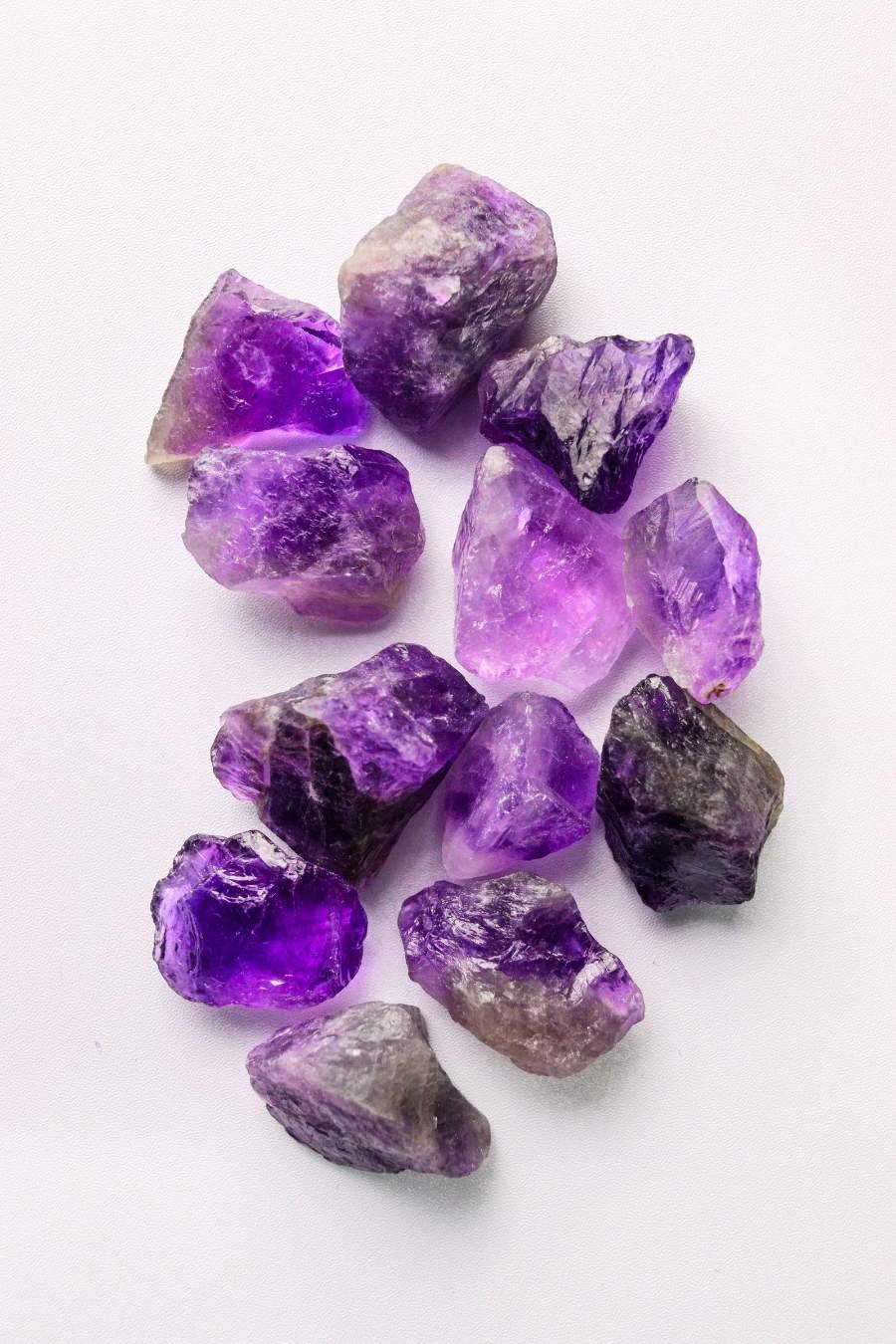
Amethyst and citrine are both varieties of quartz at around 7 on the Mohs scale. That gives them reasonably good scratch resistance for daily jewelry, and they can be practical in rings when well set and treated with reasonable care. Because they are softer than sapphire or diamond, they can still collect scratches over time with heavy use.
Garnet
“Garnet” describes a group of related minerals rather than one single gemstone, so hardness varies. Many commonly encountered garnets fall roughly between 6.5 and 7.5. That makes garnet versatile, but the variety matters, so for a ring it is worth knowing which type of garnet it is rather than relying on the word alone.
How to Choose a Gemstone for Your Lifestyle
Instead of asking only “What is the hardest gemstone?”, think about how the piece will actually be used.
1. Think about where the stone will be worn
Will the piece be worn on a hand every day, only occasionally, for work or outdoor activities, or kept for special occasions? Will it be a pendant or earrings? A stone that is practical in earrings may need more protection in a ring.
2. Consider the setting
A design that leaves a gemstone highly exposed allows more contact with surrounding objects. A protective setting can reduce the chance of a direct knock, although it cannot make a fragile stone indestructible. For an important piece, ask a qualified jeweler how well the stone and setting suit the way you plan to wear it.
3. Think beyond hardness
Before choosing a stone for daily wear, consider each of these:
- Hardness: how resistant is it to scratches?
- Toughness: how well does it resist chipping or breaking?
- Cleavage: does it have planes where it may split more easily?
- Fractures and inclusions: are there internal features that could affect durability?
- Treatments: has the stone been treated in a way that affects care?
- Cut and shape: are there exposed corners or vulnerable areas?
- Setting: does the jewelry protect the gemstone adequately?
This broader view is far more useful than choosing a stone by its Mohs number alone. If symbolism is part of your decision, our guide to gemstone meanings can help you narrow the choice.
Caring for Gemstones With Different Hardness Levels
Even a relatively durable gemstone benefits from sensible care. A few simple habits go a long way:
- Store pieces separately so harder stones do not scratch softer ones, and avoid tossing several pieces together in one box.
- Remove rings before activities that could involve strong impacts.
- Clean each gemstone according to the specific stone and any treatments it may have, and use only gentle methods.
- Have valuable or delicate jewelry inspected by a qualified jeweler when necessary.
For more ideas, see our jewelry storage guide and our tips on cleaning jewelry at home. A soft gemstone is not automatically a poor gemstone; it may simply suit a different style of wear.
Avoid home scratch tests
It can be tempting to scratch one stone against another object to see which gives way. That is not a good way to identify or assess a stone at home. Scratch testing can permanently damage jewelry and still may not tell you what you need to know about authenticity, treatments or overall durability. For a valuable or uncertain piece, examination by a qualified jeweler or gemological professional is a much safer approach.
Frequently Asked Questions
Is a higher Mohs rating always better for jewelry?
No. A higher rating generally means better resistance to scratches, but not necessarily to impact. Cleavage, fractures, inclusions, treatments, cut and setting also matter.
What is a good Mohs hardness for an everyday ring?
There is no universal cutoff, but stones around 7 or higher are often practical starting points when their other durability traits are suitable. Softer stones can still be used in rings, but they usually need more care.
Are emeralds suitable for everyday rings?
They can be, but emeralds deserve extra consideration because inclusions and treatments can affect durability. A qualified jeweler can assess an individual emerald and its setting before you commit to frequent wear.
Is quartz hard enough for everyday jewelry?
Quartz varieties such as amethyst and citrine sit around 7 and can work well for everyday jewelry. They can still be scratched or damaged by sufficiently hard contact, so reasonable care is still a good idea.
Can a diamond break even though it is the hardest gemstone?
Yes. Hardness refers to resistance to scratching, not to breaking. Diamonds can chip or fracture under certain impacts, depending on their structure, inclusions, cut and the location of the knock.
How can I find out whether a gemstone is durable enough for my ring?
Start with its hardness, then consider toughness, cleavage, fractures, inclusions, treatments, cut and setting. For a valuable piece, a qualified jeweler can give a more useful assessment than any home test.
Final Thoughts
The Mohs scale is a helpful tool for understanding gemstones, but it should never be treated as a complete durability ranking. A stone with a high hardness number can still be vulnerable to impact, while a softer stone can be a perfectly happy choice in the right piece of jewelry.
For everyday rings, scratch resistance is especially useful because hands meet hard surfaces so often. Earrings and pendants give you more flexibility, making them good places to enjoy stones that need a little more protection. The best choice depends on the gemstone, the design and how you plan to wear it. Look beyond the number on the scale, and you will have a much better idea of whether a gemstone fits your everyday routine.
