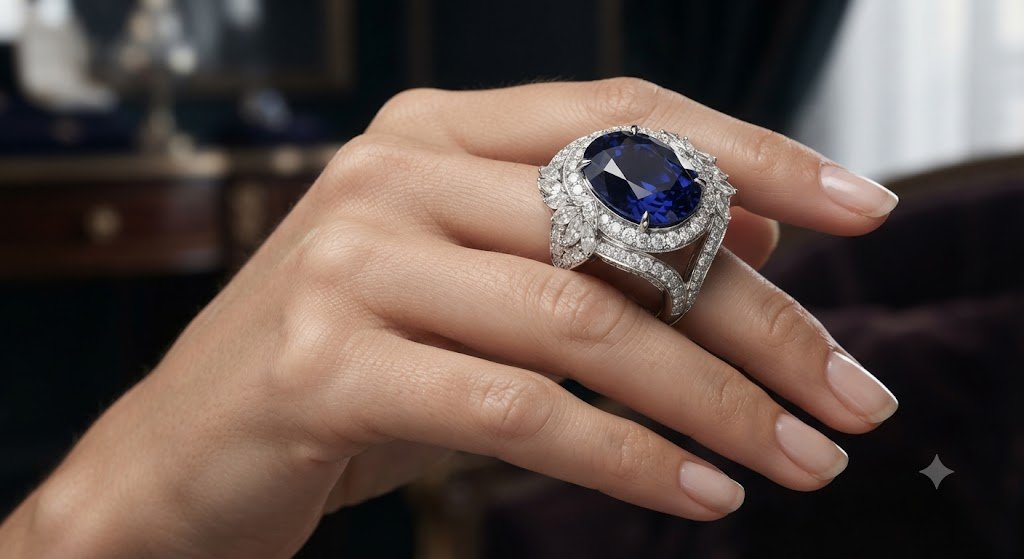
Few pieces of jewelry capture attention like a ring with a beautiful center gemstone. Whether it’s a sparkling diamond, a colorful sapphire, or a timeless emerald, the gemstone often becomes the focal point of the design. However, many buyers focus entirely on the stone’s beauty while overlooking an equally important detail: how the gemstone’s size and setting affect the way the ring fits and feels.
Contrary to popular belief, ring size is not determined solely by the circumference of your finger. The weight of the gemstone, the height of the setting, and even the construction beneath the stone can significantly influence comfort, stability, and everyday wearability.
Understanding these factors before purchasing a gemstone ring can help you choose a size that not only fits correctly but also feels secure and comfortable throughout the day.
Why Gemstone Size Changes the Way a Ring Fits
A plain metal band distributes its weight evenly around the finger. Once a gemstone is added—especially a larger one—the balance changes dramatically.
The center stone becomes the heaviest part of the ring, shifting its center of gravity upward. This changes how the ring behaves during everyday movement, especially while walking, typing, carrying objects, or gesturing.
The larger the gemstone, the more important proper ring sizing becomes.
The Top-Heavy Design Factor
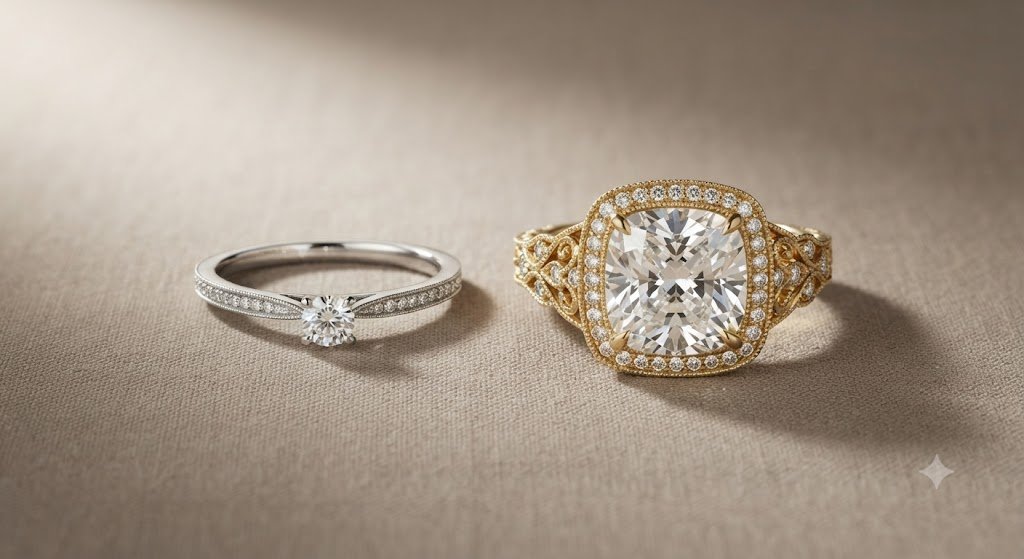
One of the most common challenges with gemstone rings is what’s known as a top-heavy design.
Large center stones naturally concentrate weight above the finger. If the ring is even slightly loose, gravity causes the heavier top section to rotate downward.
Instead of remaining perfectly centered, the gemstone gradually shifts to one side.
This movement is particularly common in rings featuring:
- Large diamonds
- Oval gemstones
- Emerald-cut stones
- Cushion-cut gemstones
- Wide halos
- Three-stone engagement rings
Although this rotation doesn’t necessarily indicate the wrong ring size, it often means the fit could be improved.
Why Loose Rings Rotate More Easily
A loose ring allows extra movement around the finger.
When combined with a heavy gemstone, the result is continuous rotation throughout the day.
This can cause several inconveniences:
- The center stone constantly moves away from the top of the finger.
- The ring requires frequent repositioning.
- Larger gemstones may bump into nearby fingers.
- The ring may feel unstable during daily activities.
A properly fitted band minimizes unnecessary movement while remaining comfortable.
Finger Shape Also Influences Stability
Not every finger has the same profile.
Some people have:
- Rounded fingers
- Prominent knuckles
- Tapered fingers
- Fingers that change size throughout the day
A jeweler considers these natural variations when recommending a size for rings with substantial gemstones.
The objective is achieving a balance between comfort and stability rather than choosing the tightest possible fit.
Setting Height and Everyday Comfort
The gemstone’s height above the band also plays a major role in how comfortable the ring feels.
High-profile settings lift the gemstone farther from the finger, creating a more dramatic appearance while also increasing leverage.
This affects both comfort and practicality.
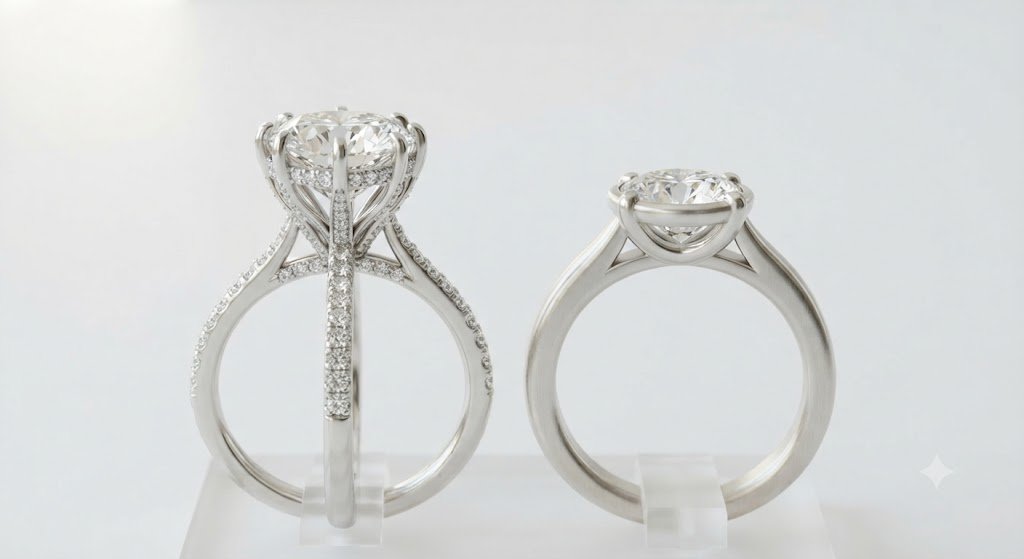
High Settings
High settings are popular because they maximize light exposure and make gemstones appear larger.
Advantages include:
- Greater brilliance
- Elegant profile
- Increased visibility
- Classic engagement ring appearance
However, they also require extra care.
Higher gemstones are more likely to:
- Catch on clothing
- Contact hard surfaces
- Feel noticeable while wearing gloves
- Interfere when gripping objects tightly
Many wearers need a short adjustment period before becoming comfortable with taller settings.
Low Settings
Lower-profile settings position the gemstone closer to the finger.
Benefits include:
- Improved stability
- Greater comfort
- Lower risk of snagging
- Better everyday practicality
Although they may expose slightly less of the gemstone, they are often preferred for active lifestyles and daily wear.
How the Setting Affects Interior Ring Space
One frequently overlooked detail is the ring’s interior structure.
Not all of the space inside a ring is available for your finger.
Some setting designs extend into the inner portion of the band.
Examples include:
- Reinforced galleries
- Closed basket settings
- Thick stone bases
- Internal support structures
- Decorative metal beneath the gemstone
These components can occupy valuable millimeters inside the ring.
Why Interior Construction Matters
Even if two rings share the same official size, they may not feel identical.
A ring with a large interior gallery may create additional pressure against the finger compared to a simple solitaire band.
This explains why some gemstone rings feel slightly tighter than plain wedding bands of the same numerical size.
Whenever possible, it’s helpful to try on rings with a similar setting style before purchasing.
Wide Settings May Change Perceived Fit
Large decorative heads often distribute pressure differently across the finger.
You may notice:
- Increased awareness of the ring
- Slightly firmer contact points
- Less flexibility during finger movement
These differences are usually subtle but become more noticeable with elaborate gemstone designs.
Practical Fitting Tips for Large Gemstone Rings
Choosing the correct size is only part of achieving a comfortable fit.
Professional jewelers often recommend additional stabilization techniques for heavier rings.
Sizing Beads
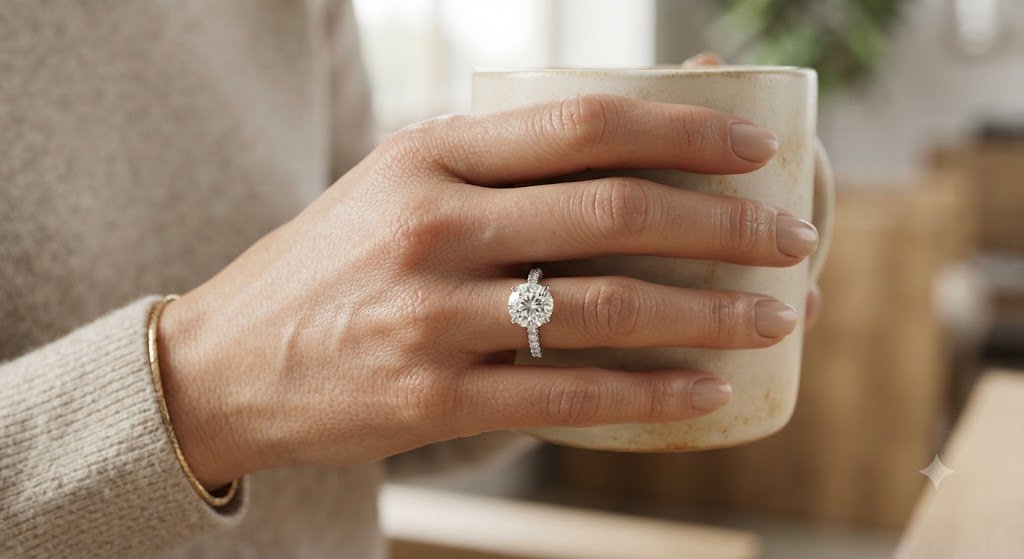
One of the most effective solutions is the use of sizing beads.
Sizing beads are two small metal spheres permanently attached inside the lower portion of the band.
Their purpose is to:
- Reduce unwanted rotation.
- Keep the gemstone centered.
- Improve stability.
- Prevent excessive sliding.
- Increase comfort for wearers with larger knuckles.
Many engagement rings featuring substantial center stones use this technique because it allows the ring to stay upright without requiring an excessively tight fit.
Ring Adjusters
Temporary ring adjusters may also help if finger size fluctuates due to:
- Temperature changes
- Humidity
- Exercise
- Seasonal swelling
These accessories provide additional stability without permanently resizing the ring.
Choose the Right Band Width
A slightly wider band often improves overall balance.
Benefits include:
- Better weight distribution
- Reduced spinning
- Improved comfort
- Enhanced durability
This is especially helpful for gemstone rings above one carat or those with particularly tall settings.
Practical Guidelines Before Buying a Gemstone Ring
Before selecting your final ring size, consider these recommendations:
- Measure your finger at the end of the day when it is closest to its average size.
- Consider both the gemstone’s weight and its overall dimensions.
- Pay attention to the setting height if you plan to wear the ring every day.
- Remember that interior galleries and structural supports may slightly reduce available finger space.
- Test how comfortably you can close your hand while wearing the ring.
- Ask whether sizing beads are appropriate for your chosen design.
- Choose stability over an extremely loose fit for heavier center stones.
- Consult a professional jeweler if you’re purchasing a ring with an unusually large gemstone or an intricate setting.
Taking these details into account can significantly improve long-term comfort and reduce the need for future adjustments.
Final Thoughts
Understanding how gemstone size affects ring size goes far beyond selecting the correct numerical measurement. A ring’s overall comfort depends on the interaction between gemstone weight, setting height, interior construction, and band design.
Large gemstones naturally create a top-heavy balance that may cause rotation if the fit isn’t carefully optimized. High-profile settings offer striking visual appeal but can change how the ring feels during everyday activities, while certain setting styles reduce the available interior space inside the band.
Before choosing the final size of your next gemstone ring, consider not only your finger measurement but also the structure, weight, and engineering of the entire piece. A thoughtfully fitted ring will remain centered, comfortable, and secure—allowing the beauty of the gemstone to shine without compromising everyday wear.
For more on getting proportions right, take a look at our guides to sizing a ring stack and measuring your wrist for bracelet size.
You Might Also Like
- Anklet Sizing Guide and Measurement: How to Measure and Choose the Perfect Fit
- Jewelry Condition Reports and Certifications Resale Value: Why Documentation Matters in the Secondary Market
- How to Measure Your Wrist for Bracelet Size: The Complete Guide to Link Bracelets and Chains
