Ring stacking has become one of the most popular jewelry trends of the past decade, allowing you to express your personality by combining multiple bands, gemstones, textures, and metals on a single finger. Whether you prefer delicate minimalist bands or bold statement combinations, stacking rings creates a customized look that can evolve with your style.
However, creating a beautiful ring stack is about much more than aesthetics. Wearing three or four rings together changes how they fit, how they move, and how they feel throughout the day. A size that feels perfect for a single band may become uncomfortable once additional rings are added.
This ring stacking size guide explains how to choose the right ring size, balance different band widths, style midi rings, and distribute your rings across multiple fingers for maximum comfort and elegance.
Why Ring Stacking Requires a Different Sizing Strategy
A single ring only occupies a narrow portion of your finger. When several rings are stacked together, they cover a much larger area around the base of the finger.
This increased surface contact changes the way the rings interact with your skin.
A stack that is too tight may:
- Feel restrictive.
- Leave deep pressure marks.
- Limit finger movement.
- Become difficult to remove.
- Cause discomfort during warm weather.
Planning the correct size before building your stack helps ensure your rings remain comfortable throughout the day.
The Half-Size Rule for Ring Stacks
One of the most useful guidelines for stacked rings is the half-size rule.
When wearing three or four bands on the same finger, many people find that increasing the size by approximately half a ring size provides a more comfortable fit.
Although this isn’t necessary for every stack, it’s a practical starting point when multiple bands create additional width.
Why Wider Stacks Feel Tighter
The more metal that surrounds your finger, the greater the contact area.
Instead of pressure being concentrated in one narrow band, it is distributed across a wider section of the finger.
As a result:
- Skin compresses less easily.
- Finger movement becomes more restricted.
- Swelling becomes more noticeable.
- The stack may feel tighter than individual rings worn separately.
This effect is similar to wearing a wide-band ring, which often requires a slightly larger size than a narrow band.
When You May Not Need to Size Up
Not every ring stack requires a larger size.
You may be comfortable wearing your regular size if:
- You’re stacking only two very thin bands.
- The rings are lightweight.
- Your fingers have minimal daily swelling.
- The bands have rounded comfort-fit interiors.
Trying different combinations before purchasing additional rings is always recommended.
Balancing Ring Thickness for Comfort
Successful ring stacking is all about proportion.
Combining different band widths creates visual interest, but poor planning can also create pressure points between neighboring rings.
A balanced stack typically mixes:
- Thin stacking bands
- Medium-width accent rings
- One focal ring or statement piece
This arrangement keeps the stack comfortable while creating a layered, sophisticated appearance.
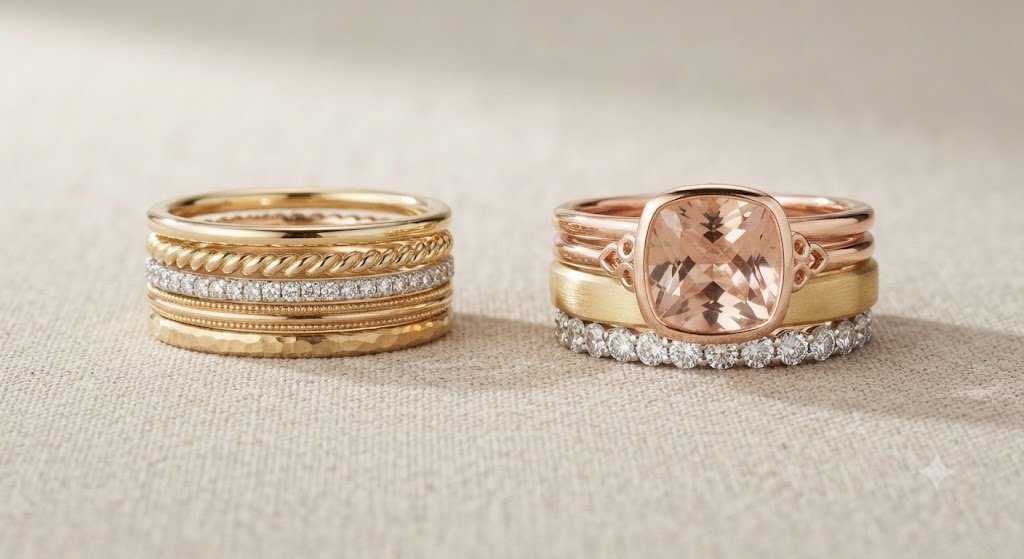
Start with a Statement Ring
Choose one ring to become the centerpiece.
Examples include:
- A solitaire gemstone
- A signet ring
- A textured gold band
- A vintage-inspired design
The remaining rings should complement rather than compete with the central piece.
Use Thin Bands as Spacers
Slim bands help separate larger rings visually while improving comfort.
Benefits include:
- Reduced friction
- Better flexibility
- More balanced proportions
- Softer transitions between larger rings
Thin stacking rings also make it easier to adjust the overall look without creating excessive bulk.
Avoid Creating Pressure Points
Placing several thick rings directly beside each other may create uncomfortable pressure during everyday activities.
To improve comfort:
- Alternate thick and thin bands.
- Mix rounded and flat profiles.
- Leave slight spacing when appropriate.
- Test how your hand feels while gripping objects.
Your stack should remain comfortable whether you’re typing, driving, or carrying bags.
Midi Rings and Knuckle Rings
Midi rings, sometimes called knuckle rings, sit above the main finger joint rather than at the base of the finger.
These rings require completely different sizing.
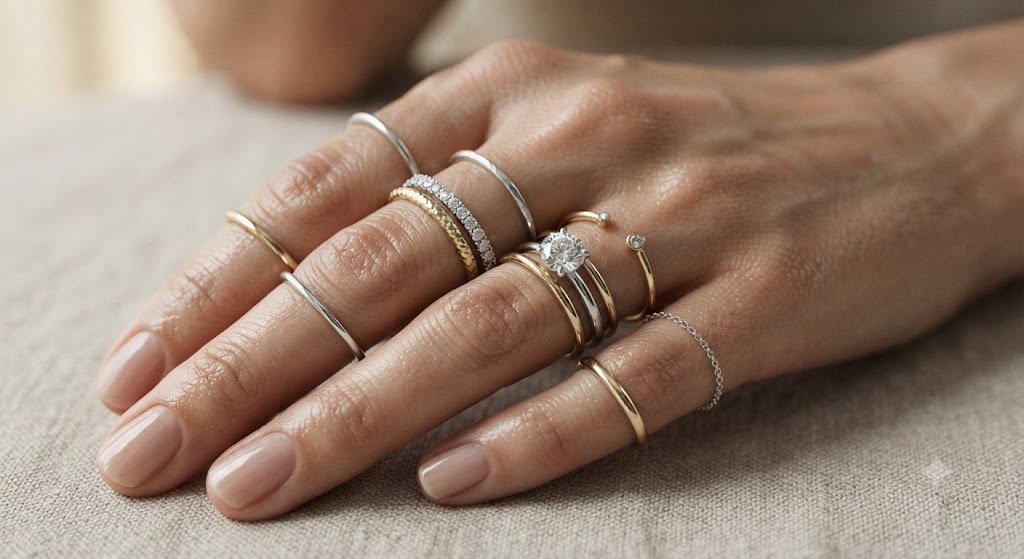
Measuring for Midi Rings
Measure the upper section of the finger where the ring will actually sit.
This area is considerably smaller than the finger’s base.
Never assume your standard ring size will fit correctly.
Using a flexible measuring tape or a printable ring sizing guide can help you obtain a more accurate measurement.
Finding the Right Fit
Midi rings should:
- Stay securely above the knuckle.
- Slide on without excessive force.
- Remain comfortable during finger movement.
- Avoid rotating excessively.
A ring that is too loose may slip off unexpectedly, while one that is too tight can restrict circulation and become uncomfortable after extended wear.
Distributing Rings Across Multiple Fingers
Ring stacking doesn’t have to mean placing every ring on one finger.
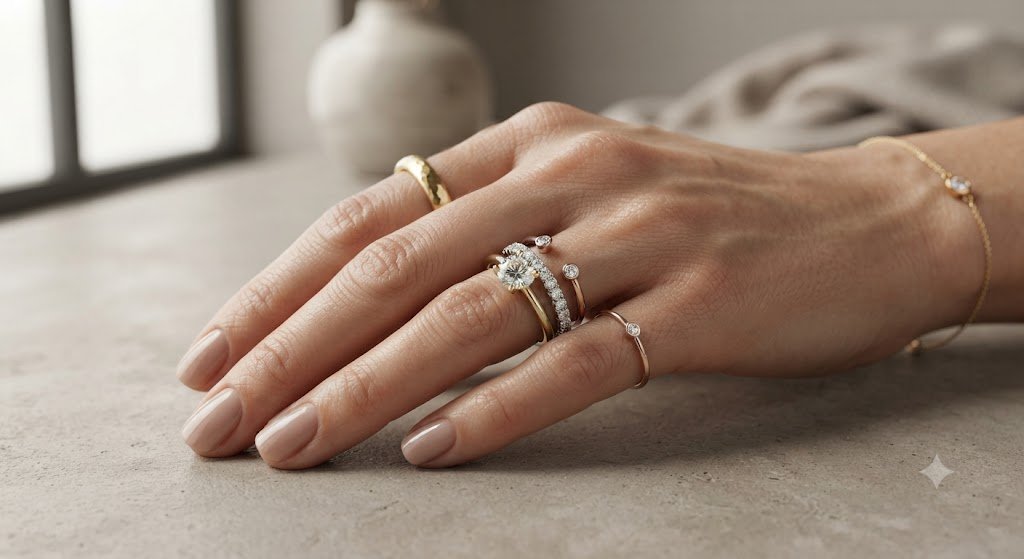
Distributing rings across neighboring fingers often creates a more balanced appearance while improving overall comfort.

Balance Visual Weight
Instead of concentrating every ring on your ring finger, consider combinations such as:
- Ring finger and middle finger
- Middle finger and index finger
- Ring finger with a midi ring above
Spreading the jewelry creates harmony without overwhelming one area of the hand.
Consider Finger Mobility
Adjacent fingers naturally move together.
If both fingers wear several thick rings, they may rub against one another.
To improve movement:
- Keep bulky rings separated.
- Use thinner bands on neighboring fingers.
- Test your grip before wearing the stack all day.
Comfort should always be as important as appearance.
Mixing Metals and Textures
One of today’s biggest jewelry trends is combining different metals within the same stack.
Popular combinations include:
- Yellow gold and white gold
- Rose gold with sterling silver
- Polished and matte finishes
- Plain bands with pavé accents
- Smooth and hammered textures
The key is maintaining balance.
Repeating one color or texture elsewhere in the stack helps create a cohesive overall look.
Practical Tips for Building Comfortable Ring Stacks
Before creating your next layered ring combination, keep these recommendations in mind:
- Consider sizing up by half a size for stacks of three or more bands.
- Start with one statement ring and build around it.
- Mix thin and thicker bands to improve comfort and visual balance.
- Measure separately for midi rings rather than using your standard ring size.
- Avoid placing multiple bulky rings on adjacent fingers.
- Test how the stack feels while writing, typing, and gripping everyday objects.
- Remove or simplify your stack if your fingers swell during hot weather.
- Choose comfort-fit bands whenever possible for rings you’ll wear daily.
Small adjustments in sizing and placement can dramatically improve both comfort and appearance.
Common Ring Stacking Mistakes
Even experienced jewelry lovers occasionally make styling mistakes.
Some of the most common include:
- Wearing every ring at the same thickness.
- Choosing rings that all compete for attention.
- Ignoring finger movement.
- Wearing overly tight stacks.
- Forgetting to account for seasonal finger swelling.
Avoiding these issues helps your stack feel effortless instead of restrictive.
Final Thoughts
Building the perfect ring stack is both an art and a science. While personal style determines the overall look, proper sizing ensures that your rings remain comfortable from morning to evening.
Following this ring stacking size guide means thinking beyond your standard ring size. Wider stacks often benefit from sizing up by half a size, while carefully mixing band thicknesses reduces pressure points and creates a more balanced appearance. Measuring midi rings independently and distributing rings across multiple fingers also improves comfort without sacrificing style.
Before adding your next stacking band or statement ring, take a few moments to consider proportion, fit, and finger movement. A thoughtfully designed ring stack not only looks elegant but also feels secure, comfortable, and effortless to wear every day.
Getting proportions right matters beyond stacked rings too. Our guides on how gemstone size affects ring fit and anklet sizing cover the same fit-first thinking for other pieces.
You Might Also Like
- Anklet Sizing Guide and Measurement: How to Measure and Choose the Perfect Fit
- Jewelry Condition Reports and Certifications Resale Value: Why Documentation Matters in the Secondary Market
- How to Measure Your Wrist for Bracelet Size: The Complete Guide to Link Bracelets and Chains
