Understanding Gold Karats Before You Buy
Shopping for gold jewelry can feel overwhelming, especially when you see labels like 10K, 14K, 18K, and 24K. Many people also confuse karat (K) with carat (ct), but they measure two completely different things.
Karat refers to the purity of gold in a piece of jewelry, while carat measures the weight of gemstones such as diamonds.
Knowing the difference makes it much easier to choose jewelry that matches your budget, lifestyle, and personal style. Whether you’re buying your first gold necklace or investing in a timeless ring, understanding gold karats helps you make a smarter purchase.
What Does Karat (K) Mean?
Pure gold is naturally soft, making it unsuitable for most everyday jewelry.
To improve strength and durability, jewelers mix pure gold with other metals such as copper, silver, zinc, or nickel. These added metals create a stronger alloy that can better withstand daily wear.
Here’s what each karat level means:
- 24K: 99.9% pure gold
- 18K: 75% pure gold
- 14K: 58.3% pure gold
- 10K: 41.7% pure gold
In general, the higher the karat, the higher the percentage of pure gold.
Why Isn’t All Jewelry Made from 24K Gold?
Many people assume that pure gold must be the best option, but that’s not always true.
Although 24K gold has the richest yellow color, it’s also very soft. Rings and bracelets made from pure gold can scratch, dent, or bend much more easily than lower-karat jewelry.
That’s why most jewelry designed for everyday wear is made with 10K, 14K, or 18K gold instead.
Comparing the Different Gold Karats
10K Gold
With 41.7% pure gold, 10K is the strongest and most durable option.
It’s ideal for people with active lifestyles or anyone looking for affordable real gold jewelry.
Best for:
- Everyday wear
- Work and outdoor activities
- Budget-friendly jewelry
Pros
- Very durable
- Highly scratch-resistant
- Most affordable solid gold option
Cons
- Lighter yellow color
- Contains more alloy metals
14K Gold
14K gold is the most popular choice in the United States because it offers an excellent balance between beauty, durability, and price.
It’s commonly used for engagement rings, necklaces, bracelets, and wedding bands.
Best for:
- Daily wear
- Engagement rings
- Fine jewelry collections
Pros
- Rich gold color
- Durable enough for everyday use
- Great value
Cons
- Slightly less vibrant than 18K gold
For many people, 14K is the ideal combination of quality and practicality.
18K Gold
Containing 75% pure gold, 18K offers a richer color and a more luxurious appearance.
It’s often chosen for premium jewelry and special occasions.
Best for:
- Luxury jewelry
- Elegant gifts
- High-end engagement rings
Pros
- Deep, rich gold color
- Higher gold content
- Often suitable for sensitive skin
Cons
- Softer than 14K
- More expensive
- Scratches more easily
24K Gold
24K is almost completely pure gold.
While it’s stunning in color, it’s too soft for most everyday jewelry and is more commonly found in investment bars, coins, and ceremonial pieces. If you are comparing karats from an investment or resale point of view, see our guide to gold karats and investment value.
Best for:
- Gold investments
- Collectors
- Traditional jewelry
Pros
- Highest purity
- Rich natural color
- Excellent intrinsic value
Cons
- Scratches very easily
- Can bend over time
- Highest price
Which Gold Karat Should You Choose?
The best option depends on how you’ll wear your jewelry.
Choose 10K if you:
- Have an active lifestyle
- Want maximum durability
- Need a budget-friendly option
Choose 14K if you:
- Wear jewelry every day
- Want the best balance of quality and price
- Prefer a timeless choice
Choose 18K if you:
- Love luxury jewelry
- Prefer a richer gold color
- Have sensitive skin
Choose 24K if you:
- Want the purest gold possible
- Are buying gold for investment
- Plan to wear it only occasionally
Quick Comparison
| Gold | Pure Gold | Durability | Best For |
|---|---|---|---|
| 10K | 41.7% | Excellent | Everyday wear and affordability |
| 14K | 58.3% | Very Good | Daily jewelry and engagement rings |
| 18K | 75% | Good | Luxury jewelry and special occasions |
| 24K | 99.9% | Fair | Investment and ceremonial pieces |
Common Myths About Gold Karats
Higher Karats Always Mean Better Jewelry
Not necessarily. Higher purity means softer gold. For everyday wear, 14K is often the most practical choice.
10K Isn’t Real Gold
False. In the United States, 10K is legally classified as genuine gold because it contains 41.7% pure gold.
24K Gold Never Gets Damaged
False. While pure gold doesn’t rust, it scratches and bends more easily than lower-karat alloys.
The Visual Difference
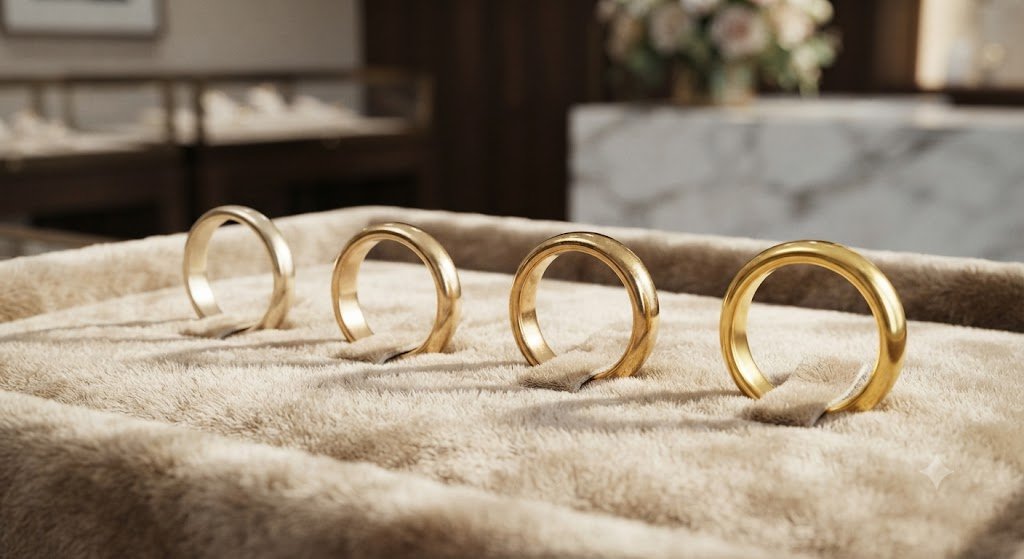
Karat affects color as much as durability. Twenty-four karat gold has a deep, warm, slightly orange-yellow tone that’s unmistakable next to lower karats — it’s the color most people picture when they think of “pure gold.” Eighteen karat gold is a rich, bright yellow with a bit more depth than 14K, which leans lighter and slightly paler because it contains a larger share of alloy metals. Side by side, the differences are subtle enough that most people can’t identify karat by eye alone, but they become noticeable when pieces of different karats are worn together.
Engagement Rings and Wedding Bands
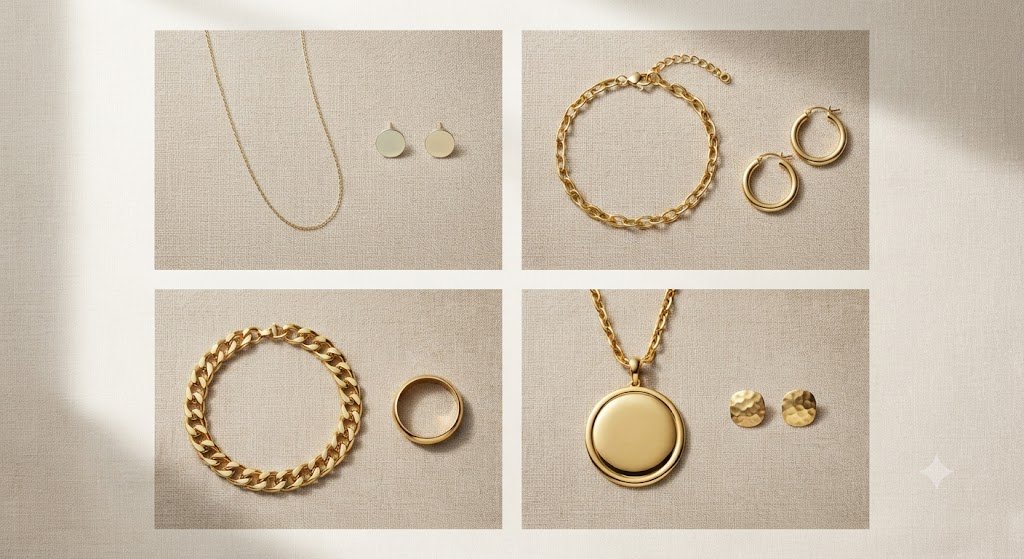
Rings take more daily impact than almost any other piece of jewelry — knocks against surfaces, constant hand movement, and prolonged skin contact. Eighteen karat gold (75% pure gold) is the karat jewelers reach for most often here, since it holds gemstone settings securely while still carrying a high percentage of real gold. Fourteen karat is also common for rings, particularly for buyers prioritizing durability and cost over the deeper 18K color. Twenty-four karat gold is rarely used for rings at all, since pure gold is too soft to reliably hold a setting or resist daily dents.
Earrings
Earrings see far less physical impact than rings, which gives more flexibility on karat. Eighteen karat gold earrings offer a noticeably richer color for pieces worn close to the face, while 14K options are common in everyday studs and hoops where cost and durability matter more than maximizing color depth.
Necklaces, Chains, and Bracelets
Thin chains and delicate bracelets flex and rub against skin and clothing constantly, so softer, higher-karat gold is more prone to stretching or thinning over time in these forms. Fourteen karat gold’s added alloy content makes it a common choice for everyday chains and tennis bracelets for exactly this reason. Heavier statement necklaces and cuffs, which see less flexing, can better accommodate 18K gold’s richer color without the same wear concerns.
Investment and Cultural Pieces
Twenty-four karat gold’s main jewelry role isn’t everyday wear — it shows up in coins, bars, and certain traditional or ceremonial jewelry where maximum purity matters more than resistance to scratching. If durability for daily use is the goal, 14K or 18K will hold up better regardless of piece type.
Caring for Gold Jewelry
No matter which karat you choose, proper care will help your jewelry stay beautiful.
Simple tips include:
- Remove jewelry before swimming or exercising.
- Apply perfume and lotion before putting on your jewelry.
- Store pieces separately to avoid scratches.
- Clean them regularly with warm water, mild dish soap, and a soft cloth.
- Avoid harsh chemicals and abrasive cleaners.
These habits can significantly extend the life of your jewelry.
Final Thoughts
Choosing between 10K, 14K, 18K, and 24K gold doesn’t have to be complicated. Each option has its own strengths, from the durability of 10K to the luxurious appearance of 18K and the unmatched purity of 24K. For most people, 14K gold offers the best combination of beauty, strength, and value, making it an excellent choice for everyday jewelry.
Ultimately, the right gold karat depends on your lifestyle, budget, and personal preferences. By understanding what each option offers, you can shop with confidence and invest in jewelry that you’ll enjoy wearing for many years.
You Might Also Like
- Gold Karats Investment Value Comparison: Is 24K, 18K, or 14K Gold the Best Choice?
- Natural vs. Lab-Grown Diamonds: Investment Value and Resale Impact Explained
- Fine Jewelry vs. Fashion Jewelry: How to Know What You’re Buying
