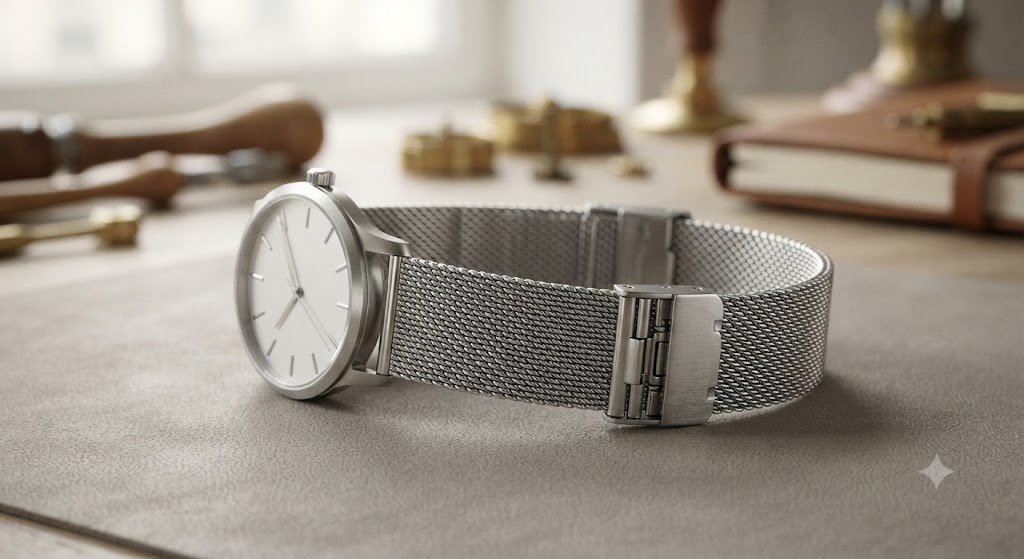
Mesh watch bands, often called Milanese mesh straps, have become a favorite among watch enthusiasts for their sleek appearance, exceptional comfort, and timeless style. Unlike traditional leather straps or metal bracelets with removable links, many mesh bands feature a sliding clasp that allows precise adjustments without requiring specialized watchmaking skills.
Learning how to adjust a mesh watch strap at home is a valuable skill that can save time, eliminate unnecessary trips to a jeweler, and help you achieve a more comfortable fit whenever your wrist size changes due to weather, activity, or daily fluctuations.
Although the adjustment process is relatively simple, using the correct tools and following the proper steps is essential to avoid scratching the clasp or damaging the woven stainless steel mesh.
This guide explains how sliding clasp systems work, how to adjust different types of mesh watch bands, and how to keep your strap looking and functioning like new.
Why Mesh Watch Bands Are So Popular
Milanese mesh bracelets have been used in watchmaking for decades because they combine elegance with practicality.
Their finely woven stainless steel construction offers several advantages:
- Lightweight yet durable design
- Excellent flexibility
- Comfortable fit around the wrist
- Breathable construction
- Sophisticated appearance suitable for both casual and formal wear
Unlike bracelets that require removing links, many mesh straps allow almost unlimited adjustment within the length of the band.
This flexibility makes them one of the easiest watch bands to customize.
Understanding the Sliding Clasp System
A sliding clasp is designed to move along the mesh until it reaches the ideal position.
Once locked, it securely grips the woven steel without requiring permanent modifications.
This mechanism allows extremely precise sizing because you are not limited to fixed adjustment holes.
As a result, many wearers find mesh straps more comfortable than traditional watch bands.
Simple Tools You’ll Need
Adjusting most sliding clasp mesh straps requires only one basic tool.
The most common options include:
- A small precision flat-head screwdriver
- A spring bar adjustment tool with a flat tip
- A pointed plastic adjustment tool designed for watch clasps
These tools are used only to lift the clasp’s locking mechanism before repositioning it.
Avoid using oversized screwdrivers, kitchen knives, or other household tools that can easily scratch the metal or damage the clasp.
Working on a clean, soft surface—such as a microfiber cloth—also helps protect both the watch and the bracelet during adjustment.
How to Adjust a Sliding Clasp Mesh Watch Band
The exact design varies slightly between manufacturers, but the adjustment process is generally very similar.
Step 1: Prepare Your Workspace
Place the watch face down on a soft cloth.
This helps prevent scratches while keeping the bracelet stable during adjustment.
Good lighting makes it easier to see the clasp mechanism.
Step 2: Locate the Locking Tab
Turn the clasp over and examine its underside.
Most sliding clasps have a small hinged locking plate that secures the clasp to the mesh.
This is the component that must be opened before the clasp can move.
Step 3: Unlock the Clasp
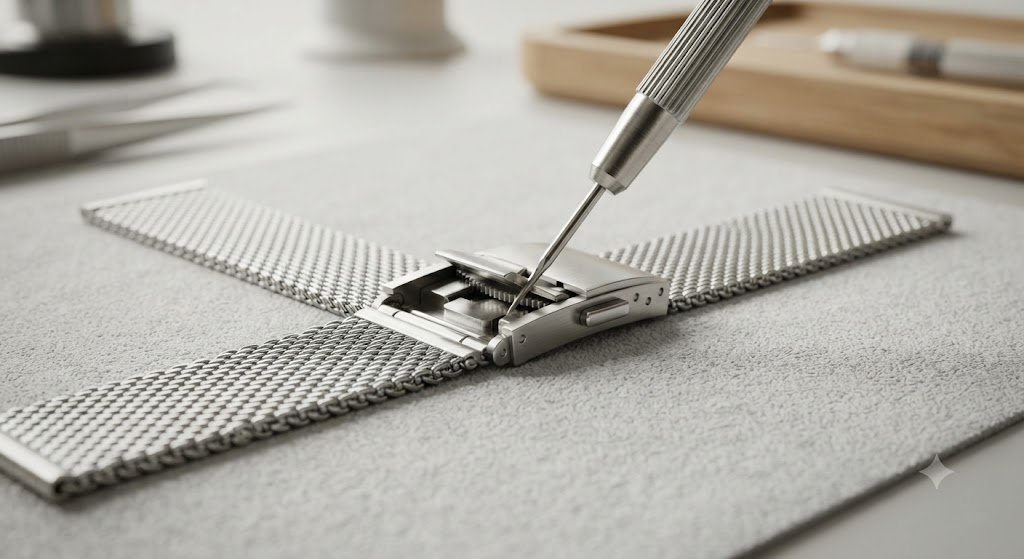
Using your precision screwdriver or adjustment tool, gently lift the locking tab.
Apply only enough pressure to release the mechanism.
Do not force it open.
The clasp should pivot upward smoothly without excessive resistance.
Step 4: Slide the Clasp
Once unlocked, carefully move the clasp along the mesh.
Slide it toward the watch case to shorten the bracelet.
Move it away from the case to increase the bracelet’s length.
Take small adjustments at a time rather than making large movements immediately.
This makes it easier to find the perfect fit.
Step 5: Lock the Clasp Securely
After choosing the desired position, press the locking plate back into place.
You should feel or hear a gentle click indicating that the clasp has locked.
Double-check that the clasp no longer slides along the mesh.
A properly secured clasp should remain firmly in position during normal wear.
Adjusting Fixed Mesh Bands with Removable Links
Not every mesh bracelet uses a fully adjustable sliding clasp.
Some fixed-length Milanese bracelets include removable sections or attachment links near the clasp.
These designs typically require a slightly different adjustment method.
How These Systems Work
Instead of sliding freely across the mesh, the bracelet length is modified by removing small connecting links or repositioning attachment hooks.
Depending on the manufacturer, this may involve:
- Removing small extension links
- Repositioning connector hooks
- Adjusting clasp attachment points
- Reinstalling retaining pins
These systems offer fewer adjustment positions than sliding clasps but still allow the bracelet to be customized for a comfortable fit.
If you’re unsure which system your watch uses, consult the manufacturer’s instructions before attempting any modifications.
Testing the Fit and Comfort
Once the adjustment is complete, wear the watch for several minutes before deciding whether additional changes are necessary.
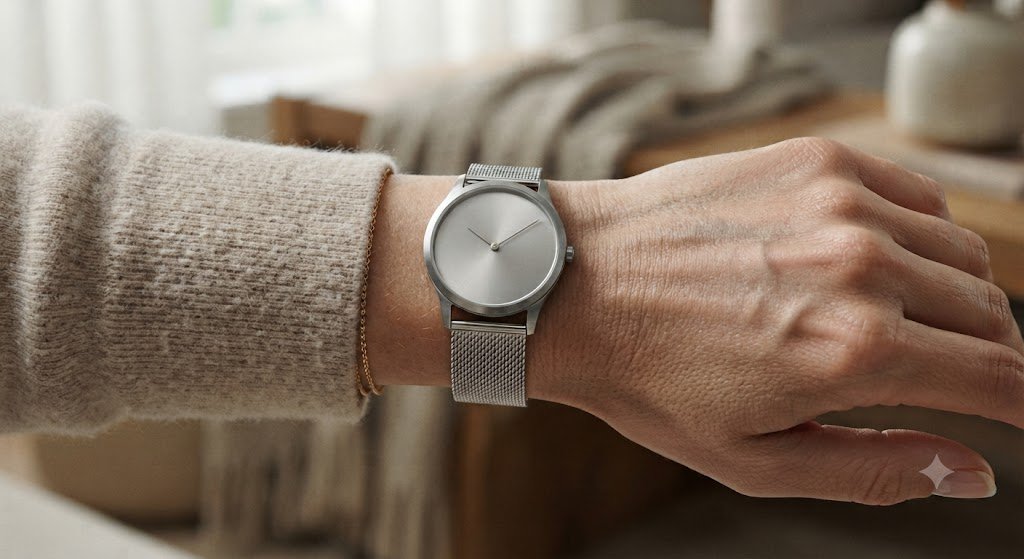
A properly adjusted mesh watch band should feel secure without restricting movement.
Use the following checklist to evaluate the fit:
- The watch remains centered on your wrist.
- The bracelet does not rotate excessively.
- You can comfortably move your wrist in all directions.
- The clasp stays securely closed.
- The mesh does not pinch or pull your skin.
- The watch feels stable during everyday activities.
Remember that wrist size naturally changes throughout the day, especially in warm weather or after exercise.
A slightly flexible fit is usually more comfortable than an overly tight one.
Common Adjustment Mistakes to Avoid
Although mesh bracelets are relatively easy to adjust, several common mistakes can damage the bracelet or reduce its lifespan.
Avoid the following:
- Forcing the clasp open with excessive pressure.
- Using large metal tools that scratch the clasp.
- Sliding the clasp while it is still partially locked.
- Failing to fully secure the locking mechanism after adjustment.
- Making large adjustments before testing the fit.
Taking your time helps preserve both the appearance and functionality of the bracelet.
Protecting Your Milanese Mesh Bracelet
The woven stainless steel structure is durable, but it still deserves proper care.
To keep your mesh bracelet in excellent condition:
- Use only precision tools designed for small mechanisms.
- Avoid dragging sharp metal objects across the mesh.
- Clean the bracelet regularly with a soft microfiber cloth.
- Rinse stainless steel mesh with fresh water after exposure to saltwater or chlorine.
- Dry the bracelet thoroughly before storing it.
- Inspect the clasp periodically to ensure it remains securely locked.
Proper maintenance helps preserve both the finish and the adjustment mechanism for years of reliable use.
Frequently Asked Questions
Can I adjust a mesh watch strap without professional help?
Yes. Most sliding clasp mesh straps are specifically designed for simple at-home adjustment using a small precision tool.
How tight should a mesh watch band be?
The bracelet should stay comfortably in place without leaving deep marks on your wrist. You should be able to slide one finger beneath the band while still keeping the watch stable.
Will adjusting the clasp damage the mesh?
Not if the adjustment is performed correctly. Opening the clasp gently and using the proper tools prevents unnecessary wear on the woven stainless steel.
Can I readjust the clasp later?
Absolutely. One of the biggest advantages of sliding clasp systems is that they can be repositioned multiple times whenever your preferred fit changes.
Final Thoughts
Learning how to adjust a mesh watch strap is a simple skill that can greatly improve the comfort, appearance, and everyday usability of your watch. Whether your bracelet features a fully adjustable sliding clasp or a fixed mesh design with removable links, understanding how the adjustment system works allows you to achieve a personalized fit without visiting a repair shop.
Using a precision screwdriver, working carefully, and testing the fit after each adjustment helps ensure the bracelet remains secure while protecting the elegant woven stainless steel from scratches or damage. Regular inspection and proper maintenance will also keep the clasp functioning smoothly over time.
Before purchasing a replacement mesh bracelet—or adjusting the one you already own—take a few minutes to follow this guide. A properly fitted Milanese mesh strap not only enhances comfort but also showcases the refined style that has made this classic watch band a favorite for generations.
If your watch also needs a new band, our guide to measuring watch lug width will help you get the replacement size exactly right. For sizing other jewelry pieces, see our anklet sizing guide.
You Might Also Like
- Anklet Sizing Guide and Measurement: How to Measure and Choose the Perfect Fit
- Jewelry Condition Reports and Certifications Resale Value: Why Documentation Matters in the Secondary Market
- How to Measure Your Wrist for Bracelet Size: The Complete Guide to Link Bracelets and Chains
