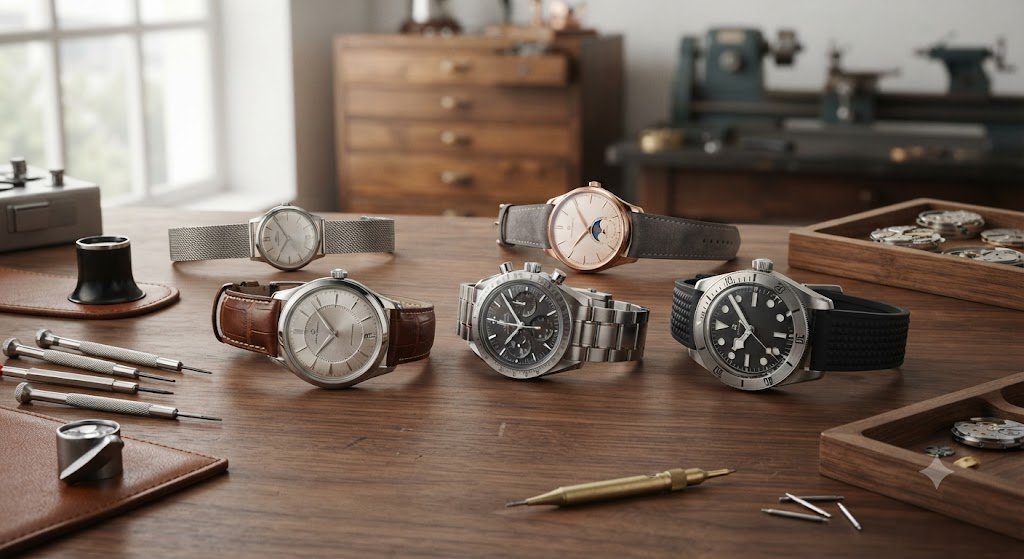
Replacing your watch band is one of the easiest ways to refresh the look, comfort, and functionality of your favorite timepiece. Whether you’re upgrading to premium leather, switching to a sporty rubber strap, or installing a durable stainless steel bracelet, choosing the correct size is essential. Even the highest-quality replacement band won’t fit properly if the measurements are incorrect.
One of the most important dimensions to understand is lug width—the distance between the two lugs on the watch case where the strap attaches. A replacement band that is too narrow will leave visible gaps and may move excessively, while one that is too wide simply won’t fit between the lugs.
Fortunately, measuring your watch band size and lug width is straightforward when you use the proper tools and techniques. This guide explains everything you need to know before purchasing a replacement strap, helping you achieve a secure, comfortable, and professional-looking fit.
What Is Watch Lug Width?
Lug width refers to the inside distance between the two lugs extending from the watch case. These lugs hold the spring bars that secure the watch band.
Unlike the overall case diameter, lug width is measured in millimeters (mm) and determines the exact width of the replacement strap you need.
Because watch bands are manufactured in standardized widths, even a difference of 1 mm can prevent proper installation.
Why Lug Width Is So Important
The lug width determines whether a replacement band will fit safely and look proportional.
A correctly sized strap will:
- Fit snugly between the lugs.
- Keep the watch centered on the wrist.
- Prevent unnecessary movement.
- Maintain the original design proportions.
- Reduce stress on the spring bars.
Using the wrong width can compromise both appearance and security.
Common Watch Lug Widths
Most modern watches use one of several standard lug widths.
The most common sizes include:
| Lug Width | Typical Watch Size |
|---|---|
| 18 mm | Smaller dress watches |
| 20 mm | Medium-sized everyday watches |
| 22 mm | Sports and dive watches |
| 24 mm | Oversized or rugged watches |
Some manufacturers also use intermediate sizes such as 19 mm, 21 mm, or 23 mm, making accurate measurement especially important.
How to Measure Watch Lug Width Correctly
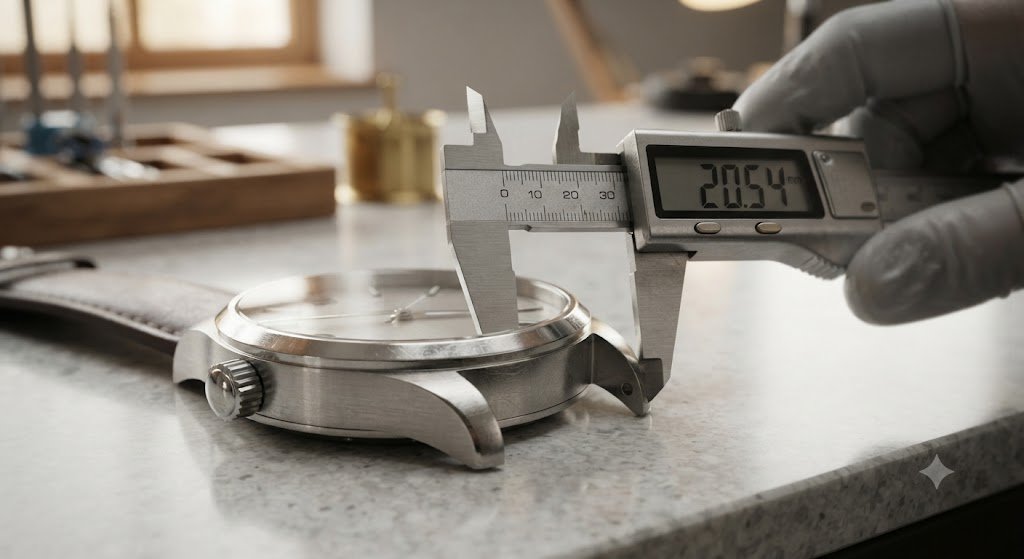
The most accurate way to determine lug width is by measuring directly between the inside edges of the lugs.
A digital caliper provides the highest level of precision, although a quality metric ruler can also work for many watches.
Method 1: Using a Digital Caliper
A digital caliper is the preferred tool because it measures with exceptional accuracy.
Step 1
Remove the existing watch band if possible.
This provides unobstructed access to the inside of the lugs.
Step 2
Place the caliper jaws against the inner faces of the lugs.
Measure only the open space where the spring bar sits.
Step 3
Read the measurement in millimeters.
Round only if the measurement is clearly between standard sizes.
Most watches measure exactly:
- 18 mm
- 20 mm
- 22 mm
- 24 mm
Method 2: Using a Millimeter Ruler
If you don’t own a caliper, a precision ruler marked in millimeters can still provide a reliable measurement.
Step 1
Position the ruler directly across the inside of the lugs.
Step 2
Keep the ruler perfectly straight.
Viewing the measurement from an angle can introduce small errors.
Step 3
Read the inside distance as accurately as possible.
Although slightly less precise than a caliper, this method is usually sufficient for standard lug widths.
How to Measure Watch Band Length
Selecting the correct width is only half of the equation.
The overall band length determines how comfortably the watch fits around your wrist.
Most two-piece straps consist of:
- The long side, containing adjustment holes.
- The short side, often called the buckle side, which includes the buckle or clasp.
Together, these two pieces determine the total wearable length.
Measuring the Long Side
Lay the longer section flat.
Measure from the spring bar hole to the end of the strap.
Do not include the spring bar itself.
Measuring the Buckle Side
Measure from the spring bar hole to the end of the buckle section.
Depending on the manufacturer, this measurement may or may not include the buckle.
When purchasing a replacement strap, always verify how the manufacturer reports strap length.
Why Strap Length Matters
Even if the lug width is perfect, an incorrect strap length may cause discomfort.
A strap that is too short can:
- Feel tight.
- Limit adjustment.
- Create uneven buckle positioning.
A strap that is too long may:
- Leave excessive excess material.
- Shift the buckle away from the wrist center.
- Reduce overall comfort.
Choosing the proper length ensures balanced wear and improves the appearance of the watch.
How Different Watch Band Materials Affect Fit
Not every watch band behaves the same way after installation.
Material flexibility influences both comfort and perceived fit.
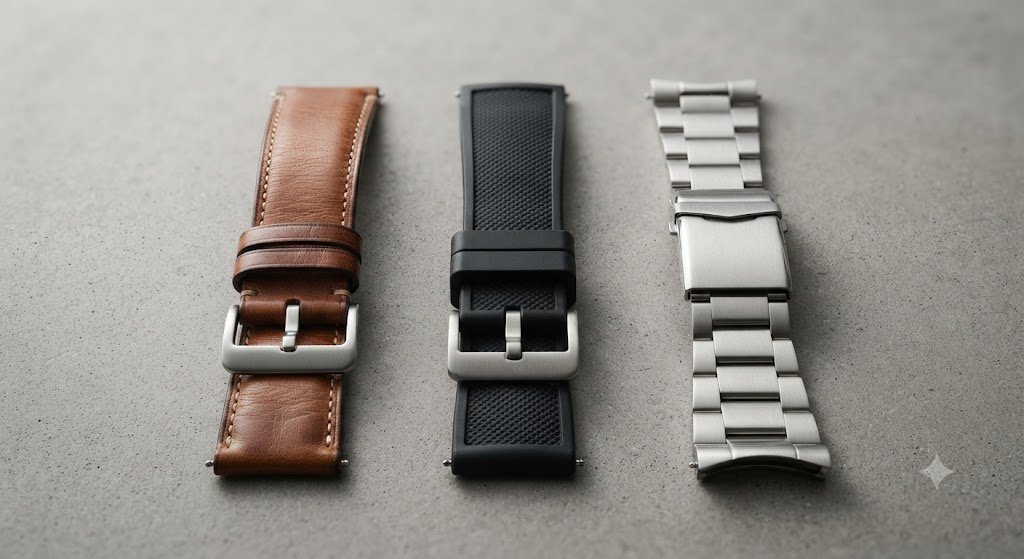
Leather Watch Bands
Leather naturally softens with wear.
Benefits include:
- Comfortable break-in period.
- Elegant appearance.
- Gradual shaping to the wrist.
However, leather may stretch slightly over time and is sensitive to prolonged moisture exposure.
Rubber and Silicone Bands
Rubber straps remain flexible while offering excellent durability.
Advantages include:
- Water resistance.
- Athletic comfort.
- Easy cleaning.
- Consistent sizing.
High-quality rubber maintains its shape well, though some softer silicone straps may feel slightly more flexible during wear.
Metal Bracelets
Metal bracelets fit differently because they use removable links rather than adjustment holes.
Characteristics include:
- Minimal flexibility.
- Precise sizing through link removal or addition.
- Excellent long-term durability.
Proper bracelet sizing often requires adjusting individual links for the best fit.
Understanding Measurement Tolerances
Manufacturing tolerances are normal in watchmaking.
A strap labeled as 20 mm may measure very slightly under or over that dimension.
High-quality replacement bands are designed with these small tolerances in mind, allowing for secure installation without excessive force.
Avoid attempting to force a wider strap into narrower lugs, as this can damage both the band and the watch case.
The Importance of Spring Bars
Spring bars are small metal pins that connect the watch band to the case.
Although inexpensive, they play a critical role in keeping the watch securely attached to your wrist.
Whenever replacing a band, inspect the spring bars carefully.
Replace them if they show:
- Rust
- Bent ends
- Weak spring tension
- Visible wear
- Corrosion
Installing a premium strap with worn spring bars increases the risk of accidental failure.
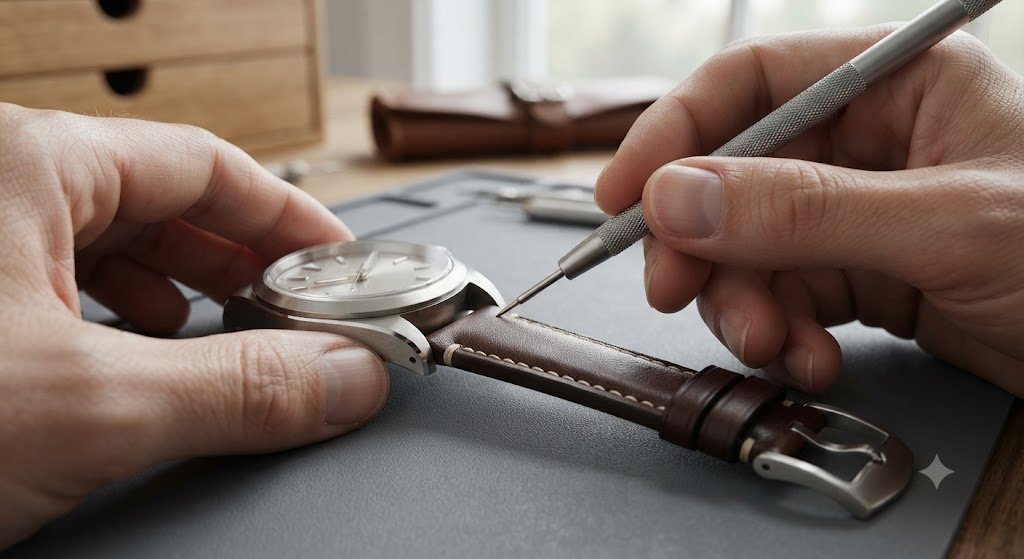
Choosing the Right Spring Bar Tool
A dedicated spring bar tool makes installation significantly easier.
These tools help you:
- Compress the spring bars safely.
- Avoid scratching the watch case.
- Install the band evenly.
- Remove straps without damaging the lugs.
Using the correct tool also reduces the chance of bending the spring bars during installation.
Step-by-Step Checklist Before Buying a Replacement Watch Band
Follow these steps to ensure a perfect fit:
- Measure the lug width directly between the inside edges of the lugs.
- Confirm the measurement in millimeters before ordering.
- Measure both the long side and buckle side of your current strap.
- Consider your wrist circumference when selecting strap length.
- Choose a material that matches your lifestyle and comfort preferences.
- Inspect or replace the spring bars if they show signs of wear.
- Use a proper spring bar tool for safe installation.
- Double-check all measurements before completing your purchase.
Taking a few extra minutes to verify these details can prevent unnecessary returns and ensure your new watch band fits exactly as intended.
Final Thoughts
Knowing how to measure watch lug width is one of the most valuable skills for anyone replacing a watch band. Accurate measurements ensure your new strap fits securely, preserves the watch’s proportions, and provides lasting comfort.
Beyond lug width, paying attention to strap length, material characteristics, and the condition of the spring bars helps create a safer and more enjoyable wearing experience. Leather, rubber, and metal bands each offer unique benefits, but all rely on correct sizing and proper installation.
Before purchasing your next replacement watch band, take the time to measure carefully using a digital caliper or a precision millimeter ruler. By following this guide, you’ll be able to customize your favorite watch with confidence, achieving a fit that is both secure and perfectly tailored to your wrist.
Already have a mesh band in mind? Our guide to adjusting a mesh watch strap covers sizing for that style specifically. For ring sizing with the same attention to detail, see our ring stacking size guide.
You Might Also Like
- Anklet Sizing Guide and Measurement: How to Measure and Choose the Perfect Fit
- Jewelry Condition Reports and Certifications Resale Value: Why Documentation Matters in the Secondary Market
- How to Measure Your Wrist for Bracelet Size: The Complete Guide to Link Bracelets and Chains
