Introduction
Choosing an engagement ring is one of the most meaningful purchases you’ll ever make. It symbolizes love, commitment, and the beginning of a new chapter together. But with so many diamonds, settings, metals, and price ranges available, it’s easy to feel overwhelmed.
The good news is that finding the perfect ring doesn’t have to be complicated. By understanding a few key basics, you can confidently choose a ring that matches your partner’s style, fits your budget, and becomes a piece they’ll treasure for years.
Understanding the 4 Cs of Diamonds
If you’re buying a diamond engagement ring, you’ll quickly come across the 4 Cs. These internationally recognized standards help determine a diamond’s quality and value.
Cut: The Most Important Factor
Many people think a diamond’s sparkle comes from its size, but cut has the biggest impact.
A well-cut diamond reflects light beautifully, making it appear brighter and more brilliant.
Common cut grades include:
- Excellent
- Very Good
- Good
- Fair
- Poor
If you’re working with a budget, prioritize a better cut before choosing a larger carat size.
Color
Diamond color is graded from D (colorless) to Z (noticeable yellow or brown tint).
For many buyers, diamonds in the G–J range offer an excellent balance between beauty and price because they usually appear colorless to the naked eye.
Clarity
Clarity refers to tiny natural imperfections, known as inclusions.
Fortunately, most are impossible to see without magnification. An eye-clean diamond often provides the best value without sacrificing appearance.
Carat
Carat measures a diamond’s weight, not its actual size.
Larger diamonds are rarer and therefore more expensive, but a smaller diamond with an excellent cut can often appear just as impressive.
Popular Engagement Ring Settings
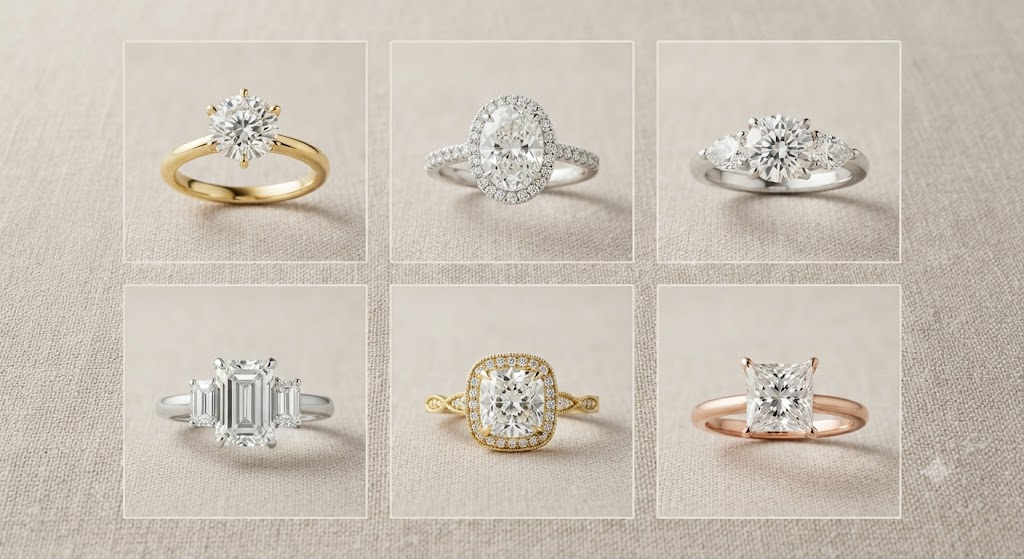
The setting shapes the ring’s overall appearance and highlights the center stone.
Solitaire
A solitaire features one center diamond without additional stones.
Why it’s popular:
- Timeless design
- Elegant simplicity
- Easy to pair with wedding bands
- Keeps the focus on the diamond
It’s a classic choice that never goes out of style.
Halo
A halo setting surrounds the center diamond with smaller diamonds.
Benefits include:
- Extra sparkle
- Makes the center stone appear larger
- Glamorous look
- Great value for maximizing brilliance
Three-Stone
This style features one center stone with two smaller stones on each side.
Many couples appreciate its symbolism:
- Past
- Present
- Future
It combines beauty with meaningful storytelling.
Choosing the Right Metal
The metal affects both durability and overall style.
Platinum
Platinum is naturally white, extremely durable, and hypoallergenic.
Pros:
- Very strong
- Excellent for everyday wear
- Doesn’t fade in color
- Great for sensitive skin
Its premium quality usually comes with a higher price.
White Gold
White gold offers a bright, modern appearance similar to platinum at a lower cost.
Advantages:
- Elegant finish
- Beautiful with diamonds
- More affordable than platinum
Keep in mind that white gold may need occasional rhodium replating to maintain its bright color.
Yellow Gold
Yellow gold remains one of the most timeless choices.
Its warm tone works beautifully with both classic and vintage-inspired designs.
Benefits include:
- Rich traditional color
- Lower maintenance
- Complements many skin tones
Rose Gold
Rose gold has become increasingly popular thanks to its soft pink color.
It offers:
- Romantic appearance
- Vintage charm
- Unique style
- Excellent versatility
Setting a Realistic Budget
One of the biggest myths about engagement rings is that there’s a required amount you should spend.
The truth is that every couple’s financial situation is different.
Before shopping, consider:
- Your overall budget
- Wedding expenses
- Savings goals
- Future financial plans
A thoughtfully chosen ring that fits your finances is far more meaningful than one that creates unnecessary stress.
How to Find the Ring Size Secretly
Planning a surprise proposal?
Try one of these simple methods:
- Borrow a ring your partner already wears on their ring finger.
- Ask a close friend or family member for help.
- Trace the inside of one of their rings on paper.
- Have a jeweler measure a borrowed ring.
If you’re unsure, choosing a slightly larger size is often safer since many rings can be resized later.
Engagement Ring Shopping Checklist
Before making your purchase, remember to:
- Learn the basics of the 4 Cs.
- Choose a setting that fits your partner’s style.
- Pick a durable metal.
- Set a realistic budget.
- Compare overall quality—not just carat size.
- Confirm the ring size.
- Buy from a reputable jeweler with a clear warranty and return policy.
Common Mistakes to Avoid
Avoid these common shopping mistakes:
- Focusing only on diamond size.
- Ignoring your partner’s personal style.
- Shopping without a budget.
- Choosing trends over timeless preferences.
- Forgetting to ask about resizing or maintenance.
- Waiting until the last minute.
A little preparation makes the entire buying experience much easier.
Final Thoughts
Learning how to choose the perfect engagement ring doesn’t require expert knowledge—it simply requires understanding the essentials. By familiarizing yourself with the 4 Cs, comparing different settings, selecting the right metal, and establishing a comfortable budget, you’ll be able to make a confident and informed decision.
Most importantly, remember that the perfect engagement ring isn’t defined by its price or size. It’s the meaning behind it that truly matters. A ring chosen with love, care, and thoughtful consideration will become a lasting symbol of your relationship and one of the most cherished pieces of jewelry your partner will ever own.
You Might Also Like
- Gold Karats Investment Value Comparison: Is 24K, 18K, or 14K Gold the Best Choice?
- Natural vs. Lab-Grown Diamonds: Investment Value and Resale Impact Explained
- Fine Jewelry vs. Fashion Jewelry: How to Know What You’re Buying