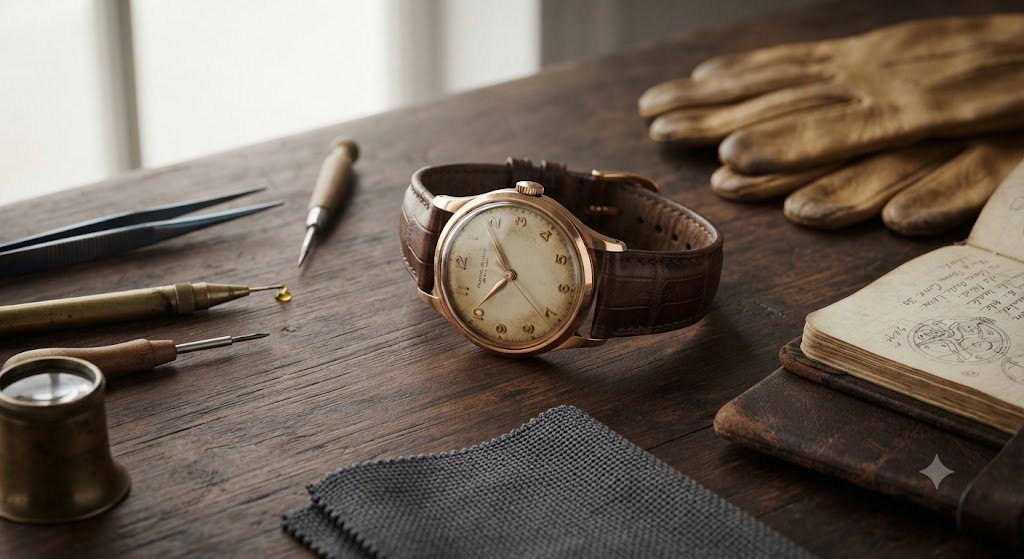
Why Proper Vintage Watch Care Matters
Owning a vintage watch is about much more than telling time. Every scratch, faded dial, and worn leather strap tells a story of another era, reflecting decades of craftsmanship, innovation, and personal history. Whether it’s a family heirloom, a collector’s treasure, or a carefully chosen antique, a vintage timepiece deserves thoughtful care to preserve both its mechanical integrity and historical character.
Unlike modern watches, vintage models were built with materials, lubricants, and sealing technologies that have naturally aged over time. Even if a watch appears to function perfectly, its internal components may be far more delicate than they seem.
Caring for a vintage watch isn’t about making it look brand new. Instead, it’s about preserving its authenticity while protecting it from unnecessary wear. With the right maintenance habits, these remarkable mechanical relics can continue running—and telling their stories—for generations to come.
Evaluating Your Vintage Watch Before Cleaning
Before reaching for a polishing cloth or cleaning solution, it’s important to understand that vintage watches require a different approach than modern timepieces.
Many watches produced decades ago no longer retain their original water resistance. Rubber gaskets dry out, seals become brittle, and metal components naturally age over time. Even if the watch was originally marketed as water-resistant, that protection should never be assumed today unless it has been recently tested by a qualified watchmaker.
Take a few moments to inspect your watch before cleaning.
Look for:
- Loose crowns or pushers
- Cracked acrylic or mineral crystals
- Worn case backs
- Corrosion around the crown
- Damaged leather straps
- Signs of previous repairs
If you notice moisture inside the crystal or visible corrosion, avoid attempting any cleaning until the watch has been inspected by a professional.
Remember that preserving originality is often more valuable than achieving a flawless appearance.
Safely Cleaning the Case and Bracelet
Routine exterior cleaning helps remove dirt, fingerprints, and oils without compromising the watch’s delicate movement.
For most vintage watches, less is more.
Essential Steps
Follow these simple guidelines:
- Remove loose dust with a soft microfiber cloth.
- Lightly dampen the cloth with clean water if necessary.
- Carefully wipe the case without allowing moisture near the crown or case back.
- Dry the watch immediately using another clean microfiber cloth.
- Use a soft artist’s brush to remove dust from tight areas between the lugs or bracelet links.
If the watch features a metal bracelet that can be safely removed, cleaning the bracelet separately is often the safest approach.
Avoid immersing the watch in water—even briefly.
Because aging seals may no longer provide reliable protection, even small amounts of moisture can enter the movement and cause costly damage.
Caring for Acrylic and Glass Crystals
The crystal is one of the defining visual features of any vintage watch.
Older watches commonly feature acrylic crystals, while later models may use mineral glass or sapphire crystal.
Each material requires a different approach.
Acrylic Crystals
Acrylic is softer than glass and scratches more easily, but it also offers an advantage.
Light surface scratches can often be reduced using specialized acrylic polishing compounds applied with a soft cloth and gentle circular motions.
Never use abrasive household products such as toothpaste or rough polishing pads, as these can permanently damage the surface.
Mineral Glass
Minor smudges can be removed with a microfiber cloth.
However, scratches in mineral glass are extremely difficult to polish effectively and are usually best left to professionals.
Sapphire Crystal
Sapphire is highly scratch-resistant but can still chip or crack if struck.
Simply clean it with a soft microfiber cloth and avoid harsh cleaning chemicals.
The goal is always preservation—not aggressive restoration.
Proper Storage Protects Your Watch’s Future
Even when you’re not wearing your vintage watch, proper storage plays a major role in preserving its condition.
Poor storage can expose delicate mechanical components to environmental damage that develops slowly over time.
Keep Watches Away From Moisture
Humidity is one of the greatest threats to vintage mechanical watches.
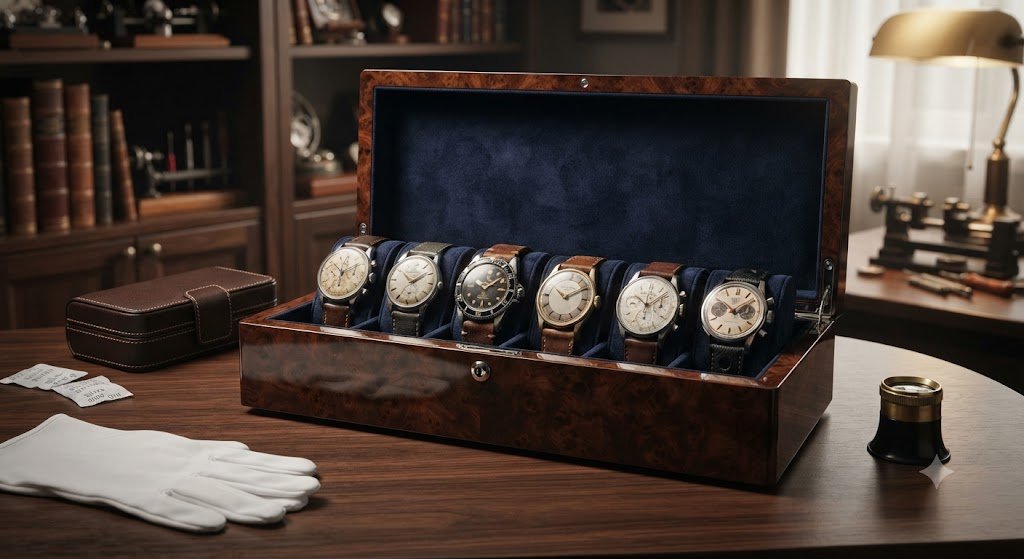
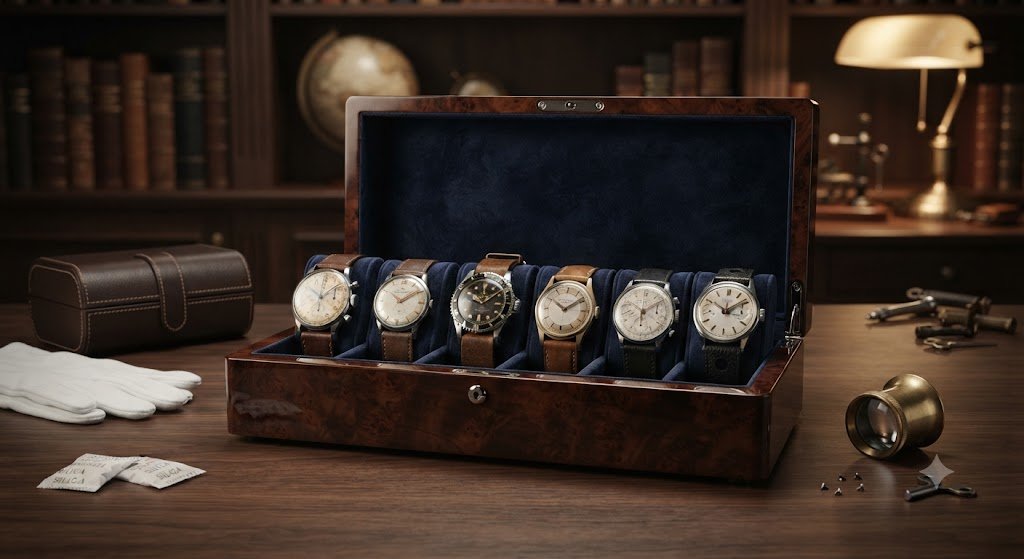
Store your watch in a dry environment, preferably inside a protective watch box or storage case with adequate ventilation.
Silica gel packets can help reduce excess moisture inside storage containers.
Avoid Magnetic Fields
Magnets can interfere with the delicate balance spring inside a mechanical movement, reducing timekeeping accuracy.
Keep vintage watches away from:
- Speakers
- Wireless chargers
- Tablets
- Smartphones
- Laptop magnets
- Magnetic clasps
Modern electronics generate stronger magnetic fields than many people realize.
Protect From Sunlight
Extended exposure to direct sunlight may cause:
- Dial fading
- Leather strap deterioration
- Lubricant degradation
- Increased internal temperatures
Store vintage watches away from windows whenever possible.
The Myth of DIY Movement Maintenance
One of the biggest mistakes new collectors make is attempting to service the movement themselves.
Opening the case back without the proper tools, experience, or clean working environment can cause serious damage.
Inside a mechanical watch are dozens—or even hundreds—of incredibly small components operating with microscopic tolerances.
Without professional equipment, it’s easy to:
- Scratch the case
- Damage the gasket
- Introduce dust into the movement
- Bend delicate components
- Lose tiny screws or springs
- Compromise water resistance
Even replacing a battery in certain vintage quartz watches may require specialized tools.
Unless you are a trained watchmaker, the safest decision is simple:
Never open the case yourself.
When to Visit a Vintage Watch Specialist
Mechanical lubricants naturally deteriorate over time.
Even a watch that appears to run well may contain dried oils that increase friction and accelerate wear.
Regular servicing by an experienced vintage watchmaker helps protect the movement before significant damage occurs.
A professional service typically includes:
- Complete movement disassembly
- Ultrasonic cleaning of components
- Inspection for worn parts
- Fresh lubrication
- Regulation and timing adjustment
- Reassembly and testing
When selecting a watchmaker, choose someone familiar with historical calibers and vintage restoration techniques.
Many older movements require replacement parts that are difficult to source, making specialized knowledge especially valuable.
Routine servicing every several years—depending on the watch’s condition and usage—helps preserve both functionality and long-term value.
Essential Vintage Watch Care Checklist
Following a few simple habits can dramatically extend the life of your watch.
✔ Clean the exterior with a soft microfiber cloth.
✔ Keep moisture away from the crown and case back.
✔ Never assume an old watch is still water-resistant.
✔ Store watches in a cool, dry location.
✔ Protect them from magnets and direct sunlight.
✔ Polish acrylic crystals only with products designed for watch restoration.
✔ Never open the movement without proper training and tools.
✔ Schedule periodic servicing with a qualified vintage watch specialist.
Final Thoughts
Vintage watches are far more than precision instruments—they are mechanical pieces of history that reflect the craftsmanship, innovation, and design philosophies of another era. Every original dial, hand-finished movement, and carefully aged case carries a story that cannot be recreated once it is lost. Preserving these details requires patience, respect, and a commitment to thoughtful care rather than unnecessary restoration.
Simple habits such as gentle exterior cleaning, proper storage, protecting the watch from moisture and magnetic fields, and avoiding do-it-yourself movement repairs can significantly extend the life of a treasured timepiece. Equally important is trusting experienced watchmakers who understand the unique characteristics of historical calibers and can service them without compromising their originality.
Ultimately, caring for a vintage watch means becoming its temporary guardian. With mindful maintenance and professional attention when needed, these remarkable mechanical heirlooms can continue ticking reliably while preserving the stories, craftsmanship, and legacy they have carried for decades—ready to be appreciated and passed on to future generations.
You Might Also Like
- Common Jewelry Care Mistakes You Need to Avoid
- How to Clean Sterling Silver Tarnish at Home: A Safe Step-by-Step Guide
- Sterling Silver Cleaning Methods Compared: Which One Should You Use?
