Discover how to preserve your family’s treasured jewelry, protect its history, and ensure each piece continues telling its story for generations to come.
Introduction: Why Family Jewelry Is More Than a Valuable Possession
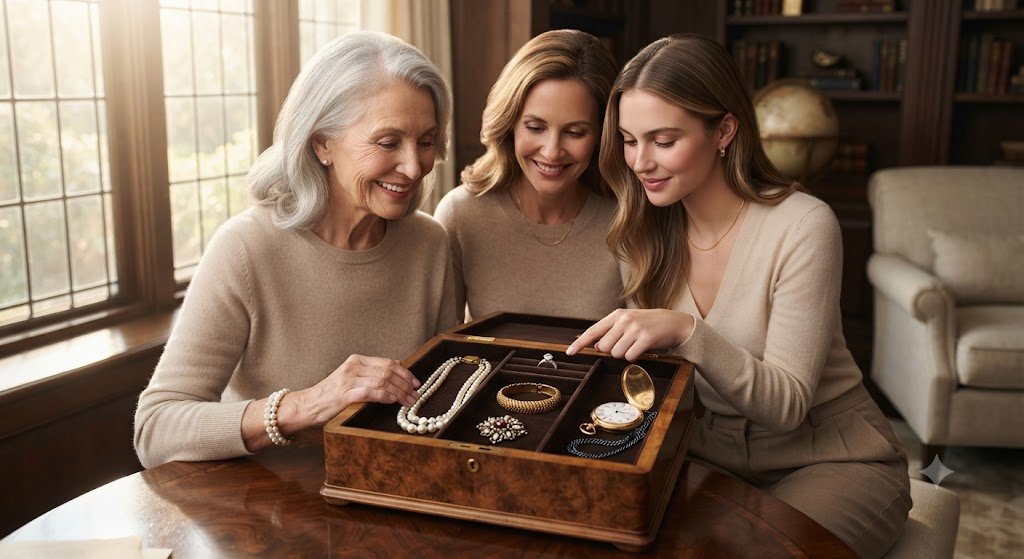
Jewelry has long represented life’s most meaningful moments. Engagement rings celebrate new beginnings, wedding bands symbolize lifelong commitment, and anniversary gifts honor years of shared memories. Over time, these pieces often become far more than beautiful accessories—they become family heirlooms.
A family heirloom carries stories that cannot be measured by its market value alone. A grandmother’s pearl necklace may remind future generations of family traditions, while a grandfather’s watch may represent decades of dedication, resilience, and love. Every scratch, engraving, and carefully preserved detail becomes part of a larger family history.
Passing down jewelry is about preserving memories as much as preserving precious metals and gemstones. With thoughtful planning, proper care, and clear communication, heirloom jewelry can continue to connect generations for decades—or even centuries—to come.
Why Jewelry Makes Meaningful Heirlooms
Unlike many possessions that eventually wear out or become outdated, fine jewelry is designed to last. Gold, platinum, diamonds, and other precious gemstones can endure for generations when properly maintained.
More importantly, jewelry becomes emotionally valuable because it is worn during life’s most significant milestones. A ring worn every day for fifty years or a pendant gifted on a special anniversary carries memories that no newly purchased piece can replicate.
As heirlooms are passed from one generation to the next, they gain new meaning while preserving the legacy of those who came before.
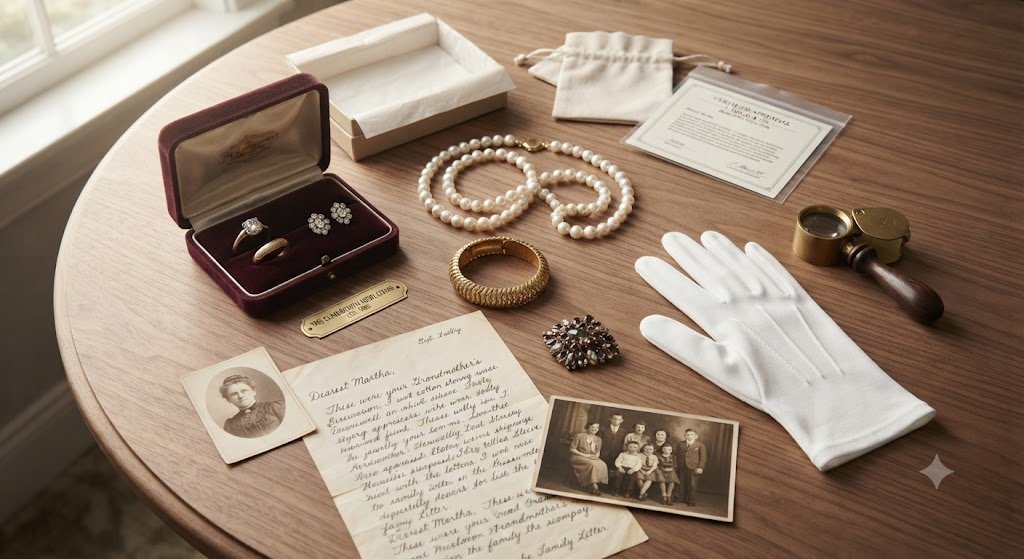
Evaluation and Documentation
Create a Complete Inventory
One of the first steps in preserving family jewelry is knowing exactly what your collection includes.
Prepare an organized inventory containing:
- A detailed description of each piece
- The type of metal and gemstones
- Dimensions and approximate weight
- Purchase information, if available
- Previous repairs or alterations
- Hallmarks or identifying marks
This documentation simplifies future insurance claims, estate planning, and family discussions.
Keep an Updated Professional Appraisal
Even if a piece has remained in your family for decades, its market value may change over time.
A certified jewelry appraisal can provide:
- Current replacement value
- Material identification
- Gemstone grading when applicable
- Documentation for insurance purposes
- Estate planning support
Updating appraisals every few years helps ensure that records remain accurate as market conditions evolve.
Photograph Every Piece
Professional-quality photographs are just as valuable as written documentation.
Capture:
- Front and back views
- Side profiles
- Close-ups of engravings
- Gemstone details
- Hallmarks
- Any distinguishing characteristics
Store both digital and printed copies in separate secure locations.
Restoration and Cleaning
Prepare Older Jewelry Carefully
Vintage jewelry often shows signs of age, and that’s part of its character. However, before passing it to the next generation, it’s worth ensuring that each piece is structurally sound.
A qualified jeweler can inspect:
- Loose gemstones
- Worn prongs
- Weak clasps
- Damaged settings
- Cracked solder joints
Preventive repairs today may help avoid expensive restoration in the future.
Preserve Original Character
Restoration should always respect the piece’s history.
Rather than making antique jewelry appear brand new, the goal is usually to stabilize and preserve its craftsmanship while maintaining its original design whenever possible.
Over-polishing or replacing historical details unnecessarily may reduce both sentimental and historical significance.
Planning the Transfer
Decide Who Receives Each Piece
Passing down jewelry can be an emotional process, particularly when several family members have strong attachments to the same heirloom.
Planning ahead reduces confusion and helps preserve family harmony.
Consider factors such as:
- Emotional significance
- Existing family traditions
- Individual preferences
- Future caretakers’ ability to preserve the jewelry
- Personal wishes of the current owner
There is rarely one perfect solution, but thoughtful planning makes future decisions much easier.
Communicate Openly
Many inheritance disputes arise simply because expectations were never discussed.
Having transparent conversations while everyone is able to participate can prevent misunderstandings later.
Some families choose to:
- Discuss heirlooms during estate planning
- Create written distribution lists
- Explain why certain pieces are intended for specific individuals
- Include jewelry instructions within legal estate documents
Clear communication often protects both relationships and treasured possessions.
Long-Term Storage
Protect Jewelry for Future Generations
Proper storage is essential for preserving heirloom jewelry over many decades.
The ideal storage environment should be:
- Cool
- Dry
- Stable in temperature
- Protected from excessive humidity
- Free from unnecessary handling
Avoid storing valuable jewelry in bathrooms or other humid environments where moisture may accelerate tarnishing or damage delicate materials.
Recommended Storage Solutions
For long-term preservation, consider using:
- Fire-resistant home safes
- Bank safe deposit boxes for rarely worn heirlooms
- Velvet-lined jewelry boxes
- Individual fabric pouches
- Anti-tarnish storage materials for sterling silver
- Silica gel packets to reduce excess moisture
Separating each item helps prevent scratches and unnecessary wear.
The Sentimental Value
Include the Story Behind the Jewelry
Perhaps the most meaningful gift you can pass along isn’t the jewelry itself—it’s the story that accompanies it.
Many families choose to write a personal note or “letter of intention” to accompany important heirlooms.
You might include:
- When the piece was acquired
- Who originally owned it
- The occasion it commemorates
- Family traditions associated with it
- Why you chose a particular recipient
- Personal memories connected to the jewelry
Years from now, this written history may become just as treasured as the jewelry itself.
Future generations will appreciate knowing not only what they inherited but also why it mattered.
Should You Modernize an Heirloom?
Preserving the Original Design
Some heirlooms are historically significant exactly as they are.
Vintage Art Deco rings, Victorian brooches, or antique lockets often reflect craftsmanship that is difficult to reproduce today.
Keeping these pieces intact preserves both their character and their historical value.
Updating Jewelry for Everyday Wear
In some cases, transforming an heirloom allows it to continue being worn rather than remaining hidden in storage.
Examples include:
- Converting a brooch into a pendant
- Resetting inherited diamonds into a modern ring
- Transforming earrings into necklaces
- Updating a bracelet clasp for improved security
A thoughtful redesign allows the original materials—and their emotional significance—to remain part of everyday life.
Whenever possible, work with an experienced jeweler who specializes in estate or antique jewelry to ensure the transformation respects the original craftsmanship.
Heirloom Preservation Checklist
Before passing family jewelry to the next generation, complete these important steps:
✔ Create a detailed inventory of every valuable piece.
✔ Obtain an updated professional appraisal.
✔ Take high-quality photographs from multiple angles.
✔ Have older jewelry inspected and professionally cleaned.
✔ Repair structural issues while preserving original craftsmanship.
✔ Store each item in a secure, climate-friendly environment.
✔ Write a personal letter explaining the jewelry’s history and meaning.
✔ Discuss inheritance plans openly with family members.
✔ Include heirloom instructions in your estate planning documents.
✔ Reevaluate storage and documentation every few years.
These simple steps help protect both the jewelry itself and the stories that make it priceless.
Building a Legacy Through Jewelry
Family heirlooms remind us that true luxury is measured not only by rarity or price but also by the memories attached to each piece.
Every generation adds another chapter.
A ring that once celebrated a wedding may later become an anniversary gift, then an heirloom for a child, and eventually a treasured keepsake for grandchildren who never met its original owner. Jewelry becomes a silent witness to family history, connecting people across decades through tangible symbols of love and commitment.
By preserving both the physical piece and its story, families create lasting connections that continue well beyond a single lifetime.
Final Thoughts
Family heirloom jewelry represents far more than precious metals and gemstones—it embodies love, tradition, resilience, and the stories that define each generation. While professional appraisals, careful restoration, secure storage, and thoughtful estate planning all play essential roles in preserving these treasures, their greatest value often lies in the memories they carry.
Whether you choose to preserve an antique exactly as it is or thoughtfully redesign it for modern wear, the goal remains the same: ensuring that the piece continues to be cherished rather than forgotten. Adding a written history or personal letter transforms an already meaningful gift into an enduring family legacy, allowing future generations to appreciate not only its beauty but also the journey it represents.
Ultimately, heirloom jewelry reminds us that love can outlast lifetimes. Long after voices have faded and photographs have aged, a carefully preserved ring, necklace, or bracelet can continue telling a family’s story—passing affection, tradition, and remembrance from one generation to the next with every hand that wears it.
If you’ve recently inherited a piece and aren’t sure where to start, our guide on what to check first on inherited or found vintage jewelry walks through the initial steps before cleaning or appraising anything.
You Might Also Like
- Gold Karats Investment Value Comparison: Is 24K, 18K, or 14K Gold the Best Choice?
- Natural vs. Lab-Grown Diamonds: Investment Value and Resale Impact Explained
- Fine Jewelry vs. Fashion Jewelry: How to Know What You’re Buying
