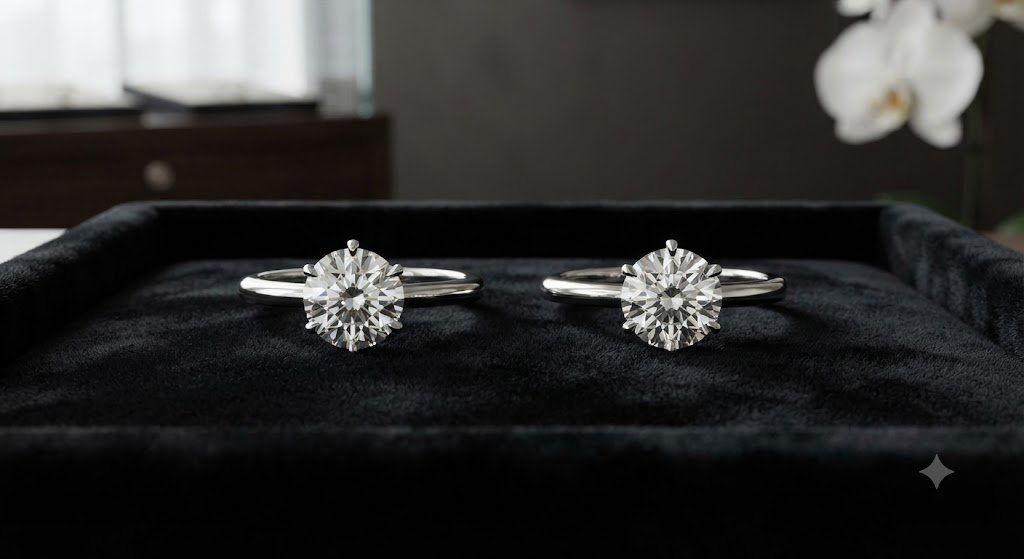
Discover how lab-grown gemstones are transforming modern fine jewelry by combining cutting-edge technology, ethical sourcing, and exceptional beauty.
Introduction: What Are Lab-Grown Gemstones?
The jewelry industry has always embraced innovation, from advanced gemstone cutting techniques to modern precious metal alloys. Today, one of the most significant developments is the rise of lab-grown gemstones, offering consumers a new way to enjoy luxury with greater transparency and sustainability.
Lab-grown gemstones—including diamonds, sapphires, rubies, and emeralds—are created in highly controlled laboratory environments that replicate the natural conditions under which gemstones form deep within the Earth. The result is a gemstone that is chemically, physically, and optically identical to its natural counterpart.
Contrary to a common misconception, lab-grown gemstones are not imitations like cubic zirconia or colored glass. They possess the same crystal structure, hardness, brilliance, and durability as mined gemstones. The only meaningful difference is their origin.
As sustainability becomes increasingly important to consumers, lab-grown gemstones are redefining what luxury means in the twenty-first century.
The Science Behind the Sparkle
Recreating Nature Through Technology
Natural gemstones form under extraordinary pressure and heat over millions—or even billions—of years beneath the Earth’s surface.
Scientists have developed sophisticated methods that recreate these same conditions inside specialized laboratories, allowing gemstones to grow in a matter of weeks instead of geological ages.
For diamonds, two primary technologies are commonly used:
High Pressure High Temperature (HPHT)
This method reproduces the intense pressure and temperature found deep within the Earth, encouraging carbon atoms to crystallize into a diamond.
Chemical Vapor Deposition (CVD)
CVD technology places a tiny diamond seed inside a controlled chamber filled with carbon-rich gases. As carbon atoms accumulate layer by layer, a new diamond crystal gradually forms.
Similar scientific processes are used to create laboratory-grown sapphires, rubies, and other precious gemstones with remarkable precision.
Although the environment differs from nature, the finished gemstone is fundamentally the same.
Sustainability and Ethical Advantages
A More Responsible Choice
Many consumers today want their purchases to reflect their personal values as well as their sense of style.
Lab-grown gemstones appeal to buyers seeking greater environmental responsibility and ethical transparency.
Potential sustainability benefits include:
- Reduced land disruption compared to many mining operations
- Greater supply chain transparency
- Controlled production environments
- Less dependence on newly extracted natural resources
- Easier traceability from production to finished jewelry
While every manufacturing process has an environmental footprint, laboratory production often allows companies to better monitor energy use, resource management, and production standards.
Supporting Ethical Sourcing
Ethical concerns have also influenced the popularity of lab-grown gemstones.
Traditional mining operations vary widely around the world, and responsible practices depend on local regulations, environmental protections, and labor standards.
Many consumers choose lab-grown stones because they appreciate the ability to purchase gemstones with a highly transparent supply chain and without concerns about mining-related conflicts.
For buyers who prioritize sustainability and responsible sourcing, laboratory-grown gemstones offer an attractive alternative.
The Value of Cost Efficiency
More Beauty for Your Budget
One of the most noticeable advantages of lab-grown gemstones is their affordability.
Because production occurs in carefully controlled environments rather than through expensive mining operations, manufacturing costs are generally lower.
This often allows consumers to purchase:
- Larger center stones
- Higher clarity grades
- Better color quality
- More elaborate jewelry designs
—all while staying within the same budget.
For many buyers, this creates opportunities that might otherwise be financially out of reach.
Rather than compromising on size or quality, shoppers can focus on choosing a design they truly love.
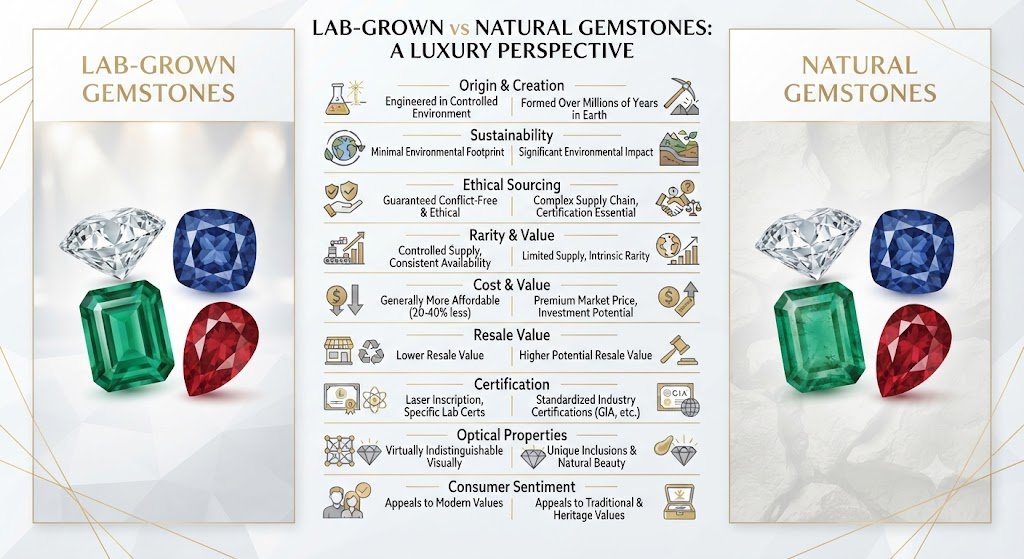
Lab-Grown vs. Natural Gemstones
The following comparison highlights the primary differences between laboratory-grown and naturally mined gemstones.
| Feature | Lab-Grown Gemstones | Natural Gemstones |
|---|---|---|
| Chemical Composition | Identical to natural gemstones | Naturally formed |
| Mohs Hardness | Same as natural equivalents (for the same gemstone species) | Natural hardness based on gemstone type |
| Environmental Impact | Often lower due to controlled production and reduced mining | Depends on mining methods and environmental practices |
| Price | Typically more affordable for comparable size and quality | Generally higher due to rarity and mining costs |
| Resale Value | May vary and is often lower than comparable natural stones | Often stronger, especially for rare, high-quality stones |
Understanding these differences helps consumers choose the option that best aligns with their priorities, whether those involve rarity, sustainability, investment potential, or budget.
The Luxury Jewelry Market Is Evolving
Innovation Meets Fine Jewelry
Lab-grown gemstones are no longer limited to niche collections.
Many respected jewelry designers and luxury brands now incorporate laboratory-grown diamonds and colored gemstones into selected collections, recognizing growing consumer demand for sustainable alternatives.
Today’s luxury shoppers increasingly value:
- Exceptional craftsmanship
- Transparent sourcing
- Responsible manufacturing
- Contemporary innovation
- Personal expression
As a result, laboratory-grown gemstones have earned a legitimate place within the fine jewelry industry.
Rather than replacing traditional gemstones, they expand the range of choices available to consumers.
Can You Tell the Difference?
Nearly Impossible Without Professional Equipment
Visually, lab-grown gemstones are virtually indistinguishable from natural gemstones.
Even experienced jewelers often rely on advanced gemological instruments to identify subtle growth characteristics left during the formation process.
These specialized tools may include:
- Microscopes
- Spectrometers
- Ultraviolet imaging systems
- Advanced laboratory testing equipment
Without professional analysis, consumers generally cannot distinguish between the two.
Why Certification Matters
Regardless of whether a gemstone is natural or laboratory-grown, certification remains one of the most important aspects of any significant jewelry purchase.
A reputable gemological report confirms important information such as:
- Whether the gemstone is natural or lab-grown
- Carat weight
- Color
- Clarity
- Cut quality (when applicable)
- Identification characteristics
Independent laboratories such as GIA (Gemological Institute of America) and IGI (International Gemological Institute) issue reports that provide buyers with confidence and transparency.
Before purchasing valuable jewelry, always verify that the accompanying certification matches the gemstone being sold.
Is a Lab-Grown Gemstone Right for You?
The answer depends on your personal priorities.
A laboratory-grown gemstone may be an excellent choice if you value:
- Sustainability
- Ethical sourcing
- Larger gemstones within your budget
- Exceptional quality
- Modern technology
- Transparent production
A natural gemstone may better suit buyers who prioritize:
- Geological rarity
- Long natural history
- Collectibility
- Traditional investment value
- Appreciation for naturally formed minerals
Neither option is inherently better—they simply appeal to different preferences.
Buying Checklist
Before purchasing a lab-grown gemstone, consider the following checklist:
✔ Confirm whether the gemstone is natural or laboratory-grown.
✔ Request certification from a recognized gemological laboratory.
✔ Review the gemstone’s color, clarity, cut, and carat weight.
✔ Purchase from a reputable jeweler with transparent sourcing information.
✔ Compare quality rather than focusing solely on size.
✔ Understand that resale values may differ between natural and lab-grown gemstones.
✔ Choose the option that best matches your values, lifestyle, and budget.
Making an informed decision ensures long-term satisfaction with your purchase.
Final Thoughts
Lab-grown gemstones represent one of the most exciting innovations in modern fine jewelry. By replicating the natural gemstone formation process through advanced scientific techniques, they offer consumers stones that are chemically, physically, and optically identical to their mined counterparts while providing greater transparency and, in many cases, a smaller environmental footprint.
Their growing popularity reflects a broader shift in luxury, where craftsmanship, sustainability, and informed purchasing decisions are becoming just as important as rarity. At the same time, natural gemstones continue to hold a special place in the jewelry world for their unique geological history, scarcity, and enduring appeal.
Rather than competing against one another, lab-grown and natural gemstones complement today’s diverse jewelry market by offering meaningful choices for different lifestyles and priorities. Whether you value environmental responsibility, exceptional craftsmanship, timeless rarity, or outstanding value, the future of luxury is one that embraces innovation while respecting tradition. The most important gemstone is ultimately the one that reflects your personal story, values, and vision of beauty.
You Might Also Like
- Gold Karats Investment Value Comparison: Is 24K, 18K, or 14K Gold the Best Choice?
- Natural vs. Lab-Grown Diamonds: Investment Value and Resale Impact Explained
- Fine Jewelry vs. Fashion Jewelry: How to Know What You’re Buying
