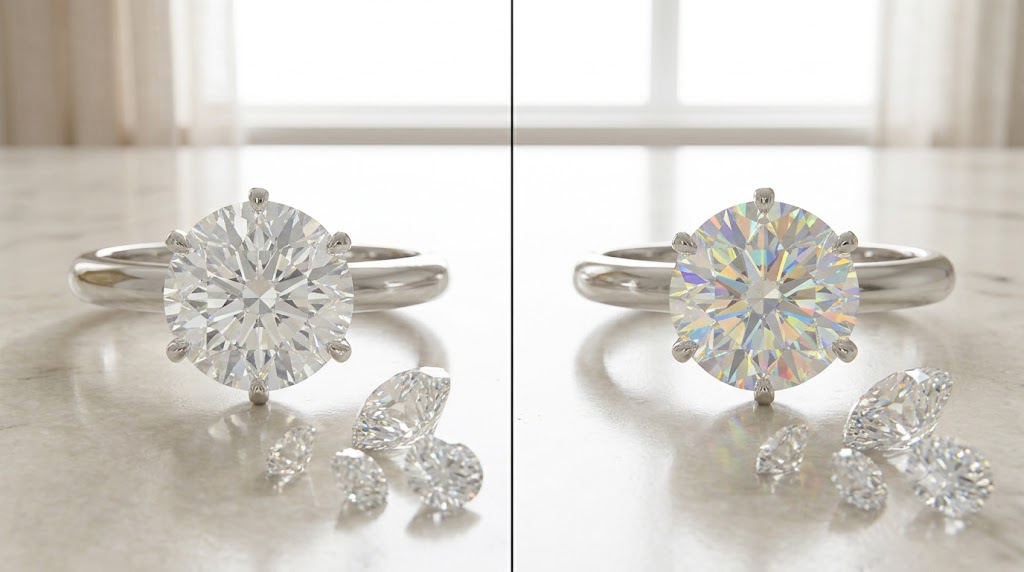
Choosing a gemstone for an engagement ring or fine jewelry is an exciting decision, but it can also feel overwhelming. Diamonds have long been the traditional favorite, yet another gemstone has gained tremendous popularity over the last decade: moissanite.
At first glance, moissanite looks remarkably similar to a diamond. It offers exceptional sparkle, impressive durability, and a luxurious appearance—but at a fraction of the cost. Because of these qualities, many shoppers are wondering whether a diamond is still the best choice or if moissanite offers better overall value.
The truth is that neither gemstone is universally “better.” Each has its own strengths, and the right choice depends on your budget, personal style, and what you value most. This guide compares moissanite and diamonds in a simple, unbiased way to help you make an informed decision.
What Is Moissanite?
Moissanite is a gemstone composed of silicon carbide, a naturally occurring mineral first discovered in 1893 by French chemist Henri Moissan.
While examining rock samples from a meteor crater in Arizona, Moissan initially believed he had found tiny diamonds. Later research revealed that the crystals were actually an entirely different mineral, which was eventually named moissanite in his honor.
Natural moissanite is incredibly rare, making it unsuitable for commercial jewelry. Today, virtually all moissanite gemstones are created in advanced laboratories, where scientists reproduce the same crystal structure found in nature.
This modern production process offers a consistent, high-quality gemstone without the need for mining, making moissanite an appealing option for buyers interested in sustainability and responsible sourcing.
Moissanite vs. Diamond: The Three Biggest Differences
Although these gemstones may appear nearly identical, they differ in several important ways.
Let’s look at the three characteristics that matter most when choosing fine jewelry.
1. Brilliance: Which Stone Sparkles More?
Sparkle is often the first thing people notice when looking at a gemstone.
While both stones are brilliant, they produce light differently.
Moissanite
Moissanite has a higher refractive index than a diamond, allowing it to bend light more efficiently.
This gives the gemstone exceptional brilliance and produces colorful flashes of light known as fire.
As the stone moves, many people notice vibrant rainbow reflections that create an eye-catching effect.
Advantages of Moissanite
- Extremely bright sparkle
- Strong rainbow fire
- Excellent performance in both natural and artificial light
- Eye-catching appearance
Many buyers choose moissanite specifically because they love its lively brilliance.
Diamond
Diamonds are admired for their balanced combination of brilliance and elegance.
Rather than producing intense rainbow flashes, a well-cut diamond reflects bright white light with more subtle flashes of color.
This refined sparkle has made diamonds the classic standard for engagement rings and luxury jewelry.
Advantages of Diamonds
- Classic, timeless appearance
- Elegant white brilliance
- Highly valued traditional gemstone
- Recognized worldwide
If you appreciate understated luxury, a diamond may better match your style.
2. Durability: Which Stone Lasts Longer?
Jewelry worn every day needs to withstand years of regular use.
Fortunately, both gemstones perform exceptionally well.
Diamond
Diamonds rank 10 on the Mohs Hardness Scale, making them the hardest natural material on Earth.
This remarkable hardness provides excellent resistance to scratches and everyday wear.
Moissanite
Moissanite ranks approximately 9.25 on the Mohs Hardness Scale.
Although slightly softer than a diamond, it remains one of the hardest gemstones available for jewelry.
Its durability makes it highly suitable for:
- Engagement rings
- Wedding bands
- Everyday necklaces
- Earrings
- Bracelets
For most people, the practical difference between a hardness of 10 and 9.25 is minimal during normal daily wear.
3. Price: Which Offers Better Value?
Price is often the deciding factor when comparing these two gemstones.
This is where moissanite stands out.
Moissanite
Moissanite typically costs significantly less than a comparable diamond.
The savings allow buyers to:
- Choose a larger center stone.
- Upgrade to a higher-quality setting.
- Select premium precious metals.
- Stay comfortably within their budget.
For shoppers focused on value, moissanite offers an impressive combination of beauty and affordability.
Diamond
Diamonds generally carry much higher prices due to their rarity in nature, long-established demand, grading standards, and market value.
For buyers who value tradition and the historical significance of diamonds, many consider the additional cost worthwhile.
Can You Tell the Difference?
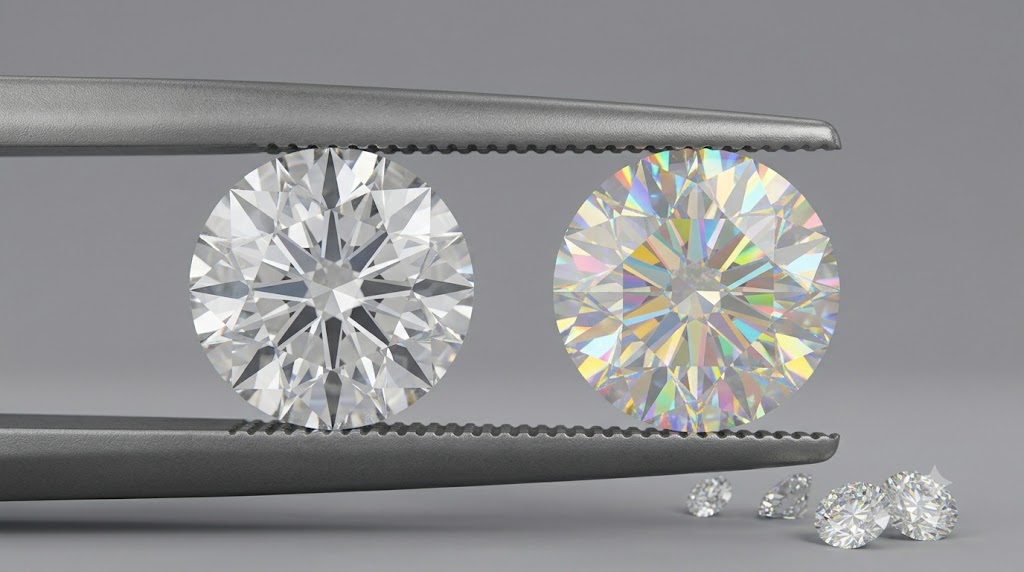
To the average person, distinguishing between moissanite and a diamond without specialized equipment is extremely difficult.
Professional gemologists use advanced testing instruments to identify each gemstone accurately, but in everyday settings, both stones appear elegant and luxurious.
One subtle difference is that moissanite often displays more colorful flashes of light, while diamonds tend to produce a whiter, more balanced sparkle.
Neither appearance is objectively better—it simply comes down to personal preference.
Simple Comparison Table
| Feature | Moissanite | Diamond |
|---|---|---|
| Hardness (Mohs Scale) | 9.25 | 10 |
| Brilliance | Very high with strong rainbow fire | High with classic white brilliance |
| Origin | Laboratory-created (based on a naturally occurring mineral) | Natural or laboratory-grown |
| Everyday Durability | Excellent | Exceptional |
| Typical Price | Much more affordable | Significantly more expensive |
Which Gemstone Is Right for You?
The best choice depends on what matters most to you.
Choose Moissanite If You:
- Want the most sparkle for your budget.
- Prefer a larger gemstone without increasing costs.
- Appreciate modern laboratory-created gems.
- Value sustainability and responsible production.
- Want excellent durability for everyday wear.
Moissanite offers outstanding performance at an accessible price, making it one of today’s most popular diamond alternatives.
Choose a Diamond If You:
- Prefer a traditional gemstone.
- Value the symbolism associated with diamonds.
- Love classic white brilliance.
- Want the hardest gemstone available.
- Have always envisioned a diamond engagement ring.
Diamonds continue to be a timeless symbol of luxury and remain a meaningful choice for many couples.
Final Thoughts
Moissanite and diamonds are both beautiful gemstones capable of lasting a lifetime when properly cared for. Rather than viewing one as superior to the other, it’s more helpful to understand what each stone offers.
If you prioritize tradition, timeless appeal, and the heritage associated with fine jewelry, a diamond may be the ideal choice. If your focus is exceptional brilliance, excellent durability, ethical laboratory production, and outstanding value, moissanite is a compelling modern alternative that allows you to maximize your budget without sacrificing beauty.
Ultimately, the best gemstone is the one that aligns with your personal style, financial goals, and preferences. By understanding the differences in brilliance, hardness, origin, and price, you can shop confidently and choose a piece of jewelry you’ll enjoy wearing for many years to come.
You Might Also Like
- Gold Karats Investment Value Comparison: Is 24K, 18K, or 14K Gold the Best Choice?
- Natural vs. Lab-Grown Diamonds: Investment Value and Resale Impact Explained
- Fine Jewelry vs. Fashion Jewelry: How to Know What You’re Buying