The Complete Guide to Recognizing Genuine Pearls and Understanding Their Quality
Pearls have fascinated people for thousands of years. Unlike diamonds, sapphires, or emeralds, pearls are the only gemstones created by living organisms. Formed inside oysters and mollusks, they possess a unique beauty that has symbolized elegance, wisdom, and refinement across cultures.
Today, pearls remain one of the most timeless choices in fine jewelry. However, the market also includes cultured pearls, imitation pearls, and countless fashion accessories made from plastic or coated glass, making it difficult for buyers to know what they’re actually purchasing.
Learning how to evaluate pearl quality can help you make smarter buying decisions, appreciate true craftsmanship, and avoid paying premium prices for imitation jewelry. In this guide, you’ll discover how real pearls are formed, what separates high-quality pearls from lower-grade ones, and the essential characteristics experts use when evaluating them.
Natural, Cultured, and Imitation Pearls: What’s the Difference?
One of the biggest misconceptions about pearls is that every real pearl is “natural.” In reality, most pearls sold today are cultured, and that’s perfectly normal.
Understanding the differences is the first step toward becoming a knowledgeable buyer.
Natural Pearls
Natural pearls form entirely without human intervention.
A tiny irritant enters a wild mollusk, which responds by coating it with layers of nacre over many years.
Because they are exceptionally rare today, natural pearls are usually found only in museums, historic collections, or high-end auctions.
Characteristics
- Extremely rare
- Very valuable
- Form naturally in the wild
- Often accompanied by professional certification
Cultured Pearls
Cultured pearls are genuine pearls produced with human assistance.
Pearl farmers carefully introduce a small nucleus or piece of tissue into the oyster, encouraging it to create nacre around the implant.
The biological process remains completely natural—the oyster performs all the work.
Today, nearly all fine pearl jewelry sold by reputable jewelers contains cultured pearls.
Characteristics
- Real pearls
- Produced on pearl farms
- Wide range of qualities and prices
- Most common choice for fine jewelry
Imitation Pearls
Imitation pearls are not gemstones at all.
They’re typically made from glass, plastic, ceramic, or other synthetic materials coated with a pearlescent finish.
While they may resemble genuine pearls from a distance, they lack the structure, depth, and durability of real nacre.
Characteristics
- Made from artificial materials
- Usually inexpensive
- Smooth, uniform appearance
- Coating may peel over time
The Seven Virtues of Pearl Quality
Professional gemologists evaluate pearls using several important characteristics, often referred to as the “Seven Virtues.”
Understanding these factors helps explain why two pearl necklaces of similar size can differ dramatically in value.
1. Luster
Luster is the most important quality factor.
It refers to how light reflects from the pearl’s surface and appears to glow from within.
High-quality pearls display:
- Bright reflections
- Sharp, mirror-like shine
- Excellent depth
- Strong visual contrast
Poor-quality pearls appear dull, chalky, or lifeless.
When comparing pearls, prioritize luster above nearly every other characteristic.
2. Surface Quality
No pearl is completely flawless.
Small natural imperfections are expected.
However, premium pearls have very clean surfaces with only minor blemishes.
Inspect pearls for:
- Spots
- Pits
- Scratches
- Wrinkles
- Cracks
The cleaner the surface, the more valuable the pearl is likely to be.
3. Shape
Perfectly round pearls are the rarest and usually the most expensive.
However, other shapes are equally beautiful and often preferred for artistic jewelry.
Common pearl shapes include:
- Round
- Near-round
- Oval
- Drop
- Button
- Baroque (irregular)
Baroque pearls have become especially popular because each one is naturally unique.
4. Color
Pearls occur naturally in a surprising variety of colors.
Popular shades include:
- White
- Cream
- Pink
- Silver
- Golden
- Lavender
- Black
- Green overtones
Color preference is largely personal, although certain rare shades command higher prices.
Skin tone, wardrobe, and personal style all influence the ideal pearl color.
5. Size
Larger pearls generally require more time to grow and are therefore less common.
As a result, larger pearls usually cost more—assuming all other quality factors are equal.
However, size alone doesn’t determine value.
A smaller pearl with exceptional luster often outperforms a larger pearl with poor surface quality.
6. Nacre Thickness
Nacre is the smooth, luminous substance that gives pearls their famous glow.
Thicker nacre usually means:
- Better durability
- Richer shine
- Greater longevity
- Higher quality
Thin nacre may eventually wear away, exposing the bead underneath in some cultured pearls.
7. Match
When evaluating pearl necklaces or earrings, consistency matters.
Professionals examine how closely each pearl matches in terms of:
- Size
- Shape
- Color
- Luster
- Surface quality
Perfectly matched strands require careful selection and are therefore significantly more valuable.
The Tooth Test: Does It Really Work?
You’ve probably heard that rubbing a pearl gently against your teeth can reveal whether it’s real.
There is some truth to this popular method.
Real pearls usually feel slightly gritty because of their microscopic crystalline nacre structure.
Imitation pearls typically feel perfectly smooth.
Use This Test with Caution
Although the tooth test can provide a rough indication, it should never be considered definitive.
Avoid performing this test on expensive jewelry, antique pearls, or heirloom pieces.
Professional evaluation is always the safest and most reliable option for valuable pearls.
Popular Types of Pearls
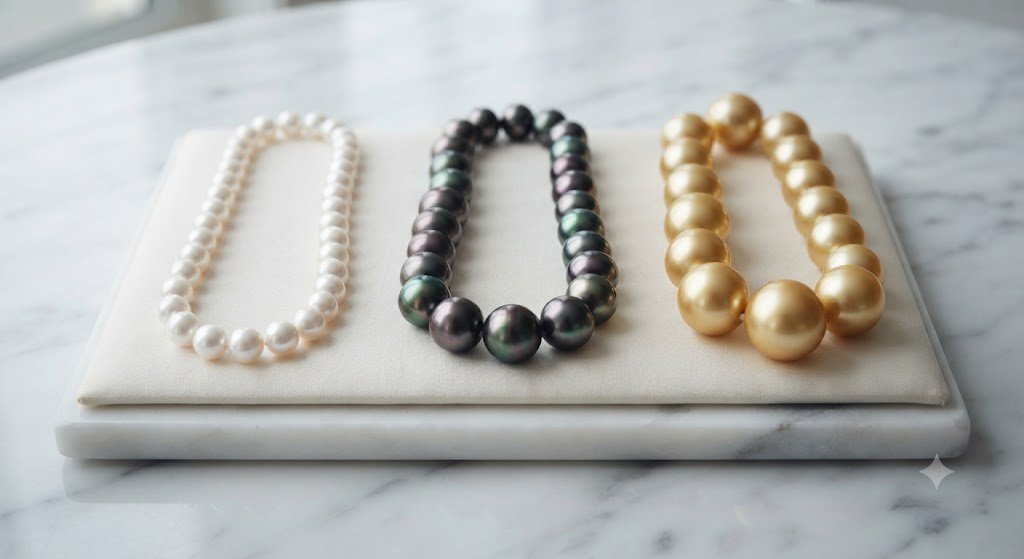
Different pearl varieties offer unique characteristics in appearance, size, and value.
Akoya Pearls
Akoya pearls are famous for their classic elegance.
They typically feature:
- Bright white color
- Exceptional luster
- Nearly perfect round shape
- Traditional appearance
These pearls are commonly used in timeless necklaces and stud earrings.
Tahitian Pearls
Often called “black pearls,” Tahitian pearls display remarkable natural colors.
Rather than pure black, they frequently show:
- Green
- Peacock
- Gray
- Blue
- Purple overtones
Their dramatic appearance makes them highly desirable for contemporary jewelry.
South Sea Pearls
South Sea pearls are among the world’s most valuable cultured pearls.
They are known for:
- Large size
- Thick nacre
- Soft satin-like glow
- White, silver, or golden colors
Because they take years to cultivate, South Sea pearls often command premium prices.
Quality Checklist Before Buying Pearls
Before purchasing pearl jewelry, ask yourself these questions:
- ✔ Does the pearl have bright, reflective luster?
- ✔ Is the surface mostly clean and free of noticeable damage?
- ✔ Are multiple pearls well matched in color and size?
- ✔ Does the seller clearly state whether the pearls are natural, cultured, or imitation?
- ✔ Is there information about the pearl variety?
- ✔ Does the jewelry include documentation or certification for valuable pieces?
- ✔ Is the retailer transparent about materials and quality?
Taking a few extra minutes to evaluate these details can help you make a confident purchase.
Caring for Pearl Jewelry
Pearls require more delicate care than most gemstones.
Unlike diamonds or sapphires, pearls contain organic material that can be damaged by chemicals and excessive dryness.
Keep Pearls Away From:
- Perfume
- Hairspray
- Sunscreen
- Makeup
- Household cleaners
- Chlorinated pools
- Saltwater
These substances can gradually dull or even damage the nacre that gives pearls their beautiful glow.
Follow the “Last On, First Off” Rule
One of the easiest ways to protect pearl jewelry is to make it the final accessory you put on before leaving home and the first item you remove when returning.
This minimizes exposure to cosmetics, skincare products, and sweat.
After wearing pearls, gently wipe them with a soft, clean cloth before storing them separately from harder gemstones that could scratch their surface.
When to Seek Professional Evaluation
If you inherit pearl jewelry, purchase vintage pieces, or are considering an expensive strand of pearls, professional evaluation is well worth the investment.
A qualified gemologist can determine:
- Whether the pearls are natural or cultured
- Their overall quality
- Their approximate market value
- Whether any treatments have been applied
This expert assessment provides peace of mind and helps protect your investment.
Final Thoughts
Pearls are unlike any other gemstone. Created by living organisms and admired for centuries, they combine natural beauty with remarkable elegance. Whether you choose classic Akoya pearls, dramatic Tahitian pearls, or luxurious South Sea pearls, understanding how to evaluate quality will help you make informed decisions and appreciate the craftsmanship behind every piece.
Rather than focusing only on size or price, pay attention to luster, nacre quality, surface condition, and overall harmony. These characteristics define a truly exceptional pearl far more than appearance alone.
With proper care and thoughtful purchasing, a beautiful strand of pearls can become more than just jewelry—it can become a treasured heirloom passed from one generation to the next. Investing in knowledge before investing in pearls is the best way to ensure that the piece you choose will remain beautiful, meaningful, and valuable for many years to come.
You Might Also Like
- Gold Karats Investment Value Comparison: Is 24K, 18K, or 14K Gold the Best Choice?
- Natural vs. Lab-Grown Diamonds: Investment Value and Resale Impact Explained
- Fine Jewelry vs. Fashion Jewelry: How to Know What You’re Buying
