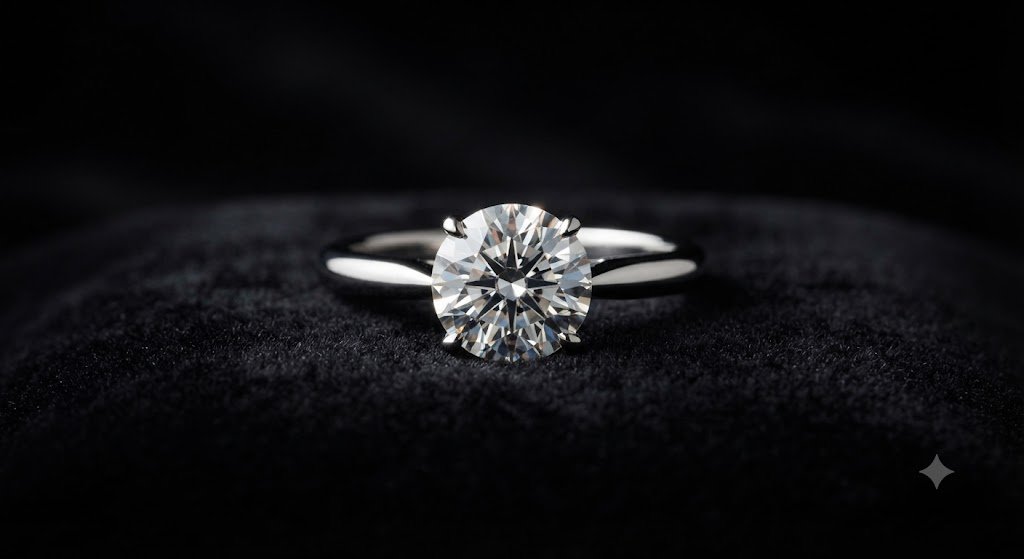
Diamonds have fascinated people for centuries with their exceptional brilliance, durability, and symbolism. Whether chosen for an engagement ring, an anniversary gift, or a personal investment, a diamond often represents one of the most significant jewelry purchases a person will ever make.
Yet shopping for a diamond can quickly become overwhelming. Two stones that appear almost identical may differ dramatically in price, while a larger diamond isn’t always more valuable than a smaller one. The reason lies in an internationally recognized grading system known as the 4 Cs.
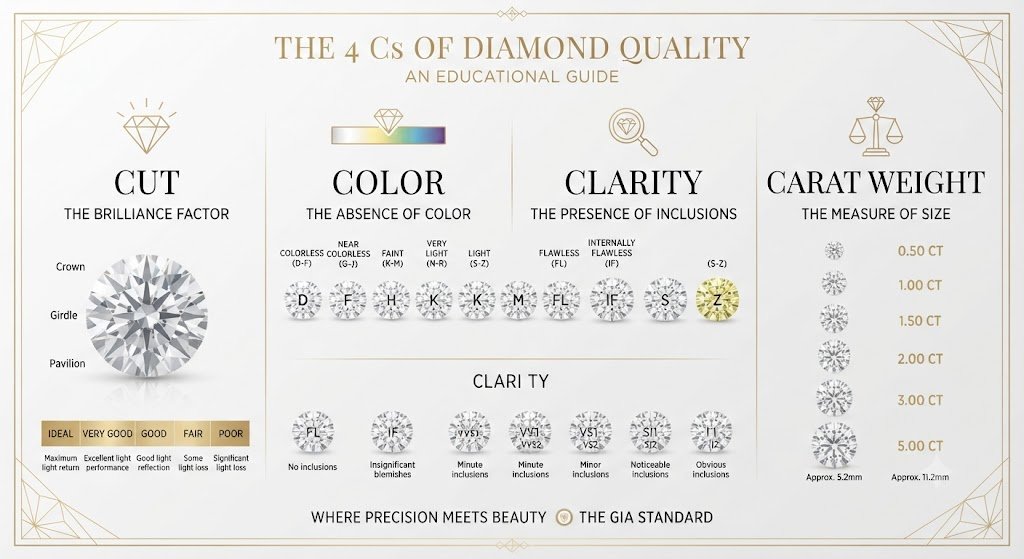
Developed by the Gemological Institute of America (GIA), the 4 Cs—Cut, Color, Clarity, and Carat Weight—provide a universal standard for evaluating diamond quality. Together, these characteristics determine a diamond’s beauty, rarity, and market value.
Understanding how each factor works will help you compare diamonds with confidence, prioritize the features that matter most, and make a smart, long-lasting purchase.
What Are the 4 Cs?
The 4 Cs are the four primary characteristics used by professional gemologists to assess diamond quality.
They include:
- Cut
- Color
- Clarity
- Carat Weight
Rather than relying on appearance alone, laboratories carefully analyze each diamond using standardized grading methods. The result is an objective evaluation that allows buyers to compare stones fairly.
Why Certification Matters
Even an experienced jeweler cannot accurately grade every aspect of a diamond simply by looking at it.
For valuable purchases, choosing a diamond accompanied by a grading report from a respected laboratory—such as the Gemological Institute of America (GIA)—provides confidence that the stone has been independently evaluated.
A reputable certificate typically includes:
- The 4 Cs grading
- Measurements
- Fluorescence information
- Polish and symmetry grades
- Plotting of internal inclusions
- A unique report number
Certification adds transparency and helps protect buyers from misleading descriptions.
Cut: The Most Important C
Of the four characteristics, Cut has the greatest influence on a diamond’s beauty.
Many shoppers assume that “cut” refers only to shape, but in gemology it describes how well the diamond’s facets have been proportioned and polished to interact with light.
A perfectly cut diamond reflects light internally before returning it through the top of the stone, creating extraordinary sparkle.
Professionals often describe this performance using three visual effects:
Brilliance
The bright white light reflected from the diamond.
Fire
The colorful flashes created as light disperses into the spectrum.
Scintillation
The pattern of sparkle seen as the diamond or the observer moves.
Even a diamond with exceptional color and clarity can appear dull if it has been poorly cut.
Common Cut Grades
Most grading laboratories classify round brilliant diamonds using grades such as:
- Excellent
- Very Good
- Good
- Fair
- Poor
For buyers seeking maximum sparkle, Excellent or Very Good cut grades are usually the best choices.
Color: Less Color Means Greater Rarity
Most diamonds appear colorless at first glance, but subtle differences exist.
Professional grading uses a scale ranging from D to Z.
Color Scale Overview
D–F: Colorless
These diamonds are exceptionally rare and display virtually no visible color.
G–J: Near Colorless
Slight warmth may be detected by experts under controlled lighting, but these diamonds typically appear colorless once mounted in jewelry.
K–M: Faint Color
A subtle yellow or brown tint becomes more noticeable.
N–Z: Noticeable Color
Increasing amounts of yellow or brown are visible.
For many buyers, diamonds in the G–H range offer an excellent balance between appearance and value.
When viewed without laboratory comparison, they often look nearly identical to higher-priced colorless diamonds.
Clarity: Nature’s Fingerprints
Because diamonds form deep within the Earth under intense heat and pressure, almost every stone contains tiny natural characteristics.
These internal features are called inclusions, while external characteristics are known as blemishes.
Clarity grading evaluates the size, location, number, and visibility of these features.
Standard Clarity Grades
| Grade | Description |
|---|---|
| FL | Flawless – No visible inclusions or blemishes under 10× magnification |
| IF | Internally Flawless – No internal inclusions |
| VVS1–VVS2 | Very, Very Slightly Included |
| VS1–VS2 | Very Slightly Included |
| SI1–SI2 | Slightly Included |
| I1–I3 | Included |
It’s important to remember that many inclusions cannot be seen without magnification.
In fact, numerous VS and SI diamonds appear completely clean to the naked eye.
This means buyers can often save money by selecting a diamond with minor microscopic inclusions that do not affect its appearance.
Carat: Weight Is Not the Same as Size
One of the biggest misconceptions about diamonds is that carat refers to size.
In reality, carat measures weight.
One carat equals 200 milligrams, or 0.2 grams.
Although larger diamonds generally weigh more, two diamonds with identical carat weights can appear different in size depending on:
- Cut proportions
- Shape
- Depth
- Table dimensions
For example, a well-cut 1-carat diamond may appear larger than a poorly proportioned 1-carat diamond.
Likewise, an oval or marquise diamond often appears larger than a round diamond of the same weight because of its elongated shape.
The 4 Cs at a Glance
| The C | What It Measures | Why It Matters |
| Cut | Light performance and proportions | Determines sparkle, brilliance, fire, and overall beauty |
| Color | Absence of body color | Less color generally means greater rarity and value |
| Clarity | Internal and external characteristics | Influences rarity and, in some cases, appearance |
| Carat | Diamond weight | Larger diamonds are generally rarer and more expensive |
How the 4 Cs Work Together
No single characteristic determines whether a diamond is “perfect.”
Instead, professionals evaluate all four factors together.
For example:
- A smaller diamond with an Excellent Cut may appear more brilliant than a larger stone with poor proportions.
- A diamond with slightly lower color but exceptional cut may appear more attractive than a colorless stone with average light performance.
- Minor clarity inclusions invisible without magnification often have little impact on beauty.
This balance explains why two diamonds with identical carat weights can differ significantly in price.
A Golden Tip: Prioritize the Right Cs for Your Budget
If you’re working within a budget, knowing where to compromise can help you maximize beauty without overspending.
Prioritize Cut Above Everything Else
If possible, never sacrifice cut quality.
A superior cut dramatically improves sparkle and overall appearance.
Choose Near-Colorless Diamonds
Diamonds graded G, H, or even I often look beautifully white once set in jewelry while offering better value than D or E grades.
Consider Eye-Clean Clarity
Many VS2 or SI1 diamonds appear flawless to the naked eye.
If inclusions are invisible without magnification, paying extra for higher clarity may not noticeably improve appearance.
Balance Carat with Quality
Instead of choosing the largest possible diamond, consider selecting a slightly smaller stone with a superior cut.
The improvement in brilliance is often far more noticeable than a small increase in size.
Types of Diamond Cut
Ideal Cut
An ideal cut reflects the maximum amount of light.
Advantages include:
- Exceptional brilliance.
- Strong sparkle.
- Excellent balance of light and contrast.
Shallow Cut
A shallow diamond allows light to escape through the bottom.
As a result, the stone may appear:
- Less bright.
- Slightly watery.
- Less lively.
Deep Cut
A deep-cut diamond also loses light because reflections exit through the sides.
This often makes the diamond appear:
- Darker.
- Smaller than its actual weight.
- Less brilliant.
The Diamond Color Scale
The GIA grades diamond color using letters from D to Z.
- D–F: Colorless
- G–J: Near Colorless
- K–M: Faint Color
- N–R: Very Light Color
- S–Z: Light Color
Diamonds graded D are considered the rarest and most valuable because they contain virtually no visible color.
What Are Inclusions?
Inclusions are tiny internal characteristics inside the diamond.
Examples include:
- Small crystals.
- Tiny fractures.
- Mineral traces.
The Clarity Scale
Common clarity grades include:
- FL – Flawless
- IF – Internally Flawless
- VVS1–VVS2 – Very, Very Slightly Included
- VS1–VS2 – Very Slightly Included
- SI1–SI2 – Slightly Included
- I1–I3 – Included
What Does “Eye-Clean” Mean?
A diamond described as eye-clean appears free of visible imperfections when viewed without magnification.
This makes eye-clean diamonds one of the best values available.
Many buyers choose VS2 or SI1 diamonds because they often look flawless in everyday viewing while offering meaningful savings.
Smart Money-Saving Tip
Diamond prices often increase dramatically at popular weight milestones.
For example:
- 0.50 ct
- 0.75 ct
- 1.00 ct
- 1.50 ct
- 2.00 ct
Choosing a diamond just below these milestones—such as 0.90 ct instead of 1.00 ct—can provide a nearly identical appearance while reducing the overall price considerably.
Which of the 4Cs is the most important?
Most gemologists consider Cut to be the most important because it has the greatest impact on brilliance and sparkle.
Is a higher carat diamond always better?
No.
A smaller diamond with an excellent cut often appears brighter and more attractive than a larger diamond with poor proportions.
Can I see clarity flaws without magnification?
Usually not.
Many VS and SI diamonds appear perfectly clean to the naked eye.
Are colorless diamonds worth the extra money?
That depends on your priorities.
Near Colorless diamonds often look virtually identical once mounted while costing considerably less.
Beyond the 4 Cs
Although the 4 Cs are the foundation of diamond grading, additional characteristics also influence beauty and value.
These include:
Polish
Measures how smoothly each facet has been finished.
Symmetry
Evaluates how precisely the facets align.
Fluorescence
Some diamonds emit a soft blue glow under ultraviolet light.
In many cases, fluorescence has little effect on appearance, but it can influence value depending on its intensity.
These secondary characteristics are typically included on professional grading reports.
Smart Tips Before Buying a Diamond
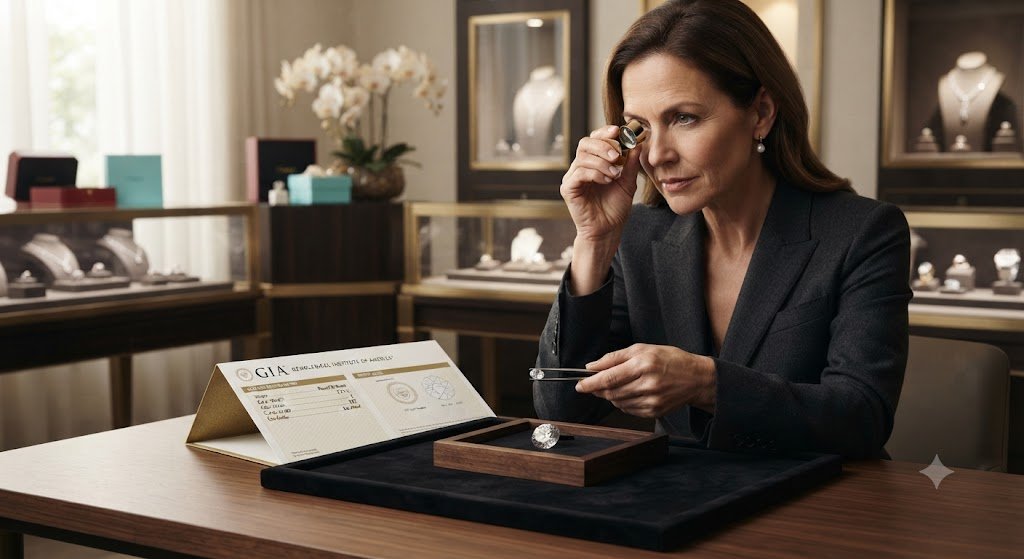
Before making a purchase, take time to evaluate more than just the price tag.
Use this checklist:
✔ Verify that the diamond includes certification from a respected laboratory such as GIA.
✔ Compare multiple diamonds instead of choosing the first one you see.
✔ Prioritize Cut over Carat if your budget is limited.
✔ Check whether the diamond appears eye-clean rather than focusing only on clarity grades.
✔ Review the complete grading report before purchasing.
✔ Buy from a reputable jeweler who clearly explains the diamond’s characteristics and offers transparent return policies.
An informed buyer is far less likely to overpay or be disappointed with their purchase.
Why Knowledge Is Your Best Investment
Diamonds are often associated with life’s most meaningful milestones, from engagements and anniversaries to personal achievements. Because these purchases carry both financial and emotional significance, taking the time to understand quality is essential.
Learning the 4 Cs allows you to evaluate diamonds objectively instead of relying solely on marketing terms or assumptions. Rather than focusing only on size, you’ll recognize how cut, color, clarity, and carat weight work together to create a beautiful and valuable gemstone.
Armed with this knowledge, you can compare options more confidently, identify excellent value, and select a diamond that fits both your style and your budget.
Once you understand the 4Cs, it’s worth considering how that translates to value over time — our guide to natural vs. lab-grown diamond investment value covers how quality and origin affect resale.
Final Thoughts
The 4 Cs remain the global standard for evaluating diamond quality because they provide a clear and consistent way to understand what makes one diamond different from another. While every characteristic plays an important role, cut has the greatest impact on brilliance, color influences rarity, clarity reflects natural formation, and carat measures weight—not visual size.
No two diamonds are exactly alike, and the “perfect” stone is ultimately the one that aligns with your priorities, preferences, and budget. By understanding how these factors interact and insisting on certification from a trusted laboratory, you greatly reduce the risk of fraud and make a more informed purchasing decision.
Whether you’re shopping for an engagement ring, celebrating a milestone, or investing in fine jewelry, knowledge is your greatest advantage. A well-chosen diamond is more than a beautiful gemstone—it is a lasting symbol of craftsmanship, value, and memories that can be treasured for generations.
You Might Also Like
- Gold Karats Investment Value Comparison: Is 24K, 18K, or 14K Gold the Best Choice?
- Natural vs. Lab-Grown Diamonds: Investment Value and Resale Impact Explained
- Fine Jewelry vs. Fashion Jewelry: How to Know What You’re Buying
