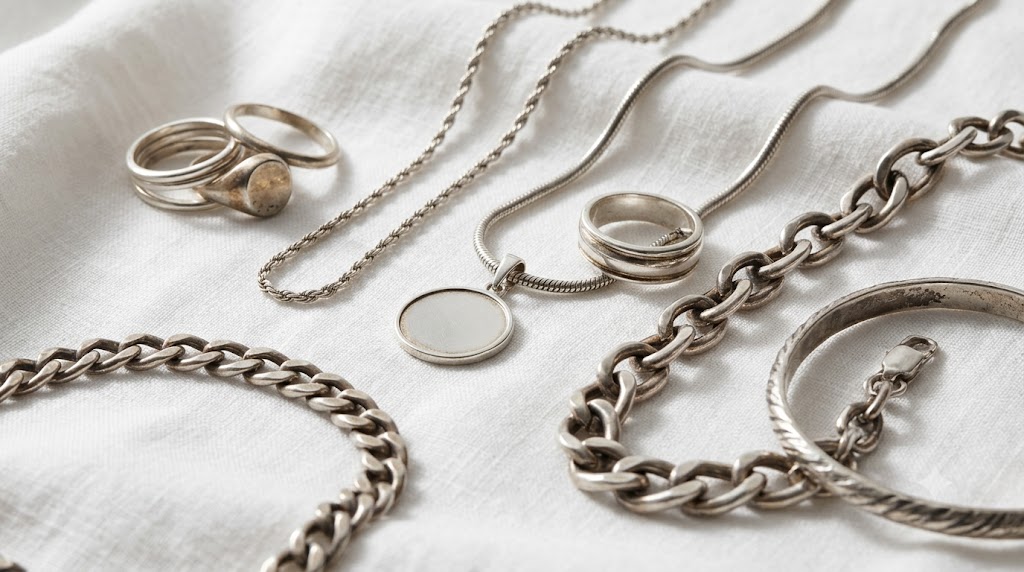
Sterling Silver 925 is one of the most popular metals in the jewelry world, loved for its bright shine, affordability, and everyday durability. From delicate necklaces to engagement rings and statement bracelets, it has been a trusted choice for generations.
But if you’ve ever noticed your silver jewelry turning dark or dull over time, you might have wondered if something is wrong. Many people even think it’s fake.
The truth is much simpler: tarnish is completely normal—and in most cases, it’s actually a sign that your jewelry is real sterling silver.
Understanding what Sterling Silver 925 is and why it changes over time helps you care for your pieces properly and enjoy them for years.
What Does “925” Mean in Sterling Silver?
Sterling Silver 925 gets its name from its metal composition.
Pure silver is beautiful, but it’s also too soft for everyday jewelry. It bends, scratches, and loses shape very easily.
To fix this, jewelers mix pure silver with other metals to make it stronger.
Sterling Silver 925 is made of:
- 92.5% pure silver
- 7.5% other metals (usually copper)
This combination creates the perfect balance:
- Silver provides shine and beauty
- Copper adds strength and durability
That’s why you often see the “925” stamp inside rings, chains, and bracelets—it confirms the jewelry is genuine sterling silver.
Why Pure Silver Isn’t Used in Jewelry
Pure silver jewelry sounds ideal, but in reality, it isn’t practical for daily wear.
On its own, pure silver is too soft and can:
- Bend easily with pressure
- Scratch quickly
- Lose its polished finish
- Become misshapen over time
That’s why Sterling Silver 925 became the global standard. It keeps the elegant look of silver while being strong enough for everyday life.
Why Does Sterling Silver 925 Tarnish?
Tarnish on sterling silver is one of the most misunderstood parts of silver jewelry.
It happens because the small amount of copper in the metal reacts with natural elements in the environment, especially sulfur compounds.
These compounds can be found in:
- Air pollution
- Moisture and humidity
- Sweat
- Perfume and cosmetics
- Cleaning products
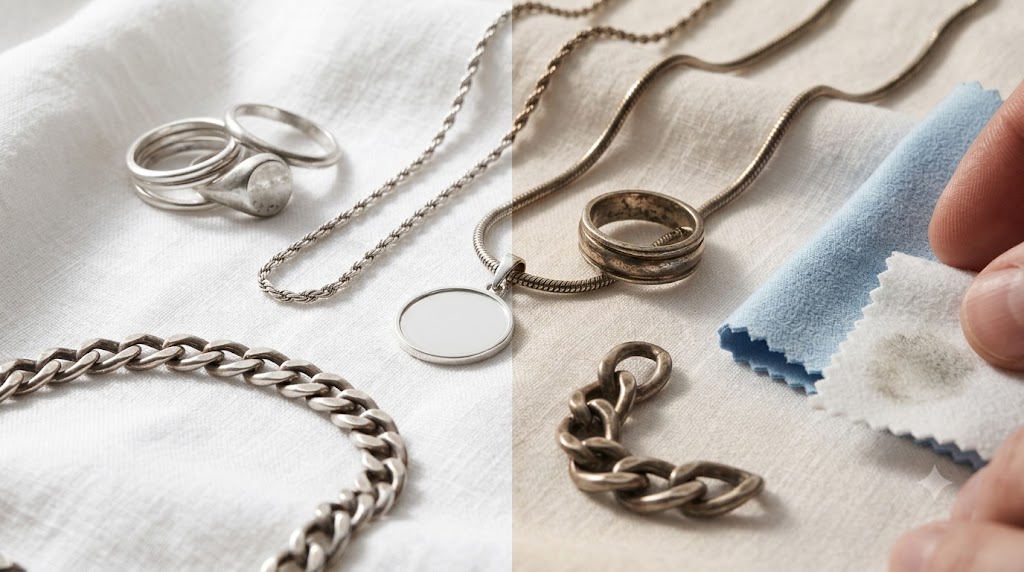
Over time, this reaction creates a thin surface layer called silver sulfide, which appears as:
- Gray spots
- Dark patches
- A dull or blackened finish
Important detail: this only affects the surface. The silver underneath is still perfectly fine.
Is Tarnish a Sign of Fake Jewelry?
Sterling Silver 925 tarnish does NOT mean your jewelry is fake.
In fact, real sterling silver naturally tarnishes over time because of its copper content.
Some plated or low-quality metals are coated to resist tarnish temporarily, but genuine sterling silver reacts naturally with the environment.
So if your jewelry darkens, it’s usually a good sign—you’re wearing real silver.
What Makes Sterling Silver Tarnish Faster?
Tarnishing speed can vary a lot from person to person. Some pieces darken quickly, while others stay shiny for months or even years.
Here are the main factors that affect it:
Humidity and Moisture
Humidity and sterling silver don’t mix well.
Bathrooms, kitchens, and humid climates can speed up tarnish.
Try to avoid storing jewelry in:
- Bathrooms
- Damp drawers
- Closed humid containers
A dry environment helps keep silver brighter for longer.
Beauty and Personal Care Products
Cosmetics and silver jewelry can react with each other.
Common products that accelerate tarnish include:
- Perfume
- Lotion
- Sunscreen
- Hair spray
- Makeup
A simple rule helps a lot: put jewelry on last, after getting ready.
Skin Chemistry
Your skin and sterling silver also interact naturally.
Factors like:
- Sweat
- Body pH
- Exercise
- Stress
- Heat
can influence how quickly tarnish appears.
This is completely normal and varies from person to person.
Air Quality
Air exposure and silver jewelry play a big role in tarnishing.
Urban environments with higher pollution levels often cause faster darkening due to sulfur particles in the air.
Even when you don’t notice it, silver is constantly reacting with the environment.
Household Chemicals
Cleaning products and silver should never mix directly.
Avoid exposing jewelry to:
- Bleach
- Ammonia
- Strong disinfectants
- Chlorine-based cleaners
These chemicals can dull the shine and speed up oxidation.
Does Water Damage Sterling Silver 925?
Water and sterling silver usually aren’t harmful on their own.
The issue comes when water contains chemicals like:
- Chlorine (pools)
- Salt (ocean water)
- Heavy minerals (hard water)
If your jewelry gets wet, the best practice is:
- Rinse with clean water
- Dry immediately with a soft cloth
Leaving moisture on silver can speed up tarnishing.
How to Slow Down Tarnishing
Sterling silver care is simple and doesn’t require expensive products.
A few small habits make a big difference:
Store It Properly
Keep silver in:
- Airtight bags
- Soft jewelry pouches
- Lined jewelry boxes
Less air exposure = slower tarnishing.
Wear It Often
Surprisingly, wearing silver jewelry can help keep it looking better.
Regular use creates gentle friction that naturally reduces early tarnish buildup.
Just remember to clean it occasionally.
Wipe After Use
After wearing, gently clean your jewelry with a soft cloth.
This removes:
- Oils
- Sweat
- Dirt
- Product residue
It only takes a few seconds but helps maintain shine.
How to Clean Tarnished Sterling Silver
Cleaning sterling silver 925 is easy and safe when done correctly.
Effective methods include:
- Silver polishing cloths
- Warm water with mild soap
- Specialized silver cleaners
Avoid abrasive sponges or harsh scrubbing, as they can scratch the surface.
The good news is that tarnish is almost always reversible.
Common Myths About Sterling Silver 925
Sterling silver myths often confuse buyers. Let’s clear up the most common ones.
Myth: Dark Silver Means It’s Fake
False.
Tarnish is a natural reaction and does not indicate fake jewelry.
Myth: Tarnish Permanently Damages Silver
False.
Tarnish only affects the surface and can be easily cleaned.
Myth: Sterling Silver Needs Constant Cleaning
False.
With proper care, many pieces stay bright for months without maintenance.
If your sterling silver has already darkened, our comparison of silver cleaning methods walks through the safest ways to restore it.
Final Thoughts
Sterling Silver 925 remains one of the most loved jewelry metals because it combines beauty, durability, and affordability in a single material. The “925” stamp simply confirms that your piece is made of 92.5% pure silver and strengthened with 7.5% other metals, making it suitable for everyday wear.
If your jewelry darkens over time, there’s no need to worry. Tarnish on sterling silver is a natural reaction caused by exposure to air, moisture, skin chemistry, and everyday products—not a sign of damage or poor quality.
With simple care habits like proper storage, gentle cleaning, and occasional polishing, your sterling silver jewelry can stay beautiful and shiny for many years.
You Might Also Like
- Gold Karats Investment Value Comparison: Is 24K, 18K, or 14K Gold the Best Choice?
- Natural vs. Lab-Grown Diamonds: Investment Value and Resale Impact Explained
- Fine Jewelry vs. Fashion Jewelry: How to Know What You’re Buying