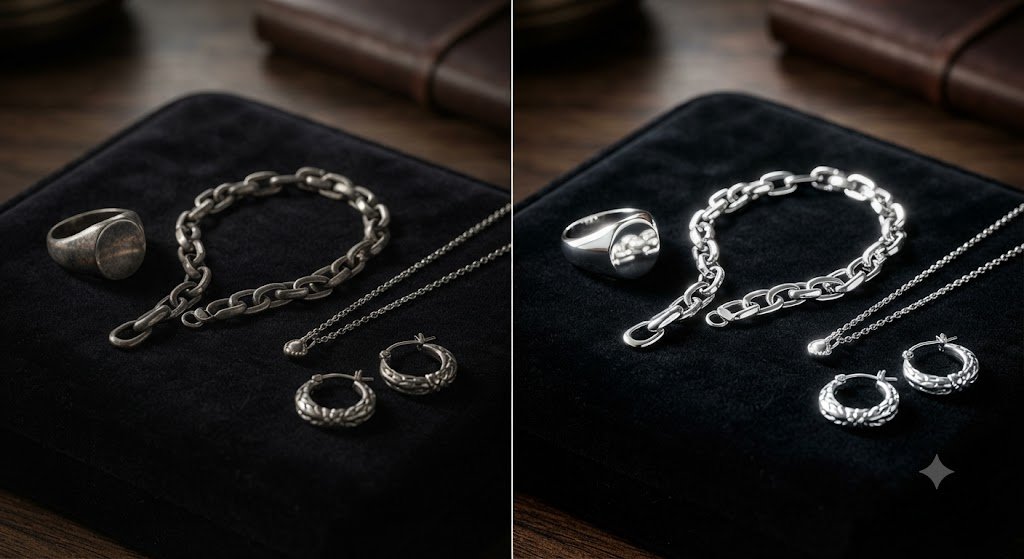
There’s nothing quite like opening your jewelry box to wear your favorite sterling silver bracelet or ring, only to find that it has turned dark and lost its beautiful shine. It’s a common experience, and for many people, it raises an immediate question: Has my jewelry been ruined?
Fortunately, the answer is almost always no.
The dark discoloration you see is called tarnish, a completely natural oxidation process that affects sterling silver over time. It doesn’t mean your jewelry is fake or damaged—it simply means the metal has reacted with elements in the environment. The best news is that tarnish is almost entirely reversible when removed using safe cleaning methods.
In this guide, you’ll learn how to remove tarnish from sterling silver at home without scratching the metal, which cleaning methods professionals recommend, what you should absolutely avoid, and how to keep your silver shining for years to come.
Why Does Sterling Silver Tarnish?
Sterling silver is made of 92.5% pure silver and 7.5% alloy metals, most commonly copper. The small amount of copper improves durability, making sterling silver suitable for everyday jewelry.
However, copper also reacts with sulfur compounds naturally present in the air. This reaction forms a thin layer of silver sulfide on the surface, which appears as the familiar gray or black tarnish.
Several everyday factors can speed up oxidation, including:
- Humidity
- Sweat
- Perfumes and lotions
- Household cleaning chemicals
- Air pollution
- Swimming pools
- Improper storage
The important thing to remember is that tarnish affects only the surface of the jewelry. In most cases, it can be safely removed without harming the silver itself.
The Baking Soda and Aluminum Foil Method
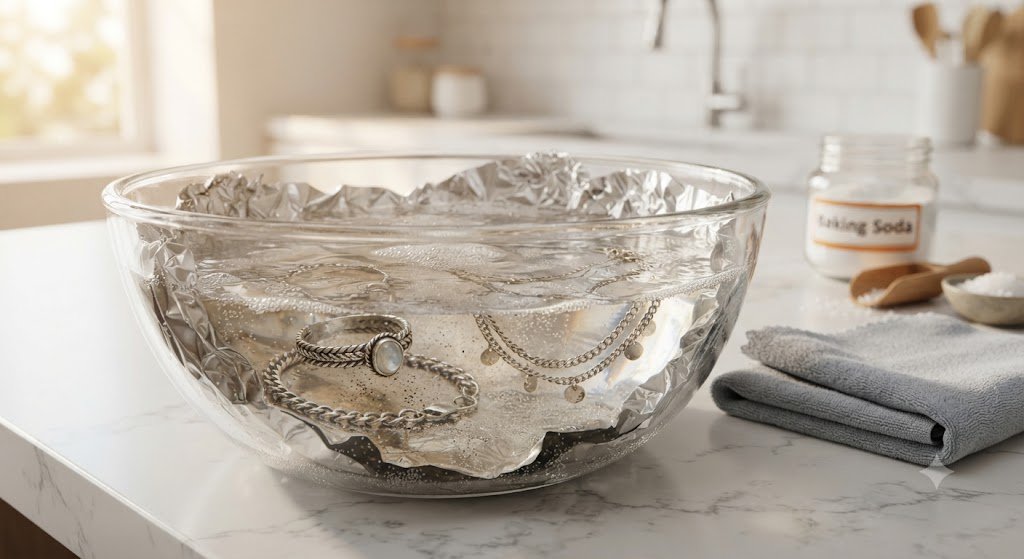
Among all home cleaning methods, the combination of warm water, aluminum foil, baking soda, and salt is widely considered one of the safest for plain sterling silver jewelry.
Unlike abrasive polishing compounds that physically remove material, this technique uses a gentle chemical reaction to transfer tarnish from the silver to the aluminum foil.
What You’ll Need
Prepare the following items:
- A glass or ceramic bowl
- Aluminum foil
- Warm water
- 1 tablespoon baking soda
- 1 tablespoon table salt
- A clean microfiber cloth
Avoid using metal bowls, which may interfere with the reaction.
Step-by-Step Instructions
1. Line the Bowl
Cover the inside of the bowl with aluminum foil, placing the shiny side facing upward.
2. Position the Jewelry
Lay the sterling silver jewelry directly on the foil so that every piece touches the aluminum.
3. Add Warm Water
Pour enough warm (not boiling) water into the bowl to completely cover the jewelry.
4. Add Baking Soda and Salt
Sprinkle one tablespoon of baking soda and one tablespoon of table salt into the water.
The solution will begin creating a mild chemical reaction.
5. Wait
Allow the jewelry to soak for 5–10 minutes.
You may notice a slight sulfur smell. This is completely normal and indicates that the tarnish is being removed.
6. Rinse Thoroughly
Remove the jewelry carefully and rinse it under clean running water.
7. Dry Completely
Use a soft microfiber cloth to dry every surface thoroughly.
If heavy tarnish remains, repeat the process once rather than extending the soaking time.
Restore Shine with a Silver Polishing Cloth
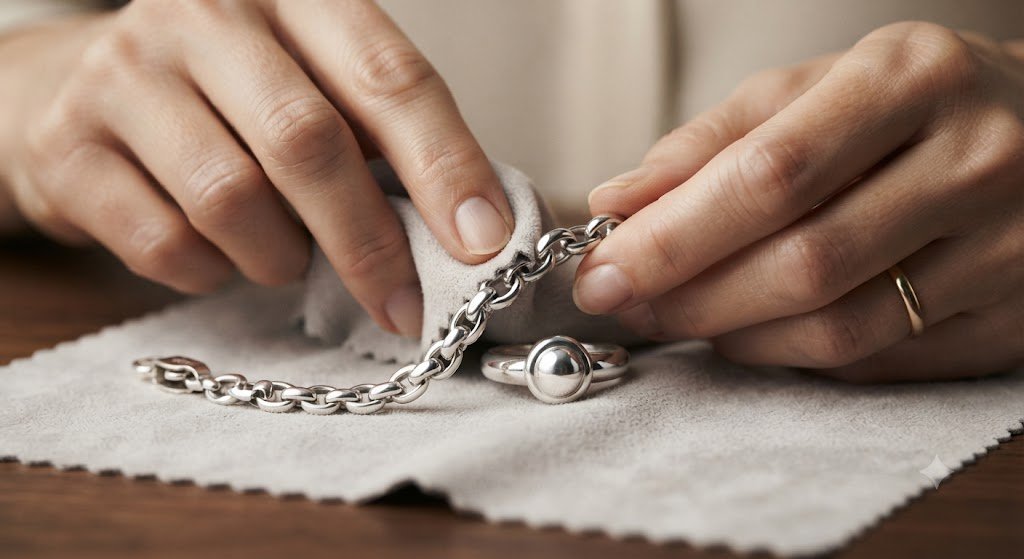
For regular maintenance, a silver polishing cloth is one of the safest and easiest tools available.
These specially treated cloths are designed to remove light oxidation while restoring sterling silver’s natural shine without requiring strong cleaning products.
Benefits of a Polishing Cloth
A quality polishing cloth:
- Restores shine safely
- Removes fingerprints and skin oils
- Eliminates light tarnish
- Requires no liquids
- Is safe for routine use
Simply rub the jewelry gently using straight motions instead of vigorous circular scrubbing.
Using a polishing cloth every few weeks often prevents tarnish from becoming severe.
What You Should Never Use
Not every cleaning trick found online is safe.
Some common household products can permanently damage sterling silver.
Never Use Harsh Chemicals
Avoid exposing sterling silver to:
- Bleach
- Chlorine
- Ammonia
- Oven cleaners
- Bathroom cleaners
- Industrial degreasers
These products can discolor silver and weaken delicate jewelry components.
Avoid Hard Toothbrushes
Many people clean jewelry using old toothbrushes.
Unfortunately, stiff bristles can leave tiny scratches that gradually dull polished silver.
Instead, choose:
- Microfiber cloths
- Jewelry polishing cloths
- Very soft natural-bristle brushes only when necessary
Skip Abrasive Cleaners
Never clean sterling silver with:
- Toothpaste
- Baking powders made for scrubbing
- Steel wool
- Kitchen scouring pads
- Abrasive polishing compounds not intended for jewelry
These materials remove tiny amounts of metal along with the tarnish, gradually wearing away the finish.
Extra Care for Delicate Jewelry
Some sterling silver jewelry requires additional caution.
Jewelry with Gemstones
If your silver ring or necklace contains gemstones, avoid soaking it unless you know the stones are safe for water exposure.
Porous gemstones such as:
- Opal
- Turquoise
- Malachite
- Lapis lazuli
can absorb moisture and become damaged.
When unsure, use only a polishing cloth on the silver portions.
Pearl Jewelry
Pearls are organic gemstones with delicate surfaces.
Never immerse pearl jewelry in baking soda solutions or polish pearls with abrasive materials.
Instead:
- Wipe gently with a slightly damp soft cloth.
- Dry immediately.
- Store separately from harder jewelry.
Rhodium-Plated Sterling Silver
Many sterling silver pieces are coated with rhodium to increase shine and improve tarnish resistance.
Because this coating is extremely thin, aggressive polishing may wear it away over time.
For rhodium-plated jewelry:
- Clean with a microfiber cloth.
- Avoid abrasive polishing compounds.
- Use mild soap only if necessary.
Prevent Tarnish Before It Starts
Cleaning is important, but prevention is even better.
A few simple storage habits can dramatically slow oxidation.
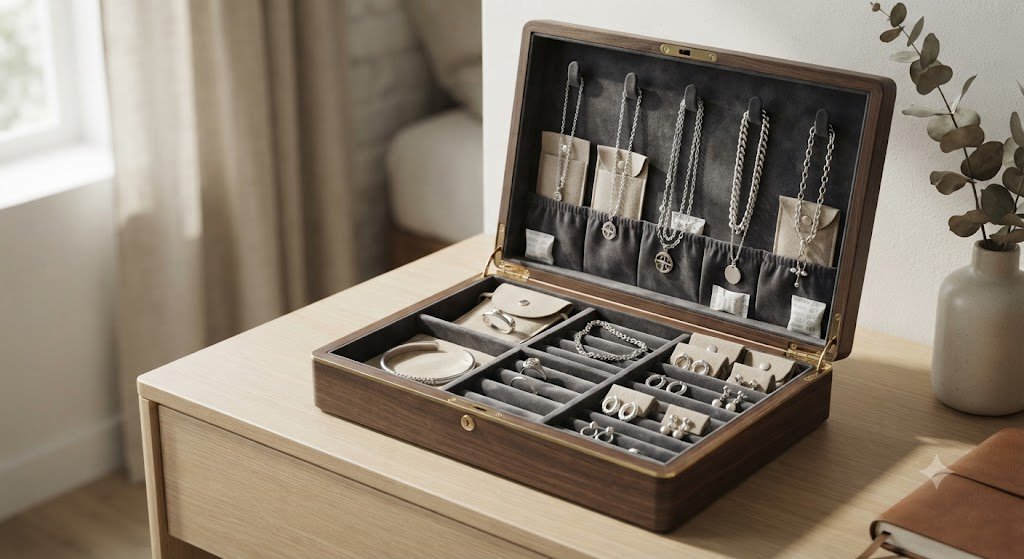
Store Jewelry in Airtight Bags
Air is one of silver’s biggest enemies.
Store each piece individually in:
- Airtight zip-top bags
- Anti-tarnish pouches
- Jewelry boxes with separate compartments
Reducing air exposure slows tarnish formation considerably.
Reduce Moisture
Humidity accelerates oxidation.
To absorb excess moisture, place one of the following inside your jewelry box:
- Silica gel packets
- Anti-tarnish strips
- Small pieces of chalk
These inexpensive items help create a drier environment for your jewelry.
Remove Jewelry Before Certain Activities
Protect sterling silver by removing it before:
- Swimming
- Showering
- Exercising
- Cleaning the house
- Applying perfume
- Using lotions
- Spraying hairspray
Limiting exposure to moisture and chemicals significantly extends your jewelry’s shine.
Comparing the Most Common Cleaning Methods
Each of these methods removes tarnish differently, and none of them is universally “best” — the right choice depends on the piece in front of you.
Baking Soda and Aluminum Foil Soak
This method uses a chemical reaction between the aluminum, baking soda, and warm water to pull tarnish off the silver without any scrubbing. It’s best suited to plain sterling silver pieces with moderate to heavy tarnish, and it can clean several items at once. It isn’t recommended for jewelry set with gemstones, pearls, or other delicate materials, since the reaction affects the entire surface a piece touches. For the full step-by-step process, see our complete aluminum foil cleaning guide.
Silver Polishing Cloth
A two-layer polishing cloth removes light tarnish and restores shine through gentle friction alone, with no liquids or chemicals involved. It’s the easiest option for routine touch-ups between deeper cleans, and it’s generally safe to use around most settings since you control exactly where the cloth touches. Its limitation is that it won’t fully restore a piece that’s heavily tarnished — for that, a soak method works faster.
Commercial Silver Dip
Silver dip solutions, sold at most jewelry and hardware stores, remove tarnish within seconds by dissolving it chemically. They’re convenient for plain silver items you want cleaned quickly, but the solution is stronger than a baking soda soak and isn’t suitable for gemstones, pearls, or oxidized (intentionally blackened) detailing, which the dip can strip away. Always follow the product’s ventilation instructions.
Mild Soap and Water
A soft cloth with a little mild, phosphate-free soap and warm water won’t remove real tarnish, but it clears away surface dirt, oils, and residue — and it’s safe for nearly every type of jewelry, including pieces with gemstones or pearls that other methods can’t touch. It’s a good first step before deciding whether deeper cleaning is even necessary.
Quick guide: heavily tarnished plain silver responds best to the aluminum foil soak; light, regular upkeep is what a polishing cloth is for; a commercial dip is the fastest option when time matters more than gentleness; and soap and water is the safest default for anything set with gemstones or pearls.
What You Should Never Use
Regardless of which method you choose, avoid bleach, chlorine, ammonia-based cleaners, and other harsh household chemicals — they can discolor silver and weaken settings. Skip hard-bristled toothbrushes, wire brushes, and abrasive powders too, since they scratch the polished surface permanently. Toothpaste in particular is a common home remedy that should be avoided; its abrasive ingredients dull silver rather than clean it. Our step-by-step cleaning guide covers the full list of what to avoid and why.
Delicate Jewelry Needs Extra Care
- Gemstone settings: stick to soap and water or a polishing cloth applied only to the metal, away from the stone.
- Pearls: never soak them — pearls are porous and can be damaged by any soaking method. Wipe with a soft, barely damp cloth only.
- Rhodium-plated silver: the plating is extremely thin, so use a microfiber cloth only and avoid abrasive polishing compounds, which can wear it away over time.
Safe Method 2: Baking Soda Paste
For jewelry with more noticeable tarnish, baking soda can provide extra cleaning power while remaining safe when used correctly.
You’ll need:
- Baking soda
- Water
- Soft cloth
Steps
- Mix two parts baking soda with one part water until a smooth paste forms.
- Apply a small amount to the silver using a soft cloth.
- Rub gently using circular motions.
- Rinse thoroughly with warm water.
- Dry and polish with a clean microfiber cloth.
Avoid pressing too hard, especially on delicate or antique jewelry.
Safe Method 3: Aluminum Foil and Baking Soda Bath
This popular household method helps remove tarnish through a simple chemical reaction rather than aggressive scrubbing.
You’ll need:
- A small bowl
- Aluminum foil
- Baking soda
- Hot (not boiling) water
Steps
- Line a bowl with aluminum foil, shiny side facing up.
- Place the silver jewelry on the foil.
- Sprinkle one tablespoon of baking soda into the bowl.
- Carefully pour hot water over the jewelry until submerged.
- Let the jewelry sit for two to five minutes.
- Remove the pieces carefully.
- Rinse with clean water.
- Dry and polish with a soft cloth.
This technique works particularly well for plain sterling silver jewelry. However, avoid using it on pieces containing delicate gemstones, pearls, glued settings, or oxidized decorative finishes.
Daily Habits That Keep Sterling Silver Beautiful
Small habits make a big difference over time.
After wearing your jewelry:
- Wipe it with a clean microfiber cloth.
- Remove fingerprints and skin oils.
- Make sure it’s completely dry before storing.
- Keep necklaces unclasped only while cleaning.
- Inspect clasps and settings periodically.
Consistent maintenance prevents heavy oxidation and reduces the need for deep cleaning.
Frequently Asked Questions
Is tarnish permanent?
No. Tarnish is a surface reaction that can usually be removed safely using proper cleaning methods.
How often should sterling silver be cleaned?
Light cleaning with a polishing cloth can be done whenever the jewelry begins losing its shine. Deep cleaning is only necessary when visible tarnish develops.
Can toothpaste clean sterling silver?
No. Toothpaste contains abrasive ingredients that can scratch polished silver and should never be used on fine jewelry.
Why does silver tarnish even when stored?
Silver naturally reacts with sulfur compounds present in the air. Even unused jewelry can tarnish if stored in humid or poorly sealed environments.
Final Thoughts
Seeing your favorite sterling silver jewelry darken over time can be frustrating, but tarnish is simply a natural part of owning genuine silver. It doesn’t mean your jewelry is damaged, and with the right techniques, its original brilliance can usually be restored safely at home.
The baking soda and aluminum foil method offers an effective way to remove oxidation from plain sterling silver without scratching the metal, while a quality polishing cloth remains the safest option for routine maintenance. Equally important is knowing what to avoid—harsh chemicals, abrasive cleaners, and stiff brushes can do far more harm than the tarnish itself.
Finally, proper storage is your best long-term defense. Keeping sterling silver in airtight bags, reducing humidity, and avoiding unnecessary exposure to moisture and chemicals will help preserve its shine for much longer. With just a little regular care, your sterling silver jewelry can remain bright, beautiful, and ready to wear for many years, preserving both its appearance and its sentimental value.
You Might Also Like
- Common Jewelry Care Mistakes You Need to Avoid
- Sterling Silver Cleaning Methods Compared: Which One Should You Use?
- How to Clean and Care for Vintage Watches: Preserving History
