Buying a bracelet online is more convenient than ever, but choosing the right size can still be challenging. One of the most common mistakes is assuming that your wrist measurement is the same as your bracelet size. In reality, a comfortable bracelet should always be slightly larger than your wrist to allow natural movement.
Whether you’re shopping for a classic chain bracelet, a stylish link bracelet, or a charm bracelet that will grow over time, understanding how to measure your wrist for bracelet size is the first step toward finding a piece that feels secure, comfortable, and looks well-proportioned.
This guide explains how to measure your wrist accurately, how much extra room to add, and how different bracelet styles affect the ideal fit. If you would rather start with a quick overview, our guide to measuring your bracelet size at home covers the basics.
Wrist Size vs. Bracelet Size: Understanding the Difference
Your wrist measurement is simply the circumference of your wrist.
Your bracelet size, however, is the wrist measurement plus additional space, often called ease or comfort allowance.
Without this extra room, a bracelet may:
- Feel tight during daily movement.
- Leave pressure marks on the skin.
- Restrict wrist flexibility.
- Become uncomfortable in warm weather.
- Be difficult to fasten and remove.
A properly sized bracelet should move naturally while remaining securely on your wrist.
Why Bracelets Need Extra Space
Unlike rings, bracelets move constantly throughout the day.
Your wrist bends, rotates, and changes size slightly depending on temperature, hydration, and physical activity.
Adding a small amount of extra length allows the bracelet to accommodate these natural changes without sacrificing comfort.
The ideal amount of ease depends on both your personal preference and the bracelet’s design.
How to Measure Your Wrist with a Flexible Measuring Tape
The easiest and most accurate method is using a soft fabric measuring tape.
If you don’t have one, a strip of paper or a piece of string works just as well.
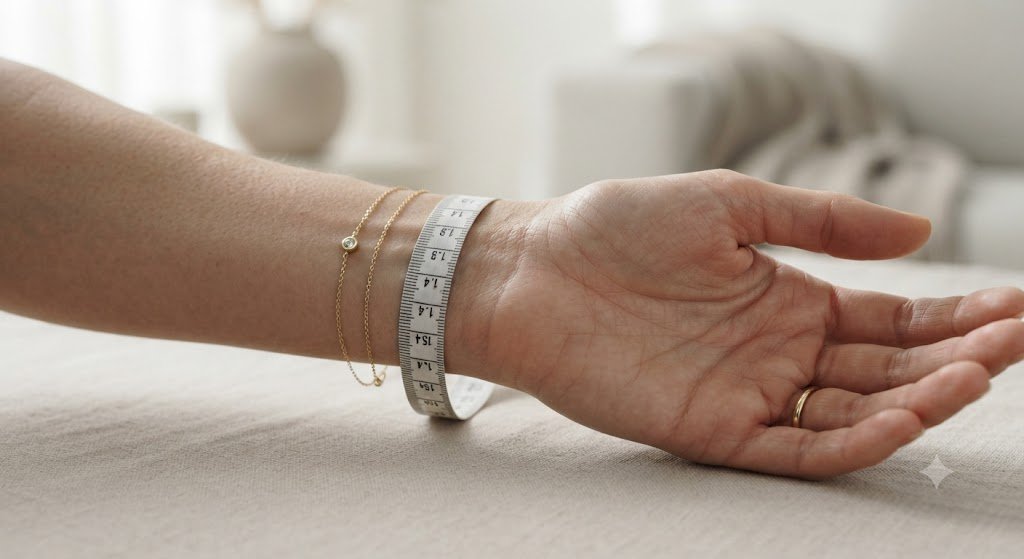
Step 1: Gather Your Materials
You’ll need:
- A flexible measuring tape
or
- A strip of paper or string
- A ruler marked in inches or centimeters
- A pen or pencil
Working in front of a mirror can also make the process easier.
Step 2: Find the Correct Position
Wrap the tape around your wrist just above the wrist bone.
This is the area where most bracelets naturally rest.
Avoid measuring too high on the forearm or too close to the hand.
The tape should lie flat against the skin without twisting.
Step 3: Measure Comfortably
Pull the measuring tape until it fits snugly—but not tightly.
It should touch the skin without compressing it.
If using paper or string:
- Mark where the ends overlap.
- Lay it flat.
- Measure the length using a ruler.
Record your wrist circumference.
This is your actual wrist measurement, not your final bracelet size.
The Comfort Room Rule: Adding Extra Space
After measuring your wrist, the next step is adding enough room for comfortable wear.
A common recommendation is to add between ½ inch and 1 inch (approximately 1.5 to 2.5 cm) depending on your preferred fit.
Snug Fit
Add approximately ½ inch (1.5 cm) if you prefer:
- Minimal movement
- A clean appearance
- Lightweight chain bracelets
- Slim link bracelets
This fit keeps the bracelet close to the wrist while still allowing comfortable movement.
Standard Everyday Fit
Adding around ¾ inch (2 cm) provides a balanced fit suitable for most bracelet styles.
This option offers:
- Comfortable movement
- Good flexibility
- Everyday practicality
- Balanced appearance
It is the preferred choice for many people because it combines comfort with security.
Loose or Relaxed Fit
For a looser style, add approximately 1 inch (2.5 cm).
This works well for:
- Chunky chain bracelets
- Fashion-forward styles
- Layered bracelet stacks
- Bracelets intended to drape slightly
Keep in mind that an overly loose bracelet may rotate frequently or catch on nearby objects.
Measuring for Charm Bracelets
Charm bracelets require a different sizing strategy.
Each charm adds weight and occupies physical space along the bracelet.
As your collection grows, the bracelet gradually feels tighter even though its actual length remains unchanged.
Why Extra Space Is Important
When charms accumulate, they reduce the bracelet’s interior flexibility.
Without additional length, the bracelet may:
- Feel increasingly tight.
- Become difficult to clasp.
- Lose its natural drape.
- Restrict wrist movement.
Planning ahead makes future additions much more comfortable.
How Much Extra Length Should You Add?
If you intend to wear multiple charms, consider adding slightly more room than you would for a standard chain bracelet.
Many jewelry professionals recommend allowing enough extra space to accommodate future charms rather than sizing only for the bracelet’s initial appearance.
This helps maintain both comfort and flexibility over time.
The One-Finger Test
After putting on your bracelet, perform a simple comfort check.
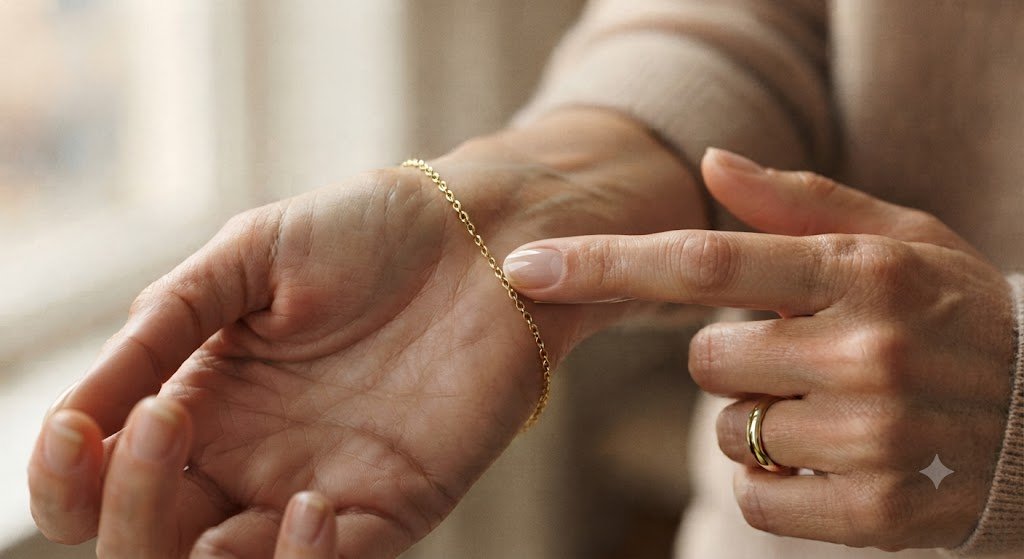
Try sliding one finger between your wrist and the bracelet.
A properly fitted bracelet should:
- Allow one finger to fit comfortably underneath.
- Feel secure without squeezing.
- Stay on the wrist without slipping over the hand.
- Move naturally during everyday activities.
If two or three fingers easily fit underneath, the bracelet may be too loose.
If you cannot fit one finger beneath it, the bracelet is likely too tight.
This quick test is one of the easiest ways to evaluate bracelet fit.
What to Do If Your Bracelet Is Too Large or Too Small
Even with careful measuring, adjustments are sometimes necessary.
Fortunately, many bracelets can be modified.
If the Bracelet Is Too Large
Depending on its design, you may be able to:
- Remove removable links.
- Shorten adjustable chain sections.
- Move the clasp to a shorter position.
- Visit a professional jeweler for resizing.
Some modern bracelets also feature multiple clasp positions that allow small length adjustments without altering the bracelet permanently.
If the Bracelet Is Too Small
A bracelet that feels too tight isn’t always a lost cause.
Possible solutions include:
- Installing a discreet bracelet extender.
- Adding compatible extension links.
- Replacing the clasp with a longer version when appropriate.
- Consulting a jeweler about professional resizing.
An extender can often provide just enough additional length while preserving the bracelet’s original appearance.
Bracelet Materials and Fit
Different materials influence how a bracelet feels once worn.
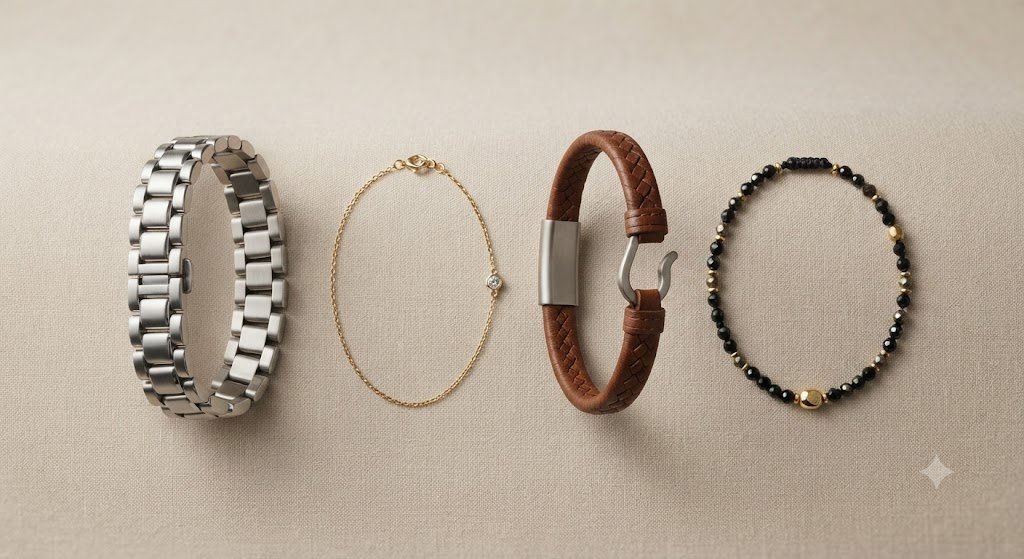
Link Bracelets
Metal link bracelets maintain their shape and usually require slightly more room for comfortable movement.
Chain Bracelets
Fine chain bracelets naturally drape around the wrist and often feel comfortable with a closer fit.
Leather Bracelets
Leather softens with wear and may stretch slightly over time, making an initially snug fit more comfortable after a short break-in period.
Beaded Bracelets
Elastic beaded bracelets should fit securely without excessive stretching, as constant tension may shorten the lifespan of the elastic cord.
Common Bracelet Sizing Mistakes
Avoid these common errors when measuring your wrist:
- Measuring too tightly.
- Forgetting to add comfort allowance.
- Measuring in the wrong wrist position.
- Ignoring future charms or additional decorative elements.
- Assuming all bracelet styles fit the same way.
- Choosing appearance over long-term comfort.
Taking a few extra minutes to measure carefully can prevent unnecessary exchanges and ensure a better wearing experience.
Final Thoughts
Learning how to measure your wrist for bracelet size is the key to finding bracelets that look elegant while remaining comfortable throughout the day. The most important step is recognizing that your wrist measurement is only the starting point. Adding the right amount of comfort room creates a bracelet that moves naturally without feeling restrictive.
Whether you’re choosing a sleek chain bracelet, a substantial link bracelet, or a charm bracelet that will grow with your collection, accurate measuring helps you select the ideal size from the beginning. Simple techniques like the flexible tape method, adding the appropriate ease, and performing the one-finger test can make a significant difference in both comfort and fit.
Before purchasing your next bracelet online, take a few minutes to follow this guide. A properly sized bracelet not only feels better on your wrist but also enhances the overall look of your jewelry, ensuring you can enjoy it comfortably for years to come.
The same careful measuring approach applies elsewhere in your jewelry box — see our guides to anklet sizing and fit and how gemstone size affects ring fit for more.
You Might Also Like
- Anklet Sizing Guide and Measurement: How to Measure and Choose the Perfect Fit
- Jewelry Condition Reports and Certifications Resale Value: Why Documentation Matters in the Secondary Market
- Ring Stacking Size Guide: How to Size and Style Stacked Rings for the Perfect Fit
